Rising Tide – Ternate Damselfish lastest addition to “been there, done that” breeding list!

By on Jan 26, 2012

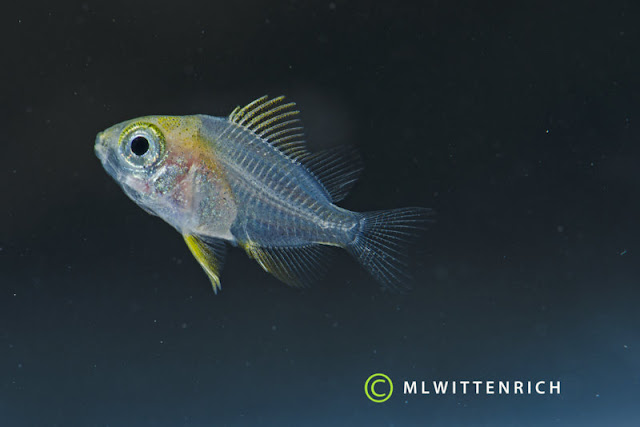
Newly Settled Ternate Damselfish, 25 days post hatch - courtesy Matt Wittenrich / Rising Tide

Newly Settled Ternate Damselfish, 25 days post hatch - courtesy Matt Wittenrich / Rising Tide

The team at the University of Florida Tropical Aquaculture Lab continue to hit home runs, breaking new ground on every frontier.  Their latest success, rearing Ternate Damselfish (Amblyglyphidodon ternatensis) hatched from eggs shipped from the Steinhart Aquarium in San Fancisco, further hit home that collaborative breeding in the form of egg shipments is in fact a viable project these days.

Larval Ternate Damselfish, 1day post hatch - courtesy Matt Wittenrich / Rising Tide

Larval Ternate Damselfish, 1day post hatch - courtesy Matt Wittenrich / Rising Tide

Still, this project wasn’t without it’s hiccups – cold shipping water and a very poor hatch rate meant that this project started with only 4 viable larvae!  The other kicker – these larvae were reared to settlement with nauplii from the now commercially available Pseudodiaptomus pelagicus (you can get these pods through vendors that carry the new Algagen copepod cultures introduced in 2011). There’s nothing to suggest that the home hobbyist couldn’t quite easily duplicate this rearing success.  The time to settlement is only 25 days (comparable with many gobies and dottybacks), and they can go to baby brine shrimp at 8 days.  Of course, Todd Gardner’s success with another Amblyglyphidodon species suggests that copepods may not be required – rotifers *might* work too here (it’s just that no one has tried yet).

For more information, read the full story of rearing the Ternate Damselfish at the Rising Tide Blog.

Posted in Breaking, Fish, Reef News |
Search More:  
   
  • http://pulse.yahoo.com/_XMBVIE5PJXMAMZJSENESFNWBKA Joe

    Always great to read new successful breedings going on… but of all the fish, why did it have to be a damsel? LOL. Still great news, to bad it wasn’t that great of a fish.

  • Anonymous

    Would you be saying that if it was a Starkii? ;)  We gotta ark ‘em all Joe!!

  • http://pulse.yahoo.com/_XMBVIE5PJXMAMZJSENESFNWBKA Joe

    LOL, ya, I would say it for even a Starkii, the only damsel allowed in my tanks are ocelleris clowns, everything else in that family is just to mean for my taste in fish.

    That’s just me though.. again, fantastic job to all those involved. Sounds like quite a trip they took and odds of survival were really stacked against them. I wish some of these people involved were closer to where I live because I would gladly take them out for a drink and dinner on me as an “atta boy or girl” to them, even if it is just a damsel. I believe these types of things are going to save our hobby one day, and possibly the oceans.

  • Todd Gardner

    Damsels may be cheap and mean, but as advanced aquarists it’s easy for us to forget how imoportant they are in the industry.  Keep in mind they are also hardy, great for beginning aquarists, and usually stay pretty small.  There are probably more individuals sold from this family than from any other in the marine trade. 

  • Anonymous

    You do know why they are the most sold fish, right? It isn’t because they are damsels or they are hardy, it is simply because they are CHEAP. A snowflake or platinum clown is a damsel and are hardy, but they don’t fly off the shelves because they cost a lot, especially for a beginner. 

    Another fish that a ton of beginners buy, and they are not damsels nor are they hardy, but they are colorful and cheap as well, are dragonettes, but we all know how over 90% of those purchases turn out.

    I agree with you though that damsels are very important for the hobby/industry, without them a lot of people probably wouldn’t try a saltwater tank.