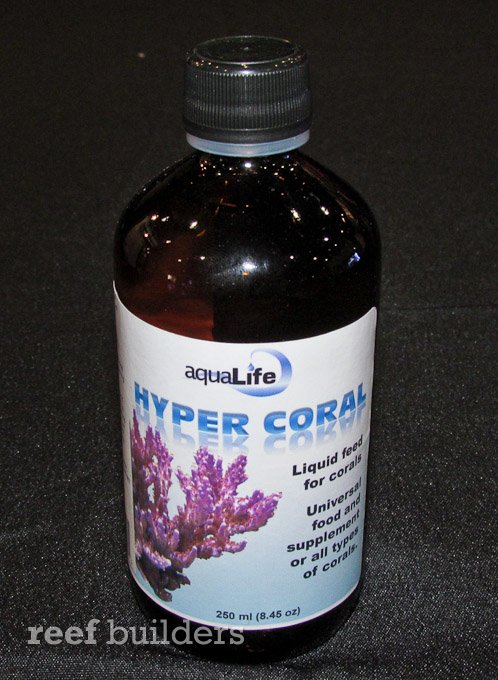
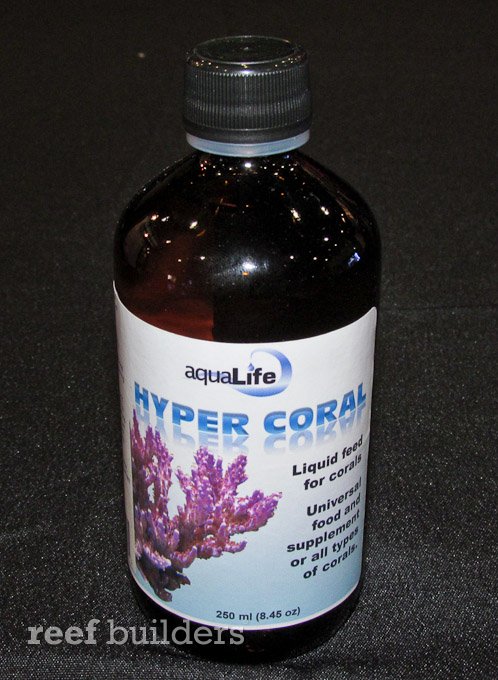
Sicce AquaLife Hyper Coral Food uses chirality to target corals instead of skimmers

By on Apr 03, 2012

hyper coral food

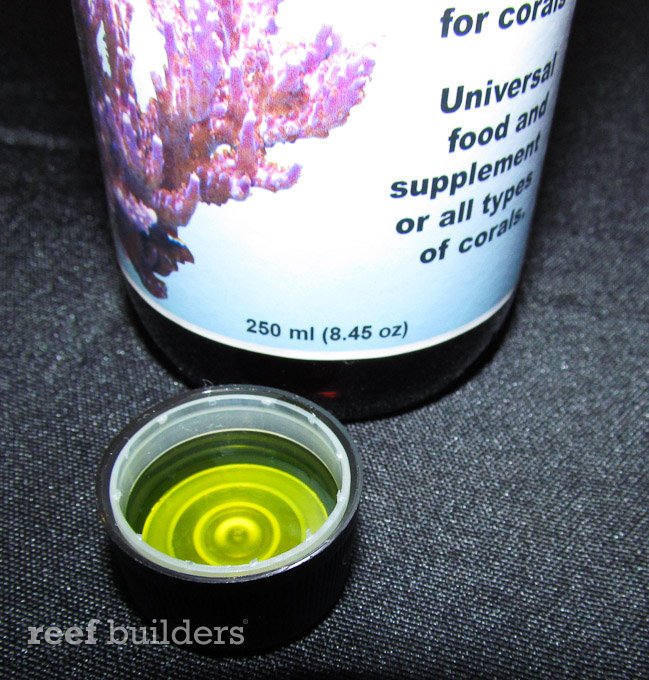
Hyper Coral Food from AquaLife is a new liquid aquarium supplement that adds essential amino acids that corals need, but which won’t be skimmed out by the protein skimmer. AquaLife Hyper Coral Food is the first aquarium additive from Sicce that will be distributed alongside Sicce products. Sicce Hyper Coral Food is also the first that we know of that explicitly uses L-amino acids which are actively taken up by corals, but which excludes the ‘D’ version of those same nutrients which are only taken up by cyanobacteria and reactive with protein skimmers.

We’ve seen a lot of liquid coral foods and amino acid supplements come and go, offering vitamins, amino acids, micronutrients and other essential elements. What we find interesting about Hyper Coral is its use of molecular chirality to deliver more nutrition to the corals and less to the protein skimmer. AquaLife Hyper Coral Food should become available in the next month or so, with the 100ml bottle retailing for about $29 and the 250ml bottle selling for $49.
hyper coral food

Posted in Reef News |
Search More:  
   
  • AlexLey

    The bit about the skimmer might be misleading. Chirally L-amino acids are biologically active and taken up by corals, but it probably gets skimmed out just the same. The real story is that because the mirror image D-amino acids (that corals and most other organisms do not consume) are not in the food product, there is less waste to be taken out by the skimmer, and you get more bang for each drop. Does that sound correct?

  • http://www.facebook.com/people/Mathieu-Gagné/659241296 Mathieu Gagné

    That’s interesting! Can you find a relativilely simple explaination as to why there is a such a selectivity on chirality?

  • Scott Brang

    My understanding, and shoot me down if I’m way off, chirally L-amino acids are less hydrophobic than the D-aminos.  This makes the L less reactive within a skimmer than the D

  • AlexLey

    Hmm, except that water is achiral, so L- and D-amino acids should behave to water the same way. However, I am not a chirality expert.

  • AlexLey

    All organisms on the planet are selective about chirality is because they have different chemistries, so they cannot be used interchangeably. If you look at your hands, they’re mirror images but not identical (the thumb are on opposite sides, etc), so if you try to use a right-handed mouse, you can use it well with your right hand but not as well with your left. In a similar way, L- and D-amino acids do not function the same way even though they are mirror images; one cannot be substituted for the other. For reasons unknown early in evolution, life “standardized” on L-amino acids, and all its descendants (aka all life on the planet) only function with L-amino acids (with rare exception).

  • johntullock

    A little clarification on the issue of chirality. With all due respect, I think Jake may have conflated two statements on the spec sheet about HyperCoral, one about chirality and one about skimmer effect. The discussion here regarding chirality is all correct. Higher organisms, with rare exception, can only use L-amino acids. Cyanobacteria can use both D and L. Therefore, adding a mixture wastes a portion of the material, since it can do the corals no good. That is the first benefit to using purified amino acids to produce HyperCoral.  The other point is this: because the product is not formulated from a protein hydrolysate that contains not only individual amino acids but peptides, chains of amino acids of varied length, it does not affect skimming. Many competing products use hydrolyzed vegetable protein, a food-industry commodity, to supply the amino acids. This is much less expensive than using individual purified amino acids. However, a good portion of the material, that which is in the form of peptide chains, is skimmed out.

  • AlexLey

    That makes more sense, so individual amino acids are not skimmed out, but peptide chains do. Thanks!

  • johntullock

    I suspect both are removed eventually, but the larger the molecule and the more surface charges it has, the more likely it is to be removed by skimming. Therefore, you would expect peptides to be removed at a faster rate than the much smaller “free” amino acid molecules.

  • http://www.facebook.com/people/Michael-Sanders/672596968 Michael Sanders

    Whether hydrophobic or hydrophilic, either form will be reactive to protein skimmers to some extent. More importantly, it is our understanding that everyone in this industry is using the L-form, as it is the form utilized by the vast majority of living organisms. Seachem Laboratories has been using the L-form in our supplements for over 30 years, first in the original Trace and later in Reef Plus and aquavitro fuel.