GHL’s new LED light lets loose spectrum graphs

By on Apr 04, 2012

While details of the forthcoming GHL LED light have been released, very little was known about the light spectrum. At full power, the light will bathe your aquarium in a wide color spectrum, that is according to new spectrum graphs from GHL. Eight independently adjustable LED colors the spectrum can be set which gives access to just about any combination that you can image. GHL is staying mum about what brand(s)of LED they will be using.  Additionally, GHL is expected to release full details in mid May this year. Until then we all can guess on the pricing for GHL’s LED goodness. But we don’t expect this light to be in the “budget” category. You can view the full graphs below the break.
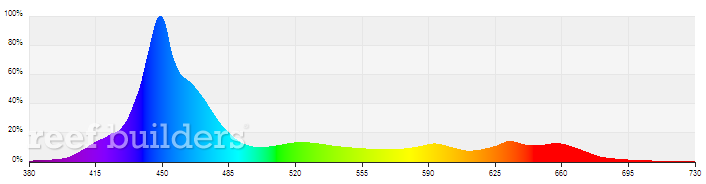
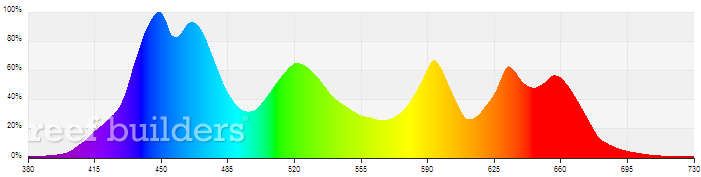
 

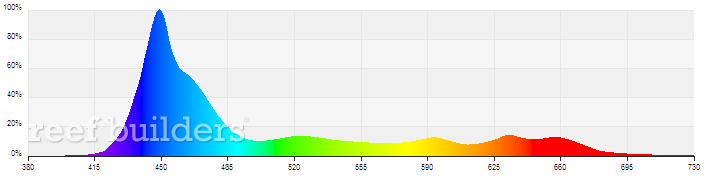
All 8 channels at 100%, spectrum from 380 nm to 720 nm


Peaks at several colors

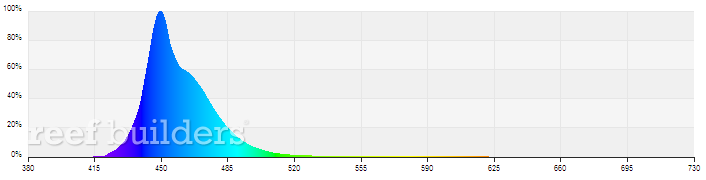
All channels without UV at 100%

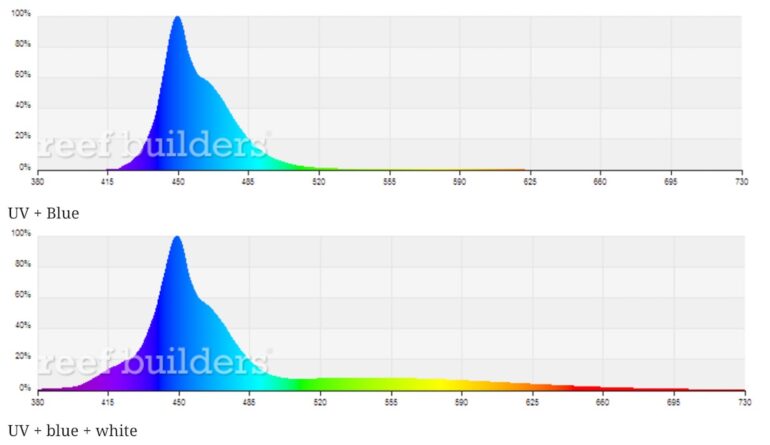
UV + Blue

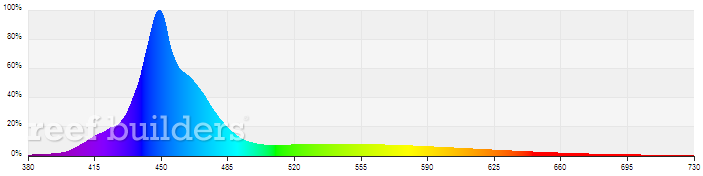
UV + blue + white

Posted in Equipment |
Search More:  
   
  • http://www.facebook.com/people/Mathieu-Gagné/659241296 Mathieu Gagné

    That’s nice! This should be powerful! I’m curious how they distributed the LEDs on the ramp.

  • Justin Farabaugh

    $4700 for a 2′ unit

  • aquadigitalinc

    LOL good guess :) We are expecting high hundreds to low $1,000 for each modular unit that is 300mm in length

  • Justin Farabaugh

    it was just a guess/joke ;-)

  • Clive Bentley

    Graphs are all wrong IMO. Not saying that the peaks aren’t in the right places, but everything is too smooth and blended from one peak wavelength to the next. Makes it look like the LEDs have a wider emission spectrum than they really do.

    Either way, should be an interesting fixture once its out in public.

  • http://www.facebook.com/profile.php?id=622465486 Ryan Thompson

    So does this unit use ACTUAL UV or Violet LEDs? They are completely different.
    From the graphs it looks to me like they are using Violet LEDs that may be close to the 410-420nm range.

  • http://www.facebook.com/profile.php?id=622465486 Ryan Thompson

    It seems to me that almost all companies are smoothing out their graphs. This is common place IME.

  • aquadigitalinc

    Hi Ryan,

    In the press release it states what LED types are being used, UV 420nm is mentioned.

    LEDs:- 8 light colors, all separately dimmable: ultra white, royal blue,
    blue, true green, yellow, red, hyperred and UV (420 nm)- 62 LEDs per
    lamp- 6 separately replacable LED-clusters on IMS boards- PAR: I think
    more than you need!

    In regards to smoothing of the graph, knowing GHL and the pride they have in quality and factual statements I would very much doubt any smoothing has been done, its not in anyones favour to do so.

    The other interesting point is the dimming curve

    “true dimming technology: non visible brightness steps with more than 3000 dimming steps per channel”

    This means at even low percent values you will see no step to step dimming pattern where you physically see a drop in the intensity between steps.

    Hope that helps.

  • http://www.facebook.com/people/Mathieu-Gagné/659241296 Mathieu Gagné

    Yep I think the spectra are all right. They compared pretty well with experimentally measured spectra.

    This is the kind of features I was expecting from Giesemann, but the tezla is not so fancy.

  • yitzhaki yitzhak

     Why are you using true green, yellow LED’s ? are they contribute anything for the corals ?

  • aquadigitalinc

    Yellow adds a more natural sunrise effect and green allows for any RGB combination to be created. Not all LED’s in the lamp will be for coral growth as a natural look as nature intended is also taken into account. Of course you can turn any channel off you wish if it is something you dont feel the need of. 

  • http://www.facebook.com/people/Mathieu-Gagné/659241296 Mathieu Gagné

    You can’t add red without adding green also, or else you get a clear pink look. It’s mainly for your eyes. Not sure what yellow will change. I guess some people like a warmer overall color.

  • CaliReefer

    ok, I thought it was just me. I couldn’t figure out how they are getting such a smooth graph for the the sub 500nm range. I expected more peaks/gaps than what is shown. If companies are starting to do this type of “false advertising” I think it is our responsibility to point that out to as many people as possible until this behavior stops. It is the same as photoshopping corals, they are giving people false hope on the true color. 

  • http://www.facebook.com/profile.php?id=622465486 Ryan Thompson

    So another company that doesn’t know the difference between UV and Violet?

    420nm is NOT, nor has it ever been, UV. UV is Ultra Violet and starts below the 400nm area. I really wish people and companies would grasp that concept.

  • http://www.facebook.com/profile.php?id=622465486 Ryan Thompson

    They are all doing it. Look at Ecotech’s Radion graph, it is way too smooth for an LED graph. Look at AI’s graph as well. They smooth them out quite a bit.

    T5 and halide manufactures have done this for years as well.

    But graphs aren’t necessarily science. They are just a general idea. I haven’t had the fortune to look at a bulb with a spectrometer (sp?) but there are quite a few people I know that have and said the reading they get, looks different than what the manufactures put out.

  • aquadigitalinc

    Before we get into some long debate, I do not profess to have any real knowledge of the subject

    Doing a basic Google search brings up 420nm consitantly with UV. Furthermore Based on a lot of RC and RB response 420nm is what people are looking for in fixtures, there has been a lot of hype about 420nm missing for sometime now and the requiement for it.

    Here is what Google brought up. I am sure there are others that counter this, and I think this could be one of those debates but here goes

    “Activation Energy for the Emission of 420 nm Luminescence from UV-Excited Polycrystalline H2O Ice”

    Thats a quote form the “Journal of physical chemistry”

    Here is another from the NCBI

    “OBJECTIVES: To examine the effects of high-intensity, narrow band 420 nm UV ”

    Here is another from hunter labs
    “ColorFlex – Port Insert: 1.25 inch (32mm) with 420nm UV Filter Assembly”

    Then of course there is the massive amount of LED manufacturers selling 420nm UV Diodes

    “XL001WP01UVC420 is a wide viewing and extremely high output power illuminator assembled with a total of 60 high efficiency GaN diode chips, mounted on a metal stem and covered with double coated clear silicone and epoxy resin. These devices are designed for high current operation with proper heat sinking to improve thermal conductive efficiency1) high reliability2) high output power at 420 nmApplications1) LED UV2) Air, tools and media purification and disinfection 3) Diagnostics and Therapy”

    Maybe all the sources I researched in this reply are wrong? I am not experienced in the subject to say.

  • aquadigitalinc

    Moving away from the UV debate and onto the requirement for 420nm a google search brings up masses upon masses of research in regards to the requirement of 420nm in coral growth, too many articles to link to here but just type in 420nm coral growth.

    Off now to educate myself on the subject ;)

  • SoTM

    What aquarium area will each module cover….assuming mixed reef?

  • http://www.facebook.com/profile.php?id=100001443324671 Patrick Jewell

    LOLOLOLOLOLOLOLOLOLOLOLOLOLOLOLOLOLOLOLOLOLOLOLOLOL Google gives answers, but not always the right answer. 

    http://en.wikipedia.org/wiki/Ultraviolet#Subtypes

    UV is 10-399 nm Visible light is 400-700 nm

    *Also, I can take a pic from my old physics book of the Electromagnetic Spectrum graphic/table and send it to you.

    **Still not convinced?!! I’ll have my buddy who is a Physics Graduate Student or even his Graduate Professor (my old professor for undergrad) say the same thing. I can do that for you. 

    The only thing I can think of why reefer’s associate UV spectrum (sub 400 nm) and Violet 420 nm is that it’s so close to UV that bulb companies produce spectral peaks of 420 nm with “spill over” into the sub 400 range.

    Hence, the MARKETING of “UV-420″. It kills a lot of birds with one stone. You get small amounts of UV, good for green florescent proteins and other fluorescent protein compounds, with a nice spike at 420 nm which most reefers deem favorable for symbiotic zooxanthelle algae. 

    You can’t argue that.

  • http://www.facebook.com/profile.php?id=100001443324671 Patrick Jewell

    It’s call data smoothing. Lots of scientist use data graph technique. To put it simply, it’s just an “average” line among the data points. It makes the graph easier to read and present to the public. Also good for marketing, because the public doesn’t like looking at shitty jagged data plots. It confuses people. 

    It is a “general idea” of what the bulb looks like to a spectrometer. However, some companies do misrepresent their products intentionally or not. 

  • http://www.facebook.com/people/Mathieu-Gagné/659241296 Mathieu Gagné

    I never found true evidence of the benefits of ~420 nm light over ~450 nm for either color or growth. LEDs at 450 nm seems to be much more efficient in terms of Lumen/W, so even if the absorption cross section of the chlorophylle is a bit higher at 420, what goods does it do if you have 1/3rd of the light. As for colors, you could see more fluorescence for the same reason as you see more fluorescence when the white are turned off: your eye is less sensible the further you lower the wavelength and it lets you appreciate the fluorescence. I would appreciate a strong experimental study of that debate. I’m still pretty sure it doesn’t hurt to have a more complete spectrum. 

  • http://www.facebook.com/profile.php?id=100001443324671 Patrick Jewell

    The smooth lines are a “general idea” of what the spectrum looks like. Anyone who takes these graphs as actual data plots from a spectrometer is sadly mistaken.

    It’s just marketing. Still, even if these spectral plots are half-way true, it’s still an awesome light.

  • http://www.facebook.com/profile.php?id=622465486 Ryan Thompson

    Here is a good chart for you to consider.

    http://i679.photobucket.com/albums/vv157/rtparty/spectrum-corals.jpg

    The Violaxanthin created at the 425nm area is used to help control photosynthesis and without enough the coral can have photoinhibition set in much quicker.

    You need get off the whole lumens/watt thing. It isn’t all that great of a tool. PAR is a good measurement to go off and PUR is even better. PUR is problematic though because it varies between tanks and even individual corals.

    That is what I have found in my research. I have been pushing LED companies for years to include more than just the old white:blue combo that is so ugly. I asked EcoTech to explain why didn’t they include any and they wouldn’t answer me. AI doesn’t include this option either.

    On issue was that 400-420nm LEDs were expensive and did not hold up well so companies avoided them. I am happy to see more and more companies offer a MUCH better selection LEDs as they become available.

  • CaliReefer

    I am one of those people that do have a spectrometer at my disposal and have looked at many lights under them, going back over 10 years now. The graphs that Sanjay puts out are accurate, the graphs I am seeing posted as a selling point are altered and in my opinion blatantly fall under “false advertising”. 

    If Mfgs simply state “this is a rough idea of the light output” for those smoothed graphs, I would give them leeway, but when they state straight up “this is the spectral graph for our light” and then show a smoothed graph, it is an outright lie. Anyone who has looked at all the various blue LEDs under a a spectrometer, even put everything together from 380nm-480nm (UV to cool blue) there are many areas where the graph bottoms out completely due to blue LEDs having a very narrow bandwidth. There is no way to fill in the entire blue color range using LEDs on the market today (one big gap is between 430nm-450nm), so when I see a graph like I see pictured above, I immediately call BS. 

  • aquadigitalinc

    Thanks Ryan and patrick this is good info as I said i am not expert and have a lot of learning to do myself which of course helps us understand clients needs and requirements better.

    Ryan – yes you are quite right and GHL are adding as much a spread of LED’s within the realms of current capabilities and as patrick points out 420nm of course was one of the biggest requested value talked about in our hobby so it is natural for GHL to answer that call.

    Instead of hyper-UV, Hyper-Violet seems a better term to call it. The term 420nm-UV comes from the diode manufacturers more than anything rather than the lamp manufacturer anyway, but as you factually point out, although not completely in the UV spectrum it does offer the corals a nice useful spike into the UV range, and I think that is far more important info than what name you give the diode.

    So calling it 420nm-UV is not strictly incorrect however better marketed on the useful reasons of this peak rather than just UV alone, its just in marketing very difficult to get your mouth around “420nm with useful peak into the UV range” Its easier just to call the LED 420nm-UV which is the term all the 420nm diode makers use anyway.

    For me this has provided great marketing insight and knowledge, and I will do my best when the lamp is launched to highlight the reasons and uses for each colour.

    I appreciate your feedback.

  • http://www.facebook.com/people/Mathieu-Gagné/659241296 Mathieu Gagné

    Lumen/W is pertinant simply because it gives you a good idea of the amount of light you’re going to get if you want to compare to different LEDs. PAR are overall measurements that will depend on the total choice of LEDs and optics. PUR can’t be measured without a spectrum analyser, so it’s just a concept to tell people that not all the visible spectrum is used the same way. I still think including 410-420 is good, but I would like to have strong evidences of it rather than vague assumptions. I think they may be including it for marketing reasons too: the whole “corals color themselves to protect from UV” (and Ecotech don’t have them).

  • http://twitter.com/ProfiLux GHL GmbH & Co. KG

    Hi,

    just a comment to 2 of the discussed points:

    “graph looks too smooth”
    no – this is the output of our lamp
    you are right that LEDs have usually a narrow band of color emission, but the white LEDs (with their “remote phosphor”) flatten the graph; and I agree – most spectrum graphs I have seen in the past look really as they had been smoothed, but again: these graphs we showed here are no fake, this is the reality.

    Second, the never ending debate about UV… the LED we are using has its dominant wavelength at 420 nm. Many companies, even LED manufacturers, and labs call this “UV”. I like “hyperviolet” more for the 400 nm … 430 nm.

  • http://www.facebook.com/profile.php?id=100001443324671 Patrick Jewell

    *Frist, will you publicly (on individual request, no need for a press conference) release your spectral plots tested by an independent lab? Independent, such as an University? Sanjay? Will he will test it eventually…


    *Second, UV by definition is and always will be sub-400 to 10 nm and I will correct ANYONE down if they say otherwise, light manufacturer or not.
    Hyperviolet is OK, though unnecessary because the spectrum is so short. So it is sort of pointless. What about HYPOviolet? Does that really mean it’s closer to the indigo/blue spectrum? Hypo doesn’t sound as cool as hyper… and neither are a good definition for a *continuous* spectrum of visible light.What it sounds like *marketing buzz words* to me or… just putting unnecessary Greek Root Terms on an already confusing subject. 

    *Regardless of the silly UV debate, I am still verrrrry interested in your product.