AquaSpaceLED 200 from AquaMedic is 200 watts of LED weak sauce

By on May 25, 2012

aquaspaceled

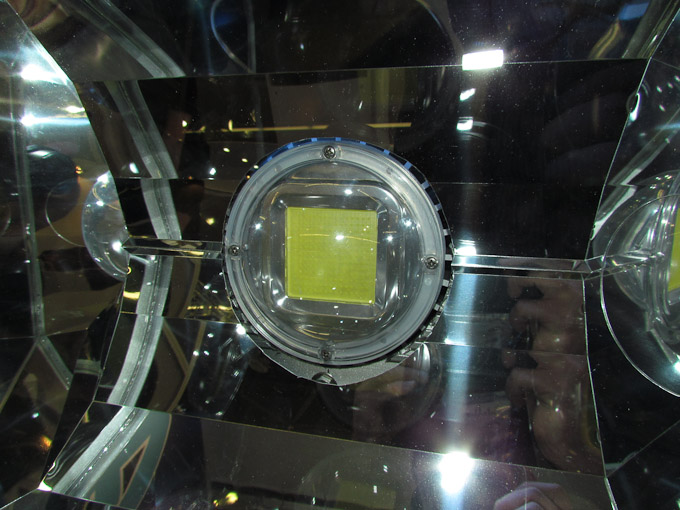
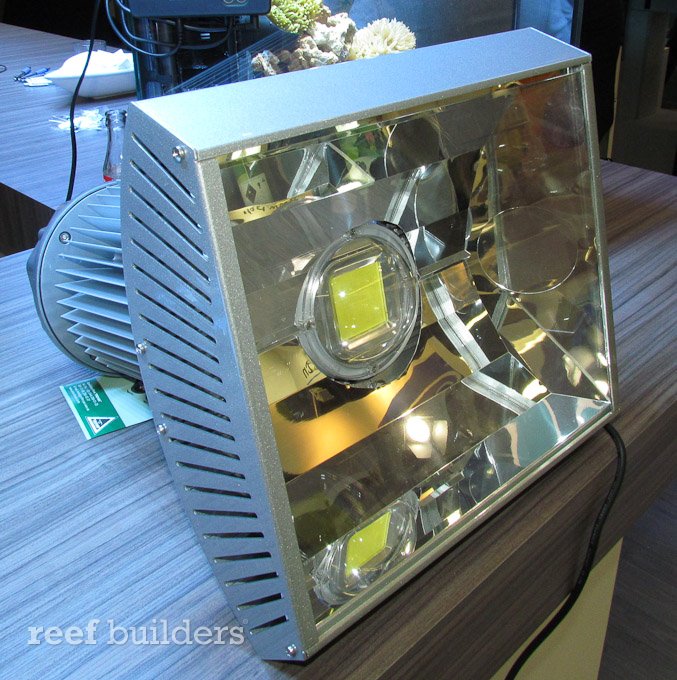
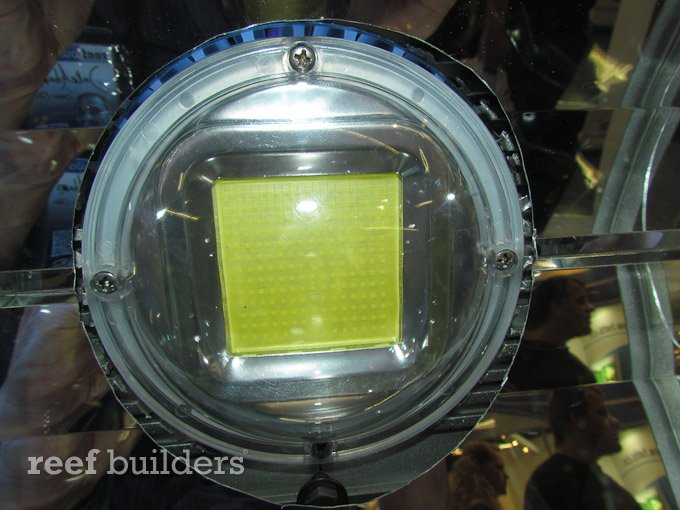
What do you do when a 100 watt LED multichip isn’t enough? Well if you are AquaMedic you find a 200 watt multichip and make one of the biggest LED aquarium lights ever seen. The thing is, at 800 Euro (~$1,000), 200 watts of LED power from AquaMedic won’t come cheap, it doesn’t do any tricks, and it’s not exactly competitive with the huge current offering of aquarium LED lights. To be quite honest, the AquaSpaceLED 200 looks really cool but it lacks innovation and vision.

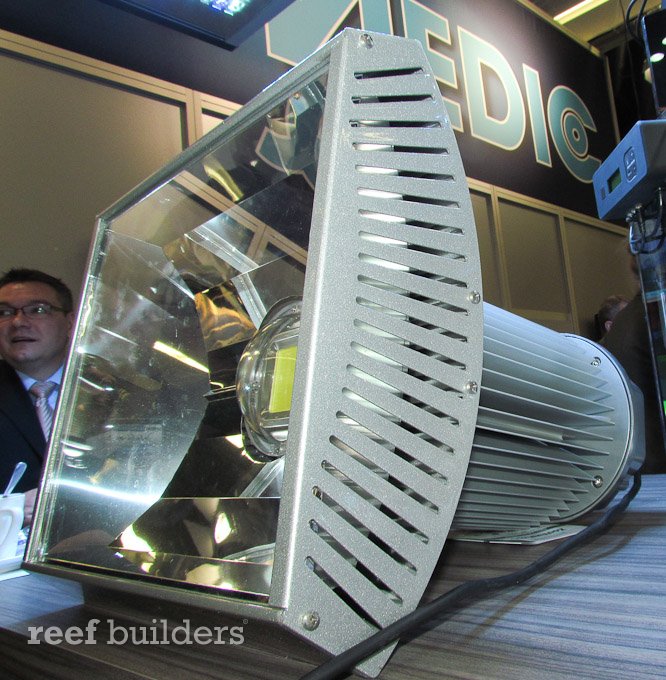
It’s one thing to buy an off the shelf 200 watt LED gym light and to mate it up to a reflector on the business end for better spread and more usefulness in aquariums. But taking that same gym light, not tweaking the color with some added blue and worst of all mating it with a 15 year old design for a mogul base metal halide reflector shows a lack of effort on AquaMedic’s part. Heck, it looks like the hole in the reflector was cut by hand, with scissors.

If you have to have all two hundred of your LED watts coming from a spotlight-style fixture with a single color multichip, we guess you could go with the AquaSpaceLED 200. But unless you’re a public aquarium, the average reefer will be able to find better than a hybrid gym LED downlight mated with a metal halide reflector.
aquaspaceled
aquaspaceled
aquaspaceled

Posted in Reef News |
Search More:  
   
  • Justin Farabaugh

    does look like it was cut by hand……nice

  • under cover

    And to think people pay big money for German engineering.. Hand crafted especially! :)

  • SolidStateLEDLighting

    And what we have here boys and girls is a good example of a chicken egg incubator…

    I can see now how all the decorators in New York will be clambering for a chance to install this in every client’s posh apartment.

    I believe we can all agree that this multi-chip design (well done for multi-chip) explores all the right reasons that multi-chip is the wrong technology for serious LED illumination.

    200 Watts does not indicate a light output nor does it describe the loss of energy due to excessive heat dissipation.

    If it looks like a fryer hood, sounds like a fryer hood, … well then it must be….  a fry hood with it’s own built in light source!

    Disclaimer:  This poster makes a competing brand of LED lighting equipment and therefore these comments can only be taken in jest….

  • http://pulse.yahoo.com/_JYYOOBDFX2UY64WIZJ5RZPMSGI Reef

    looks like a 5 year old made it

  • http://pulse.yahoo.com/_3LLNDZ5XJ6ZQ76J2VLDUQD5WOA Micheal

    Guess you need that big shiny reflector to capture that 3% of light that actually spreads out that far.

  • John Oxnard

    James Carville? 

  • Texatom

    I bought the 250WX2 150WX1 internal ballast with same case and it almost took out my house. It is in the local landfill now and cost 1000 usd too!

  • http://www.facebook.com/profile.php?id=608040062 Ioannis Mylothridis

    wth are they smoking there at Aqua Medic? This thing is hideous

  • http://www.facebook.com/ericcpeck Eric Peck

    LoL, you said weak sauce :) . Look like they took an orphek DIF-100 and the uggliest reflector housing they can buy and glued the two together…

  • Thomas Plocher

    This prototype was built to share with our customers mainly in commercial applications. The key requirements we were asked to meet are certainly energy savings, as well as increased reliability. Customers told us that it is a viable alternative to the 400W HQI fixtures, for example.
    The design is nowhere near final, and will potentially look much different.There are two ways to manage the heat, one is to keep the form factor as small as possible using cooling fans, or reduce the amount of components for increased reliability. The former would not be as reliable in high humidity, high temperature environments long term.

    Thank You.
    Aqua Medic North America – Thomas Plocher