Bridgelux enters partnership with Toshiba

By on May 11, 2012

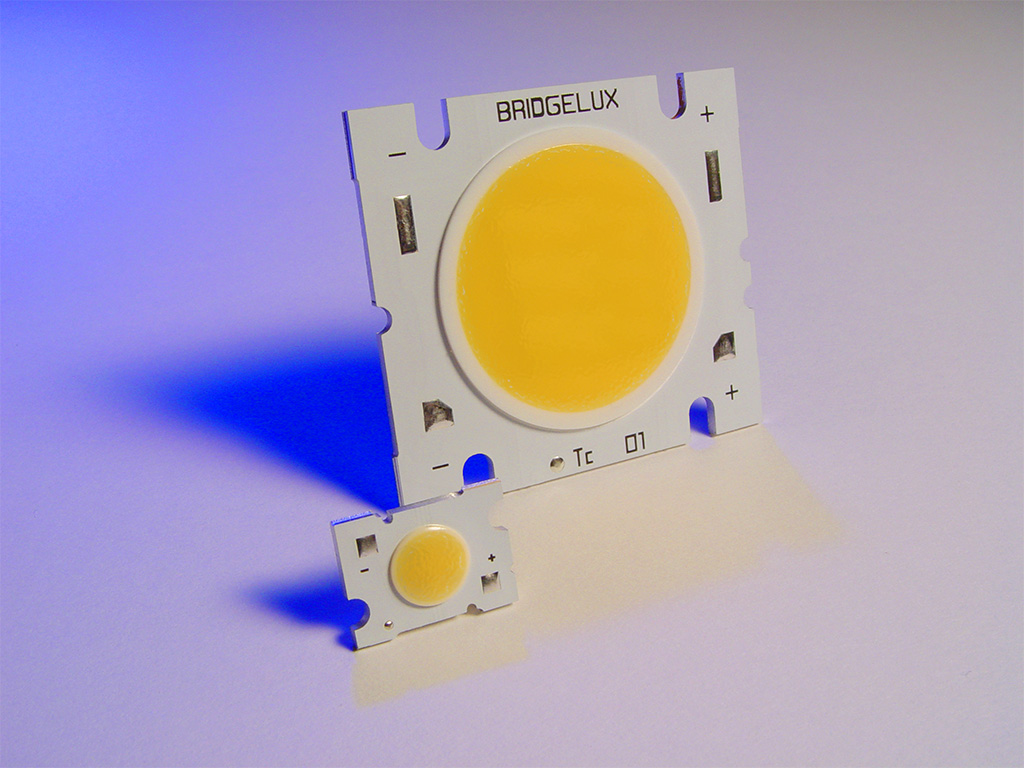
Many of you are familiar with the name Bridgelux for a variety of reasons, including their awesome multi-chip arrays, as well as the use of their chips in many Asian LEDs. Well, you may become more familiar with that name in the near future now that Toshiba, one of the largest electronics producers in the world is taking a huge interest in the relative start-up. Follow along after the break for more details.

Toshiba is taking an equity stake in the Livermore California company to help produce their products, as well as advance new LED technology to help drive the cost of the devices down to levels that will make LED products affordable to everyone. While most Bridgelux products outside of their actual LEDs don’t have direct applications to our aquariums, the change in technology on the LED front will eventually trickle down to us.

What Toshiba will be helping with is the advancement of fabricating LEDs using semiconductor grade silcon wafers as a substrate, which is a far more mature manufacturing process than any other LED fabrication approach. As a result, the cost to produce LEDs will drop dramatically. While most of you have heard us talking about the cost reduction resulting from using silicon carbide as a substrate lately with the new batch of Cree XB-D and XT-E LEDs hitting the market, silicon is poised to reduce costs even more.

While it’s currently unclear how much time it will take to start ramping up the new technology and resulting products, there is a strong chance that this technology will end up becoming available to us reefers soon enough. Bridgelux’ own products will be the first to see the change, but it’s a safe bet that it will end up trickling down to their raw chip sales to Asian manufacturers, driving the cost of Asian fixtures down to the range of inexpensive T5 fixtures.


Source [WSJ]

Posted in Breaking, Equipment, Industry |
Search More:  
   
  • SolidStateLEDLighting

    I’m here in Asia and the Asian mentality will always be to under-cut quality to cheapen the price.   No customer can win on that premise.   The massive problem that faces all lighting industries is who do you trust to give an honest evaluation of quality.   Thanks for the “puff piece” Clive.   Can you dig a little deeper for more significance on the next go’round?

  • Clive Bentley

    I’m sorry that you feel that this was a “puff piece”. My intention for bringing this news to the aquarium masses was to highlight the potential benefits that everyone will be able to take advantage of in the somewhat near future, regardless of whether you are a consumer, integrator, or manufacturer of LED products, regardless of the location.
     
    The Bridgelux name, sadly, is deeply ingrained in a lot of the products currently coming out of Asia due to Bridgelux selling their chips to other LED manufacturers to package and sell, and is the only reason that “Asia”was brought up. I know your products, and they don’t fall into the same category on what would be “questionable quality”, so I’m not sure where you really take offence on this one. If the partnership of Bridgelux and Toshiba can bring the cost of LED products down to more reasonable levels, regardless of the intended use, I see that as a win for everyone.
     
    Personally, I don’t care much for the Bridgelux or Epistar based LEDs coming out of Asia. The quality is low, and the performance is lackluster at best, especially on the whites. While the partnership will directly benefit those types of LEDs once the new process matures, it’s companies like Cree, Philips, Osram, Citizen, Nichia, Samsung, LG, et al that will benefit indirectly, whether it be from licensing the technology from Bridgelux/Toshiba, or spurring their own development of alternate substrate materials to compete, much like Cree has started to do with their silicon carbide technology.

  • SolidStateLEDLighting

    I guess I just grow a little tired of hearing spin doctors talk about “LEDs that are affordable to everyone” when in fact, there are many that are.   If you buy high end, you get outstanding performance and return on investment that is a great deal.   If you buy low end, you get a great price with moderate performance.   What is there not to afford?   

    Also, the expectation that there are going to be dramatic price drops is probably not realistic as when there are leaps forward in technology, typically companies take larger slices of profits and consumer prices only gradually edge downward. I know you have direct experience in this industry to have already seen this happen Clive.

    The only substantive price drops we have seen in recent times were born from economic hardship — not leaps in technology.

    Still, more meat next time please with unique and personal insight — not a rehash of other articles.   Thank you.

  • http://pulse.yahoo.com/_3PQR2S2EAZUDJKVYUCKLCWJ37Q Micheal

    I appreciate the “puff” Clive

  • C_3PO

    Don’t mind him, Clive.  Chewbacca smashed Lando’s wristwatch, and Lobot hasn’t been the same since.

  • http://www.facebook.com/robin.lutchman Robin Lutchman

    Thanks for the info Clive, our reef aquarium lighting will be always evolving this is a good thing.

  • http://www.facebook.com/people/Jeff-Elsberry/100000261819436 Jeff Elsberry

    Isn’t Bridgelux a US company?