We’re pretty sure that the proponents of the Hawaiian-based anti-aquarium-trade movements will try to cherry pick an article like this for out-of-context statements that they can try to use to use against the aquarium industry. If you found your way here via anti-trade literature/websites/propaganda, well, we’d commend you for not taking things at face value.
In light of the relentless misinformation being produced by anti-trade activists, and consumed by legislators, we acknowledge that it’s better to be prepared for bad legislation that could happen. This means strategically planning our collective conservation efforts so that we may side-step anti-aquarium efforts that would derail the aquarium industry’s ability to save Hawaii’s reef fishes from the real threats out there.

Today, the aquarium world asks, “If we lose Hawaii as a source of marine aquarium fish, what impact does that have?” In answering that first question, we ultimately come to another question – what can we, as individual hobbyists, do about all this? Beyond the usual recommendation to stay informed and voice your opinion at the right time, read on for more insights into how we might address these questions and issues.
Disclaimers:
Let us categorically state that we are not encouraging every aquarist out there to rush out and buy Hawaiian reef fishes while they still can. Let us also state that despite what groups like For The Fishes may tell the public, none of Hawaii’s endemic reef aquarium fishes are considered endangered species (or even threatened) at this point in time. Still, in a possible future where an edemic species could be at risk, is it better for a species Pseudanthias hawaiiensis to be completely extinct, or to *maybe* still exist in captivity if it can’t continue in the wild?
Captive Breeding may be the long term answer, but…
Let’s start with breeding. Overall, captive breeding of marine fish is still “new”, emerging technology, and represents a very small subset within the marine aquarium community. But if we hope for breeding as a long term failsafe for species survival in the decades ahead, it requires everyday casual aquarists to buy what breeders are producing.
Yes, we can’t breed wrasses today, but maybe 5 or 10 years from now we might know how. What good does it do us though, if a fantastic fish like the Flame Wrasse or the Hawaiian Longfin Anthias is off limits to breeders?

Afterall, we couldn’t breed Crosshatch Triggerfish at the start of 2011, but by the end, Frank Baensch, a private small-scale commercial breeder, did just that. Why aim to stifle innovation? Why put species off limits to most marine breeders? Someone has to experiment, to tinker. More and more, it is aquariums that provide real change and evolution in our understandings. And our best scientists…guess where many of them got their starts? Aquariums…
If you are really “For The Fishes”, then you’re “for captive propagation”, but you also must realize that technological advancements take time, and it is often the private, individual home aquarist working without any profit incentive, making the breakthroughs and sharing them with the world. Anti-trade activists who want to conserve and preserve reef biodiversity need a reality check – aquariums and breeding can potentially provide the failsafe, but you can’t simply “wish” captive bred Hawaiian Anthias into existence. Think about the introduction of cell phones, personal computers, CD-ROMs, DVDs, in our lifetimes. Think about where those technologies first originated. Think about the decades of time involved. Marine breeding technology is faced with the same types of timelines and economies of scale, and there is always going to be some minimal ongoing need for wild-caught broodstock to ensure genetic diversity if possible. Banning blocks captive breeding efforts, it kills off any potential failsafe for Hawaii’s endemic species.
Impacts of Bans on Species, and Entire Collection Areas – The White List
Let’s step back from breeding now and talk about the here and now for the majority of aquarists. While full bans are being considered, there is already a proposed “White List” agreed on by the West Hawaii Fisheries Council…any fish not on that list won’t be coming out of state waters on the Kona coast of the Big Island. The last update we heard suggested that this white list was slated to go into effect either in January or February of 2012 (whether that has actually happened is an unanswerable question at this moment). That means every fish not listed will have to be collected from one of the other, smaller Hawaiian Islands – in essence it makes them that much harder to obtain. And maybe you’re OK with some of the endemic Hawaiian fishes shown below being harder to find than they already are:


The White List is just a first step…it’s a “localized” ban on some 200 species (if it’s not one of the 40 species on the list, it’s off limits..aka. banned). Ironically, it’s a compromise effort that aquarium fishers agreed to in an effort to save their livelihoods, to attempt to meet in the middle. And this compromise didn’t stop anything…the calls to ban aquarium collection are louder than ever.
Will A Full Ban Automatically Mean No More Yellow Tangs?
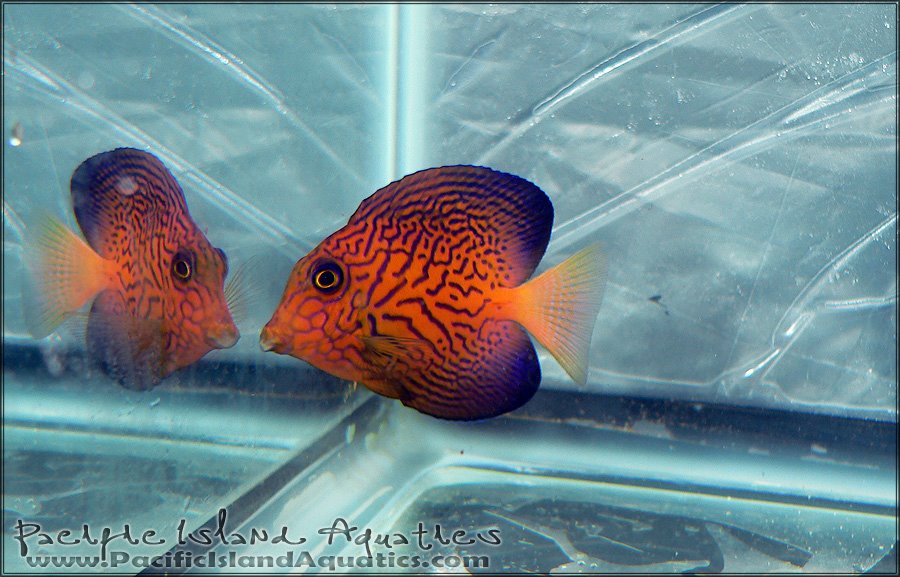
So, what do we really lose if there is a complete ban aquarium fish collection in Hawaii? Interestingly, some of the fish we associate with Hawaii and assume to be endemics are not in fact found only there. The Chevron Tang is found throughout Micronesia.

Yellow Tangs can also be found in several other island groups, most notably the Marshall Islands. Achilles Tangs can also be found in other isolated island chains, and even are reported off the southern tip of the Baja penninsula in Mexico.

So while Hawaii may be the main source, if not the sole commercial source, some of these flagship species from the Hawaiian fishery may still find their way into the aquarium hobby from other collection points, albeit at probably extremely prohibitive pricing (especially since both the Achilles and Cheveron Tangs already command prices greater than $100-200 most of the time). Yes, it could be that the Achilles Tang might one day be on par with the Gem Tang or a Conspiculatus Angelfish.
What Will Bans Really Ban Then?
We’re not free and clear. While some of these pseudo-endemics may find their way to breeders and aquarists through other channels, there are still many popular species that are true Hawaiian endemics, found nowhere else. Rather than list them all here, we’re going to direct you to check out a 4-page pictorial listing of Hawaii’s endemic reef fish. (Page 1, Page 2, Page 3, Page 4). As you look through this visual catalog, you’ll realize that some of these fish aren’t fish we keep in aquariums, but several notable species are. Some of these species have even been bred in captivity already!
Time to Make Your Middle Name Noah!
So what is a hobbyist to do? Well, we’re not trying to sound the alarm here, but we’re suggesting you make some rational purchases. The one way we can circumvent any future ban would be to gather up “broodstock” today, even if we currently have no breeding knowledge or capabilities to yet apply. We all know marine fish can have stunning captive lifespans when compared to their wild counterparts. For example, the wild lifespan on the average Centropyge Angelfish might only be 1 year (Scott Michaels, 2004, page 218, 50% annual predation rate on adult Centropyge ferrugatus), but they can live many times longer in captivity (my personal C. argi are already 5+ years and still spawning nightly). With the strong potential for long captive lifespans, it’s conceivable that broodstock purchased today could still be quite viable if, or when, breeding becomes a necessary reality.
And don’t think you can’t do it. Afterall, if Tony Vargas can create and ark a spawning trio of Flame Wrasses, there should be something you can do too. In the Freshwater Community, there’s a hobbyist-initiated program called CARES. This program encourages Freshwater Breeders to set aside at least one tank in their fishroom to propagating a “CARES” species…many of which are non-mainstream species that are endangered or even extinct in the wild, persisting solely through the efforts of private breeders. Taking a page from the CARES mentality, maybe it’s time we ask experienced marine aquarists to set aside some tankspace for a rainy day.
So, to our fellow responsible aquarists – we believe it may be worthwhile to revisit the list of true Hawaiian endemics. In your purchases this month, maybe there’s a Hawaiian fish a little more deserving of your attention. Perhaps you were considering the purchase of a Pygmy Angelfish like Centropyge argi? Maybe you should set up a trio of Centropyge fisheri or C. potteri instead.

Leopard wrasses have your fancy? Make it a point to seek out Potter’s wrasses and set up a harem (or at least a pair).

There’s no shortage of stunning wrasses endemic to Hawaii. I can only imagine how awesome a spawning trio of Psyche Head Wrasses would be in the hands of an expert aquarist.

Want to take the existing breeding knowledge for Filefish and attempt a new species? Perhaps the Fantail Filefish is a better choice than whatever you were contemplating. In the market for a Bandit Angelfish? Well fellow reader, if you can truly afford one, you can truly afford to get it a mate.

Yes, the recurring theme here is this – even if you have no plans to breed any marine fish, perhaps you can make a small (or HUGE) contribution by consciously seeking out and establishing breeding groups of Hawaii’s endemic species. Avoid buying single specimens at all costs, because it’s kinda hard for anyone to breed with only one specimen. If we did ever lose access to Hawaii’s endemic fish species, and the technology to breed them was available, the aquarist with a spawning group might be able to distribute fertilized eggs to larval rearing specialists…or even just pass along the established broodstock itself to someone who can really use it for some good.
Just pick one species and make it a point to keep some broodstock safe in your tanks for a rainy day. Yes, we’re proposing that the average hobbyist can make a difference, even doing as little as simply buying a few fish and keeping them alive for years to come.
Do As We Do, Not As We Say.
And we’re not just preaching here…we’re actually doing as we suggest. Since last fall, I’ve been working on getting at least a half dozen Blue Line Butterflyfish (Chaetodon fremblii) to keep here in my basement fishroom. This is a species that’s fallen out of favor in the hobby (and heck, a species from a family that’s not nearly as popular these days). This is my personal contribution to the cause. I’ll volunteer my tankspace to the species. I may never breed Fremblii, they may be absolute terrors to pair, but I’m going to try. I do know Fremblii is a species I’d consider at elevated access risk. It’s already banned via the White List, and even if non-white-list collection areas could still get it into the trade, any more comprehensive ban coming through would make it 100% unobtainable. If we want any real hope of preserving this species in the face of catastrophic reef decline, 2012 may be the one year left to get started on the project.

Pick A Hawaiian Species You Love, Or Can Learn To Love – Be a Steward For The Future
Since it’s likely the aquarium hobby that will be the ark for marine biodiversity in the future, it certainly looks like now is the time to make an investment in some Hawaiian broodstock. From where I sit, I’m hoping someone else loves the Pebbled Butterflyfish (Chaetodon multicinctus) or the Lemon / Milletseed Butterflyfish (Chaetodon miliaris), and realizes that keeping half a dozen around could be the difference between having this species in the hobby 20 years from now, or not.

It may sound pie-in-the-sky, but then again, who would’ve believed that Wittenrich would get Heniochus Butterflyfish larvae to near settlement on his very first try. Given the 10-20 year lifespan of many marine fish, it’s certainly conceivable that a conscious effort to gather up and ark some broodstock of Hawaii’s endemics now may be the difference.

In the final injustice – take a look at all of the species we just illustrated, and ask yourself how many of them you see with any regularity in your local fish stores or through online vendors. This is the real travesty – while the Yellow Tang is the posterchild for both sides of the aquarium-ban debate, it is really dozens (or hundreds) of species harvested at varying levels (right down to truly insiginificant levels) that stand to lose out as collateral damage. If the ban goes into place, it is the species themselves who are most at risk by having lost the one avenue that, over the long term, has the potential to ark them…the aquarium trade.
In an ideal world, the proposed bans will not become reality as they are emotionally driven and ignore the data. However, realizing that a ban only has to pass ONCE, it makes sense to start thinking about backup plans. Thankfully, the price of Hawaiian fish hasn’t skyrocketed yet. If you’ve been thinking about Hawaiian fishes…maybe now is a good time to buy.
A special thanks goes out to Kevin Rezendes of Pacific Island Aquatics for allowing me to ransack his website and Facebook pages for the prefect images to illustate this article. All images belong to Kevin / PIA and were provided with permission to exclusively republish here on Reef Builders – THANKS!