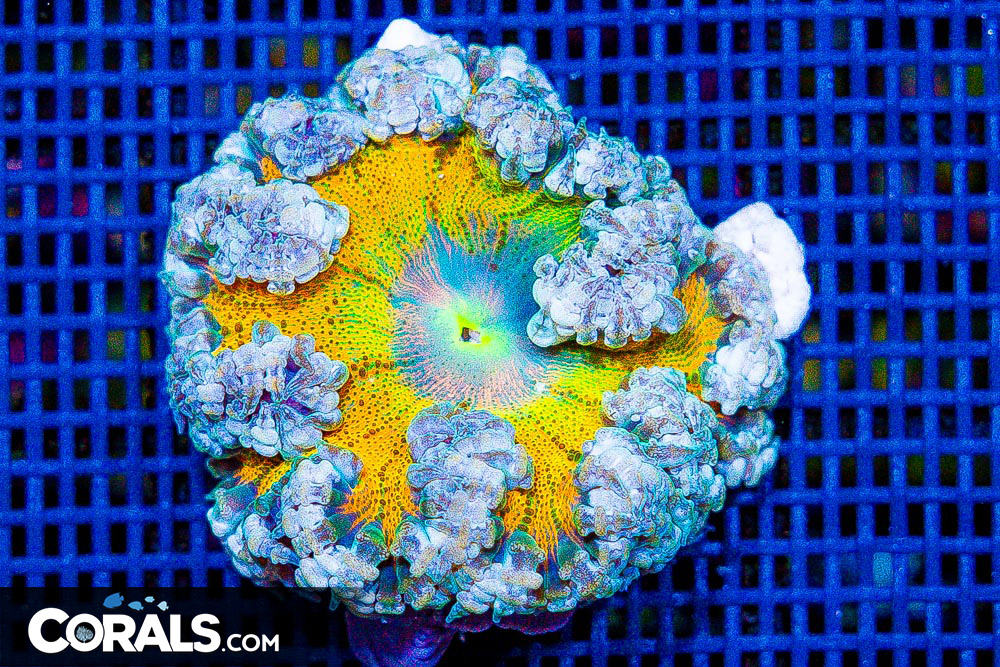
Hey Reef Builders, let’s talk about Rock Flower Anemones!
Rock Flower Anemones, or RFAs as they are commonly referred to, are one of the most popular Anemones in our hobby. Their beautiful, various coloration and patterns make for an amazing addition to almost any type of reef tank! Their huge circular centers and mouths are surrounded by tons of fuzzy, flowing tentacles that look just like petals on a flower.
RFAs come from a more local place than you might imagine! Unlike other anemones and corals that are usually from the Southern Hemisphere, halfway across the globe, most RFAs are from the warm, tropical waters of South Florida and the Caribbean! They come in so many beautiful colors of reds, greens, striking pinks, yellows, and golds that are often combined together to form stunning patterns resulting in an awesome Anemone! They’re found in shallow reef areas, lagoons, and sandy areas with their feet dug in revealing only their disc shaped body.
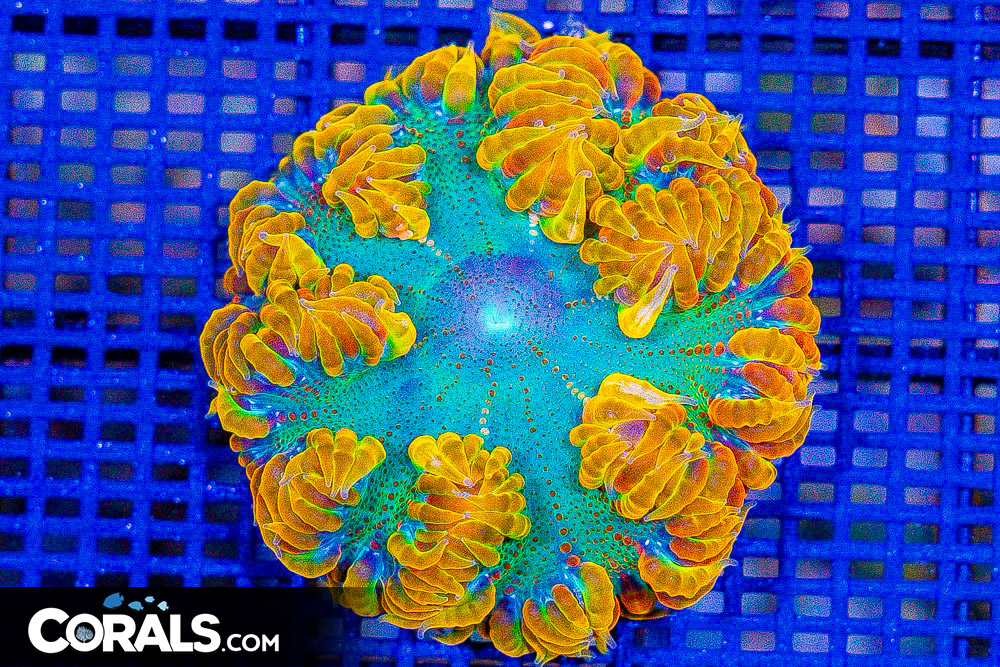
Unlike other anemones, one of the things that make Rock Flower Anemones so popular is their care! They are one of the easiest anemones to care for in the hobby and are extremely hardy. Low maintenance and a wide range of requirements make them perfect for any Reefer or reef tank! Keep your rock flowers under moderate to high light and moderate/indirect flow, but they adapt well to almost any setup. Their striking colors really POP under full actinic lighting!
While they do photosynthesize, it’s important to also feed them. Spot feed your RFAs with a turkey baster using a mixture of meaty foods like mysis and brine shrimp one to two times a week. They love to open up, grab food with their tentacles, and consume!
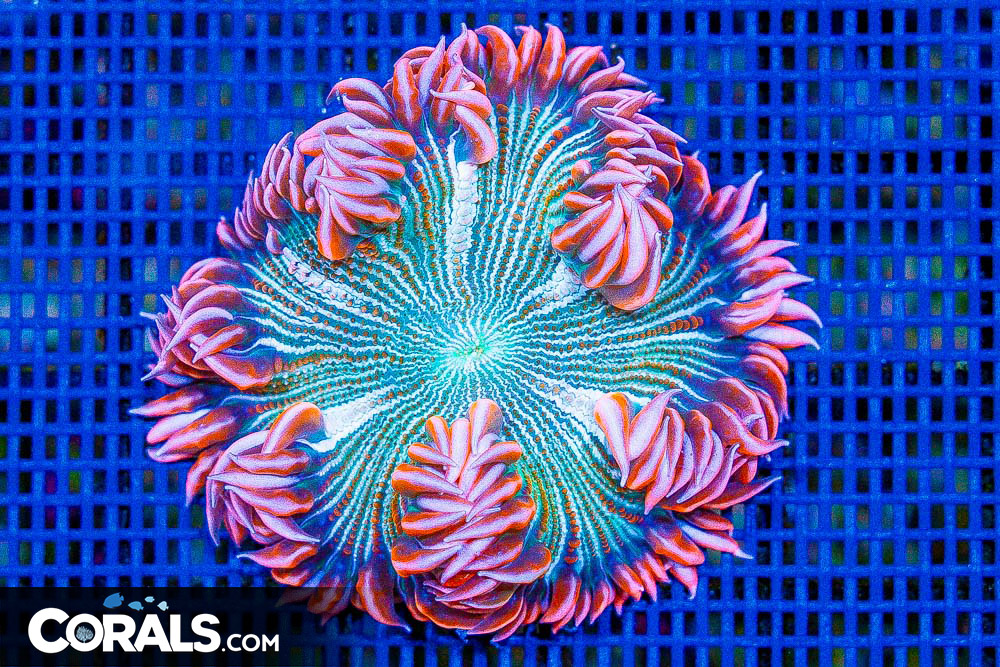
One of the coolest things about RFAs is their reproduction! They do not commonly reproduce asexually like other anemones. They actually go through spawning events in which baby RFAs are sexually reproduced from male and female anemones! If you have multiple RFAs in your tank, you’ll hopefully start to see small, baby ones in your sand bed or rock work one day. Less commonly, they can reproduce asexually from pieces of their tissue coming off, which can then form into new ones. While they do not split on their own like many other anemones, they can be fragged. However, this practice should only be reserved for very advanced hobbyists as there is a high risk of one or both of the newly cut halves perishing. The healing process from the fragging procedure is quite slow, leaving them susceptible to infection. If you’re going to frag them, here’s a few pro tips that will lead to more success:
- Start with a very healthy RFA
- Only use sterile equipment
- Use iodine dips to prevent infection
- Cut right through the center of the mouth
- Use a separate hospital tank for recovery
What do you look for when buying a Rock Flower Anemone? Avoid RFAs with wide gaping mouths where you can see their insides. Full, stretched out and complete tentacles all the way around is a good sign of health. If the tentacles are nubby and retracted, this could indicate poor health or stress. The foot should also be smooth and complete with a purplish/pink/red coloration. Tears in their feet are not an end all to them, they’re quite resilient and heal well. However, if the feet look like they are dissolving, that’s typically a sign the anemone may be on its way out. Pick ones that are vibrant and full of color Loss of coloration or pale coloration indicate stress and potentially poor health. That’s not to say they will not color up over time, but they just may require more husbandry to get them going in the right direction. They should also look very symmetrical, meaty, fat and puffy; not elongated, odd-shaped, and flat.
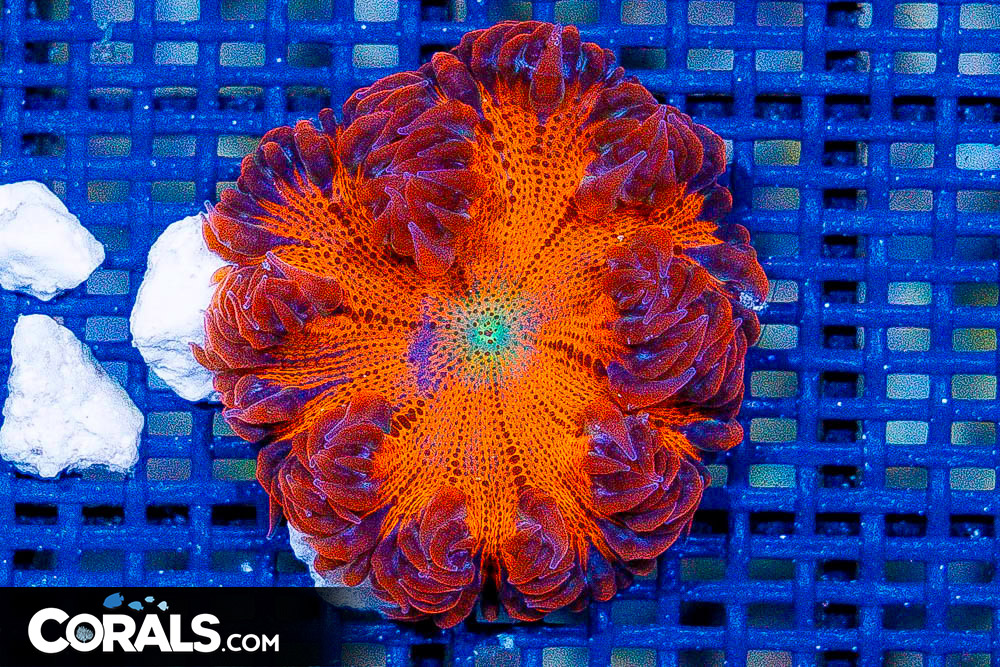
Compared to other anemones, they are much more tolerant of parameter swings. However, like all anemones and corals, stable parameters are recommended to keep them successfully. Rock Flowers will thrive best in salinity of 1.026, calcium of 450 ppm, magnesium of 1350 ppm, alkalinity of 9 dKH and tank temperature of 78 degrees fahrenheit. Keeping your parameters steady and stable is key to their long term health.
While most anemones, like carpets or bubble tips, tend to move around the tank until finding a spot they like, RFAs are not very fussy when it comes to placement. The majority of the time they like to stay put wherever they are placed which makes planning for their placement in your tank fun and easy! Just allow them time to attach to some loose substrate or rock by turning down or turning off your flow. This allows them time to take hold with their feet and not blow around your tank. Keep an eye on them when initially placing them to ensure they are not floating around and potentially being sucked into a powerhead. Placing them in groups makes for some amazing RFA gardens!
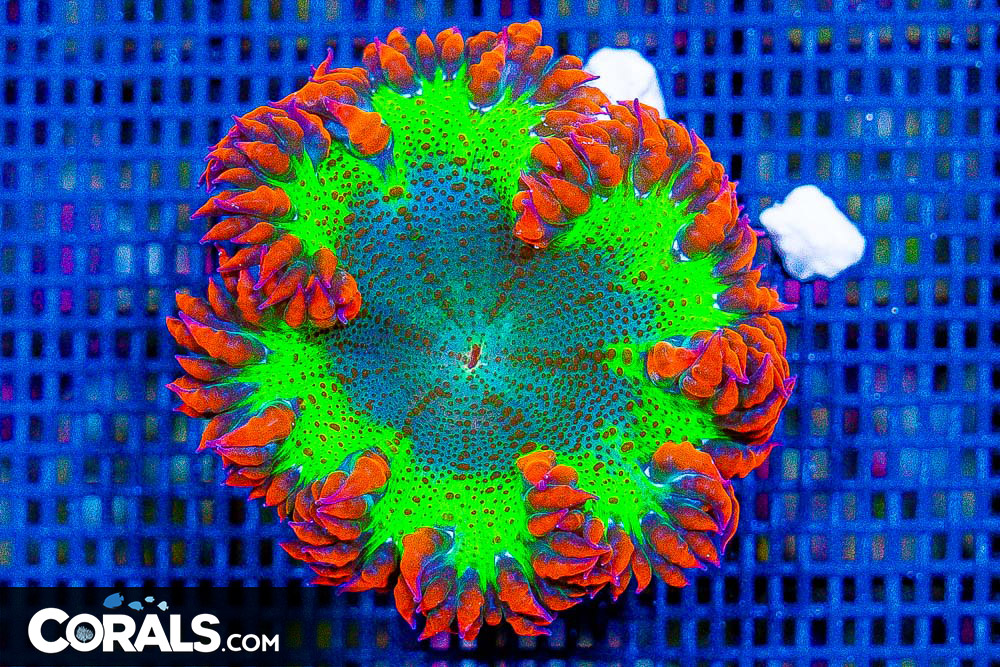
Rock Flower Anemones are truly one of the coolest additions you can make to a reef tank. As far as inverts go, they are at the top of the list!