?Bubble Tip Anemones, or “BTAs” as they are often referred to, are one of, if not the most, popular type of anemone that exists in our hobby! Carpet Anemones, Long Tentacles, and Rock Flowers are plenty nice, however, nothing quite comes close to the coloration and beauty of a Bubble Tip Anemone.
Much like the majority of fish and corals in our saltwater community, Bubble Tip Anemones, originate in the warm, tropical waters of the indo-pacific. While the collection of wild Bubble Tip Anemones for the trade used to be fairly common. Due to advances in aquaculture and named strains, most BTAs today are sourced from land based aquaculture farms.
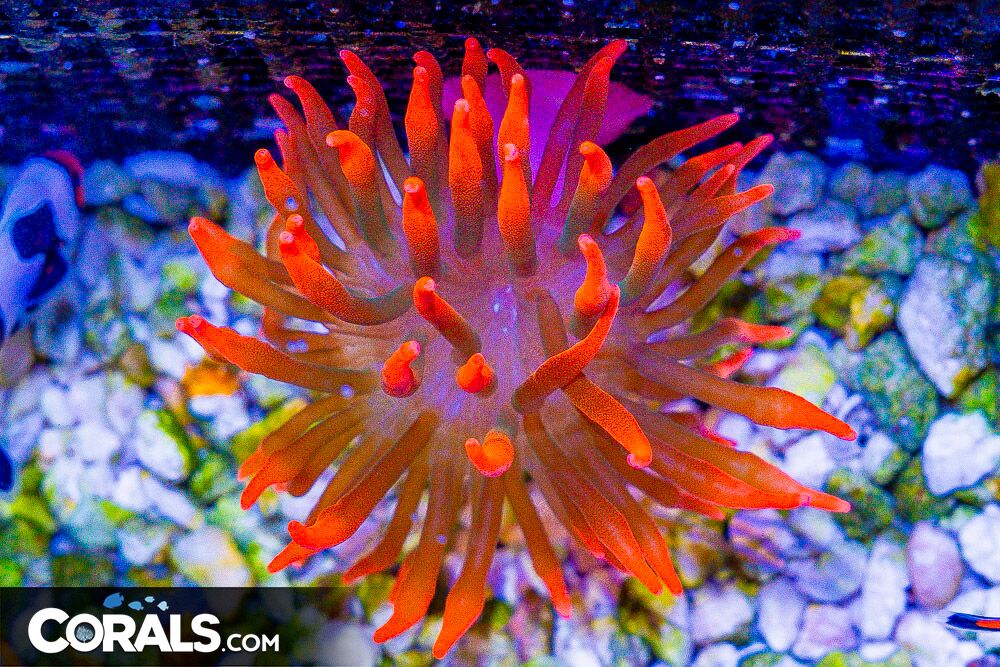
Being Aquacultured means these anemones were reproduced in controlled conditions, likely in a tank at one of your favorite wholesalers or retailers. Aquacultured BTAs come with many health benefits. This includes a much more rich and vibrant coloration and an overall hardy and disease resistance. This also means that they are very well adapted to aquarium life and have been for some time. Many of these Aquacultured BTAs come from a strain of anemone that can be traced back nearly a decade! A strain of Anemone is a single individual that was named and has split thousands of times over the years. Many of these strains have spread across the world: Colorado Sunbursts, Black Widows, Nexus Anemones, and many more!
Bubble Tip Anemones reproduce in a number of ways in captivity. Their rapid reproduction results in great availability across the hobby. Their sexual reproduction consists of broadcast spawning into the water column, where different gametes fertilize and settle somewhere in the tank, growing into full anemones. The much more common method of reproduction is asexual, and is likely something you have experienced at home if you have a BTA! These anemones will split completely in two given the right conditions. They can also leave behind a small piece of themselves as they move, which will then grow into a complete anemone! BTAs are often manually split in our hobby as well, however, it is a method better left to professionals and highly experienced aquarists. Manual propagation consists of using a sharp razor blade to cut the anemone directly down the middle, splitting the mouth and foot exactly in half. Through a series of antibacterial treatments and lots of TLC, these halves heal into two separate individuals!
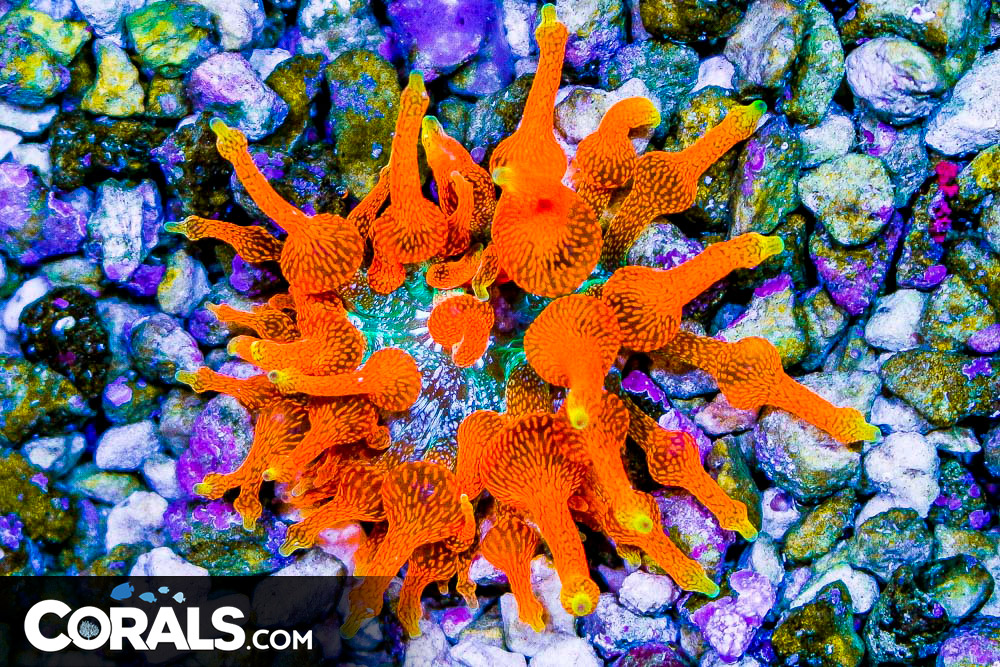
Similar to corals, Bubble Tip Anemones carry Zooxanthellae algae in their flesh, and need to be provided with the correct amount and quality of lighting and flow to stay happy and healthy. Occasional spot feeding them will further help get them the essential nutrients they need to thrive. Finer foods such as zooplankton and phytoplankton are best due to their smaller size. Typically, moderate lighting and flow is sufficient, however, being mobile like other anemones, they will move around your tank with their foot until settling in somewhere they are happy. This is important when considering adding an anemone. The spinning blades of powerheads must be covered to prevent the anemone from wandering into a deadly situation! Some aquarists keep their anemones in baskets, along the edge of their tank. Keeping them in a controlled environment where they cannot escape and cause themselves or others any harm. While Bubble Tip Anemones do not have sweeper tentacles, they will sting when coming into direct contact with another coral or your skin. Accordingly, it’s recommended to wear gloves when handling any anemone directly, especially for those who have other allergies.
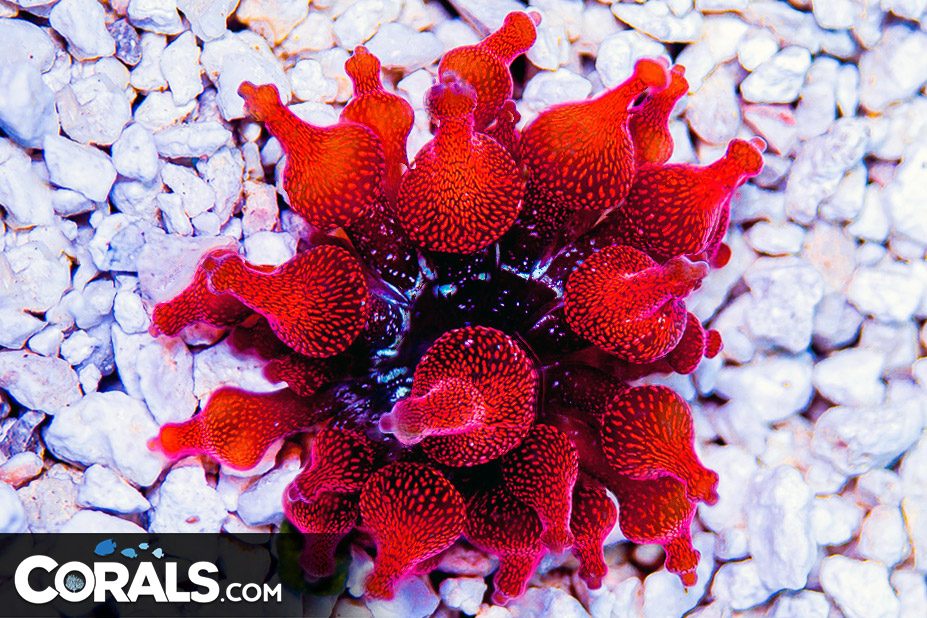
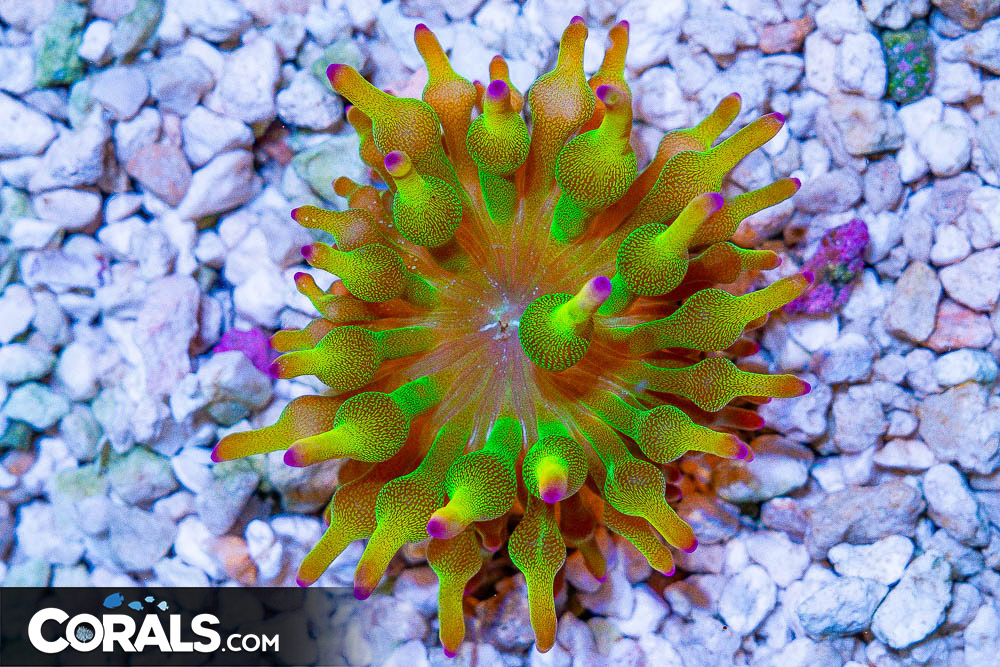
Bubble Tip Anemones come in a very wide variety of color combinations and patterns, often contributing to the name of their strain. Vibrant oranges, reds, yellows, pinks, greens, and purples are all on the table when it comes to BTAs. The different colors are often mixed in together creating amazing combinations between their center mouths, tentacles, and tentacle tips! Their color patterns can often be grafted, gradual, striped, spotted, and speckled. Most Bubble Tip Anemones really show off under blue actinic lighting, glowing brighter than some corals if you can believe it! Thankfully though, they are so colorful, there is not a lighting spectrum that they don’t look great under. It seems new anemone strains are popping up all the time, leading to a never ending supply of stunning anemones!
The best way to ensure their long term success and survival is to strive for stable tank parameters. Anemones do best in systems with the following parameters:
- 78 degrees
- 1.026 specific gravity
- Alkalinity (9 dKH)
- Calcium (450 ppm)
- Magnesium (1300 – 1400 ppm)
- Low Nitrates Nitrites, and Phosphates.
Stable, essential nutrients are the key to keeping healthy anemones that will thrive and grow for years to come. Do frequent, small water changes to replace nutrients in your aquarium, avoiding large water changes that can swing parameters suddenly, shocking your anemone and other corals. Don’t forget: just make sure the parameters are as stable as possible! Ensure they have moderate to high flow as well as medium to high intensity lighting too.
One of the most sought after aspects of a Bubble Tip Anemone is their hosting ability. Clownfish pairs of all species cannot resist calling a BTA their home! Their long, puffy, bubbled up tentacles are the perfect match for a pair of happy clowns to swim in and out of. Clownfish also serve as beneficial partners to BTAs with their mutualistic relationship. The Anemone provides protection and hiding for Clownfish and in return, the Clownfish bring food. It’s by far one of the most rewarding experiences to have take place in your own reef tank!
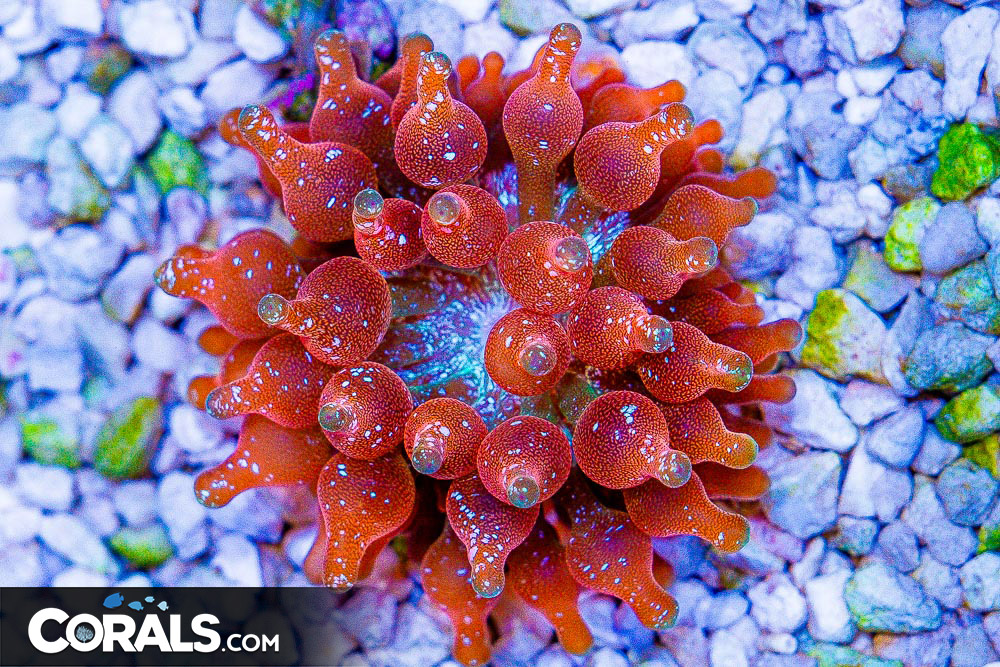
When it comes to selecting a healthy Bubble Tip Anemone for your reef tank, there are a few key characteristics to look for. The first being coloration: Deep, vibrant, and rich coloration is the biggest indicator of a healthy anemone. Whitish, dull, or bleached looking colors indicate that BTA might not have been receiving the correct nutrients and parameters necessary for it to flourish. A healthy BTA will also be nice and inflated with water, and attached strongly with its foot to an object. Bubble Tip Anemones that are deflated and flat, or won’t attach with their foot, are likely to have an underlying health issue.
Do Bubble Tip Anemones have pests? Luckily, BTAs have no known pests that will try and eat them or harm them in any way. They can be stung and irritated by other pest anemones such as Aiptasia or Majanos. Even though they don’t have any anemone specific pests, it’s always possible for a BTA to carry hitchhikers. So while dipping a BTA upon arrival isn’t recommended, you can always thoroughly inspect and quarantine them for a period of time to give yourself that peace of mind.
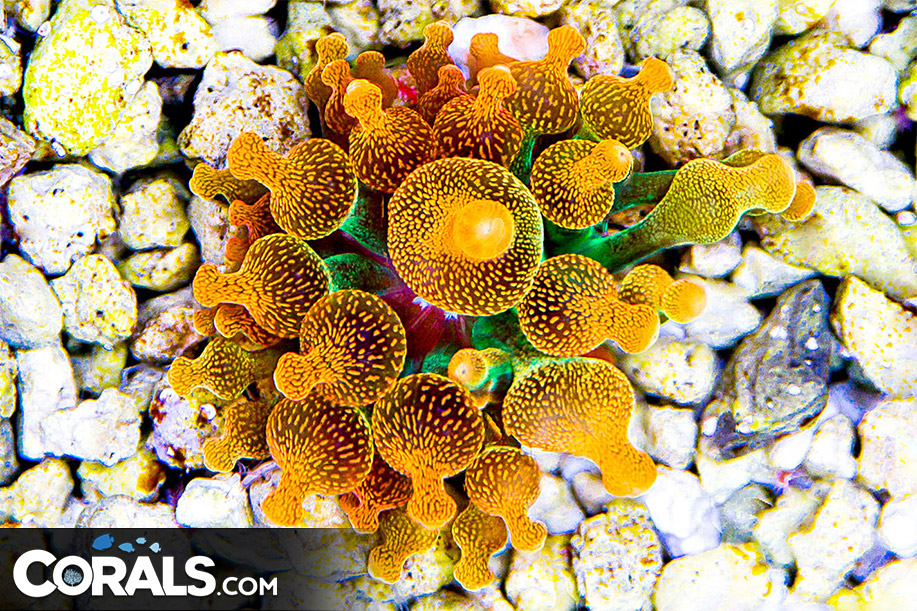
One of the most important things to remember about Bubble Tip Anemones is they engage in something called Chemical Warfare. When BTAs detect another species of BTA in the same system they begin releasing harmful chemicals/bacteria into the water to slowly kill the other species/strain. Since there has been conflicting information about which strains will attack others this way, it’s generally safest to separate all strains. The only 100% way to ensure two different strains won’t attack one another is housing them in two completely separate systems!
Bubble Tip Anemones are a very rewarding addition to add to your aquarium. They pop full of color, give your aquarium beautiful swaying movement, and reproduce extremely well over time.