Editorial on The Biota Group’s Yellow Tang Comment and Position
By Andrew L. Rhyne, Ph.D.
There is a serious ethical problem when companies and investors try to use conservation policy to eliminate sustainable competitors and protect their own market position.
That is what makes The Biota Group’s comment in the current push to ban Hawaii’s aquarium fishery so troubling.
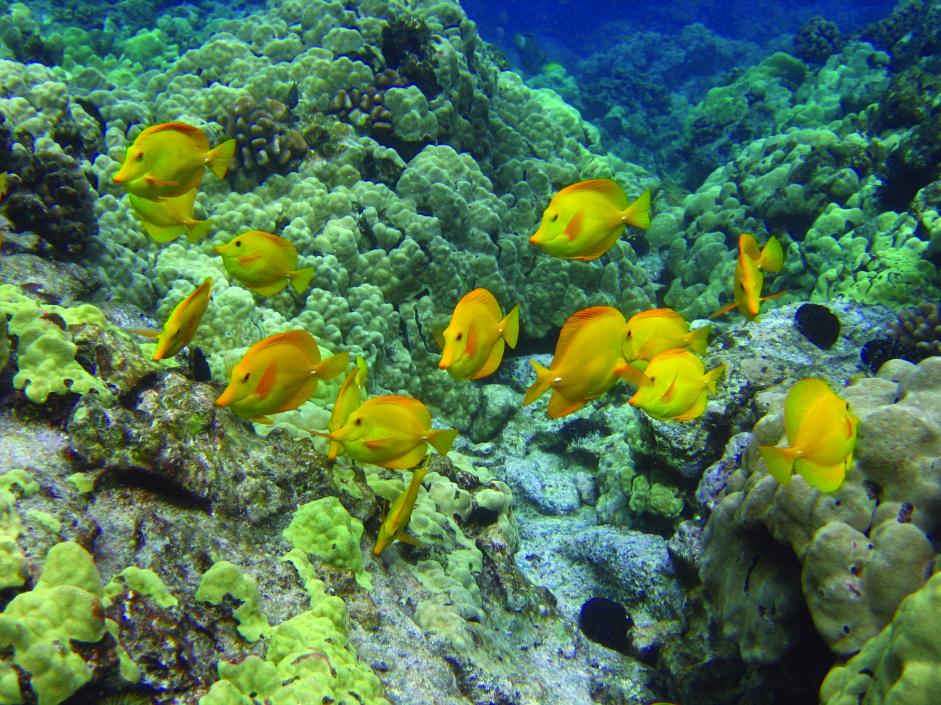
For years, activists have tried to paint the Hawaiian aquarium fishery as destructive, despite the fact that the West Hawaii fishery has long stood out as one of the best-studied and best-managed reef fisheries anywhere in the world, whether for food or aquarium use. In our 20+ years of published scientific work, and in the broader literature, the point has never been that every aquarium fishery is sustainable. The point is that these fisheries must be judged fishery by fishery, species by species, using data, management, and outcomes, not slogans. There are volumes of work that have described the Kona yellow tang fishery, prior to closures driven not by science but by activism, as a model of management under strong governmental capacity. In their efforts to reopen the fishery, the fishery plan has been further strengthened, with quotas, limited entry, and all the bells and whistles any fishery manager would like to have, all of which continue to improve the fishery.
What makes the current debate different is that some of the loudest direct support for a ban now comes from a company that commercially produces yellow tang. Their public position is not surprising, and it is revealing. They do not rebut the scientific case for sustainability in any meaningful way. Instead, they argue that aquaculture exists, investors have spent money building it, and a ban on wild collection would strengthen their investment and confidence in that industry. That is not a conservation argument. It is a market argument, and it should not be treated as a conservation message.
Aquaculture has an important role to play in the aquarium trade. I have spent nearly 30 years working in aquaculture. My primary role is to develop aquaculture methods for aquarium fish. I support its development. I have written about its promise and also about its limitations. Often, investors are sold a bill of goods; hype and promises about how much money can be made in the aquaculture of aquarium fish. The problem is not aquaculture itself. The problem is when aquaculture is used as a moral shield for a political effort to eliminate a competing wild fishery that has been shown to operate under a serious management framework. Our published work has been explicit on this point. Captive propagation should not simply replace fisheries that provide sustainable value for existing communities and ecosystems, and neither wild capture nor captive breeding should be prioritized to the detriment of the other.
That matters because sustainability is not just about whether a fish can be bred in a tank. That does not make them sustainable. Sustainability is a broader relationship between society and the reef, one that sustains and improves the net benefit to the coral reef social-ecological system. That includes ecological outcomes, governance, accountability, and the livelihoods of the people who depend on these fisheries. It also means recognizing that when local fishers derive economic value from healthy reefs, they have a reason to protect those systems. In our work, we have warned that if aquarium fisheries are shuttered, communities do not stop using resources. They shift to other forms of use, potentially in less sustainable ways.
This is why investor-driven policy advocacy in this space deserves real scrutiny. When a company that sells cultured yellow tang supports shutting down the wild yellow tang fishery, the public is entitled to ask a basic question: who benefits? The answer is not hard to see in this case. Restrict supply from a competing source, and scarcity helps support price. Biota and Oceanic Institute have benefited enormously from the closure of the West Hawaii aquarium fishery. Protect a market niche, and investors have a clearer story to tell about future profits. Dress that strategy up in the language of reef protection, and it becomes easier to market as virtue rather than self-interest.
That is the corrupting influence here. Not necessarily corruption in the criminal sense, but the corruption of conservation by financial incentive, and it is disingenuous. Moreover, I would argue it is unethical to ask lawmakers and the public to believe that destroying one group’s livelihood is a moral necessity when the real effect is to improve the business environment for another group. It is unethical to present that as if it were a selfless act of reef stewardship. It is unethical to erase the fishers, families, and local knowledge embedded in a sustainable fishery simply because a better-capitalized sector would prefer less competition.
I see this same pattern appear elsewhere in the aquarium trade. Domestic coral producers would benefit when sustainably managed coral exports from places like Indonesia face tighter restrictions, because reduced supply abroad can lift prices here in the US. Again, that does not mean every producer acts in bad faith. But you should be honest about the incentives. Too often, conservation measures are sold to the public as if they are automatic wins, when in reality they may do little for reefs while shifting market share toward firms already positioned to profit from scarcity. What The Biota Group has supported is not conservation. That is protectionism wrapped in environmental language.
A mature conservation ethic should be able to discern between a destructive fishery that needs to be stopped and a well-managed fishery that should be supported, improved, and held accountable. It should be able to distinguish between aquaculture as a complement to sustainable wild trade and aquaculture as a political tool used to displace it. It should be able to see that reef conservation and fisher livelihoods are not enemies when a fishery is genuinely well managed.
The future of the aquarium trade should not belong exclusively to investors, to slogans, nor to whichever sector can afford the best marketing campaign. It should belong to the systems that actually work: transparent management, data-driven oversight, accountable trade, and a willingness to support both sustainable fisheries and responsible aquaculture where each makes sense.
If we let investor priorities define conservation, we will not get better reef policy or products. We will get policy that rewards capital, punishes livelihoods, and calls that outcome ethics. That would be a mistake for Hawaii, and a mistake for the broader aquarium trade.