EcoEZ PNG SEASMART Operations Hamstrung by Premature Funding Loss

By on Jan 05, 2011

So what are the odds of anymore wild caught PNG Lightning Maroons, Premnas biaculeatus, being collected?

We were starting to wonder what happened to the forecast December 2010 release of maricultured corals from SEASMART program in Papua New Guinea. Today it was announced that the loss of PNG government funding during the last quarter of 2010 halted the collection and export of PNG marine life for the SEASMART program.

The program was under a trial status receiving government funding that was due to end January 1, 2011 unless the PNG Government opted to extend the program. Due to the withholding of funding prematurely, EcoEZ — creator and manager of the PNG SEASMART Program — chose to seek legal action. Read on for more of the story and the official EcoEZ Press Release

Will we ever see more PNG Tufi Damselfish? Will our own Jake Adams now endeavor to be a damselfish breeder?

As the rumors of problems surfaced, speculation soon followed and knowing the problems of past collection and farming operations, it really could have been anything causing the delay. According to SEASMART’s press release regarding this news, funding was withheld prematurely, leaving SEASMART without expected operating capital for the fourth quarter of 2010. There was a strong push to get SEASMART to be self-sustaining and profitable. The program poised to accomplish this but the lack of funds resulted in SEASMART being forced to halt sales and export operations. For the moment and for an indefinite amount of time into the future, there will not be any SEASMART exports from PNG.

In 2010, EcoEZ’s efforts to promote this sustainable collection program were finally getting traction and a SEASMART brand was taking shape. Being the keynote speaker at MACNA XXII this past year in Orlando and having the representatives of PNG present at the event to meet aquarists as well as buyers and importers, gave the program the exposure that seemed to be a turning point for SEASMART. Just as new demand was created, SEASMART entered Q4 in a sprint to demonstrable profit capability, while the program was left without the operational funding needed to meet new demand and to release the first round of maricultured coral.

PNG SEASMART Coral Farming

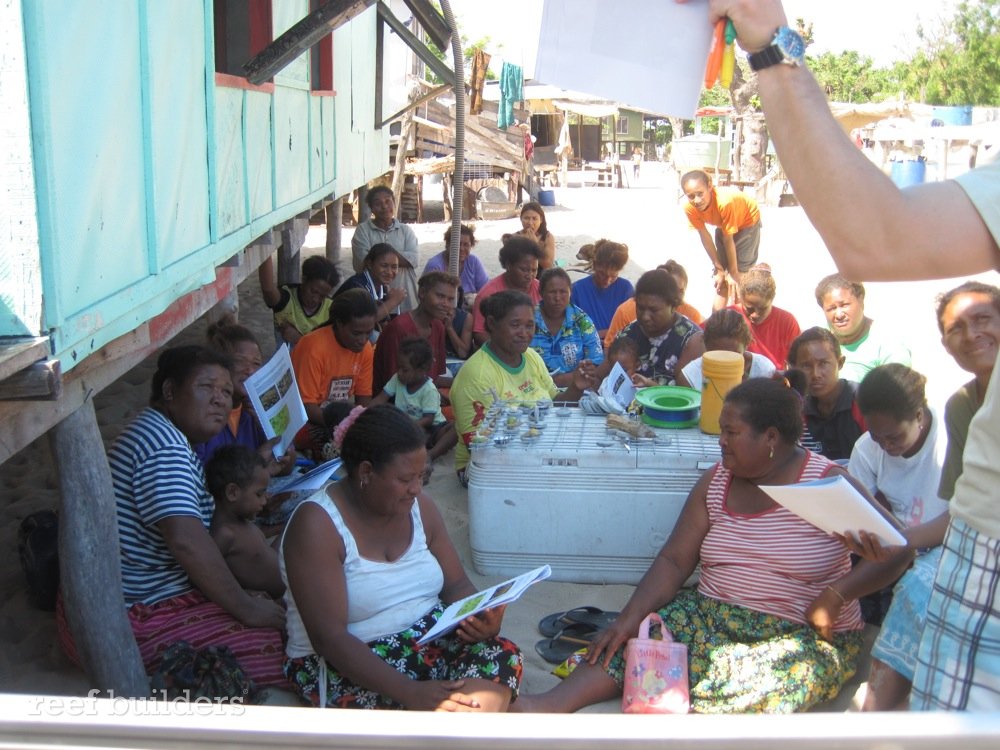
PNG SEASMART's new coral farm and the PNG locals who stood to benefit now face an uncertain future.

We don’t know why SEASMART’s funding was withheld prematurely and do not have the Papua New Guinea government’s side of the story to clarify the situation. In speaking with journalist Ret Talbot today about this news, we learned that some SEASMART employees remain and the Port Moresby facility remains SEASMART property, but is currently shut down. Local fishers most likely have returned to other forms of fishing, and we assume the fledgling coral farming efforts are in need of attention.

What we do know is that this could not have happened at a worse time for a program that was on the path towards being self-sustaining and a tremendous value to the coastal communities who participated in this sustainable program. With ever increasing outside scrutiny and criticism towards the marine aquarium industry, SEASMART was one of the best examples to counteract the claims made by external detractors. This setback for SEASMART is also a setback for the marine aquarium industry as a whole.

There is still hope that this legal issue is quickly resolved for the benefit of all parties, but most especially the people of PNG who were dependent on this program and were shown this wonderful way to benefit from their natural resources in a sustainable fashion. We are very disheartened that just as the vision was starting to materialize — it was put on hold and the people of PNG left hanging.

EcoEZ’sofficial press release is below:

PNG Yellow-Breasted Saddleback Clownfish

Will we ever see more of the unique Yellow-Breasted Saddleback Clownfish, Amphiprion polymnus, from PNG?

MANAGERS OF SEASMART TAKE LEGAL ACTION TO RECOVER FUNDS AND DELIVER SUSTAINABLY-COLLECTED AQUARIUM LIFE TO AQUARISTS

– Port Moresby, Papua New Guinea (PNG) –
EcoEZ, creator and manager of the PNG SEASMART Program, announced recently it is taking legal action to recover funds owed by the PNG National Fisheries Authority (NFA). SEASMART, the supplier of supply sustainably-collected marine aquarium animals from PNG, has been operating in the country since 2007 as part of a government subsidized trial program set to end after 2010. The withholding of funds during the last quarter of 2010 caused SEASMART to halt collection and export of PNG marine life. Recovering funds will allow the Program to resume operations and move forward with supplying sustainably-collected marine aquarium life to hobbyists in North America.

SEASMART gained widespread recognition amongst North American marine aquarists in 2010 as a result of, among other things, improvements in animal transit time and frequency from PNG to Los Angeles, the collection of some rare and high value species like the PNG lightning maroon clownfish, and increased interest in—and demand for—sustainably-collected aquarium animals. The keynote address at the 2010 Marine Aquarium Conference of North America (MACNA) featured representatives from EcoEZ, NFA, and the Office of the PNG Fisheries Minister, who all represented PNG and the SEASMART Program. This event further increased market demand for what were considered to be some of the best wild-caught animals available to sustainably-minded aquarists. The withholding of funds, which led to operations being shut down in the fall of 2010, meant that SEASMART could not meet that demand.

“The EcoEZ PNG SEASMART Program is committed to meeting the demand of aquarists who want to use their purchasing power to support sustainable wild collection,” said a SEASMART spokesperson. “Whether we move forward as part of an extended government trial program, as the private contractor working with NFA, or as an independent company working with provincial governments, we are committed to continuing to assist the people of PNG in creating and operating a truly sustainable marine aquarium fishery. Most parties to this Program, at all levels in PNG and beyond, would like to see the work continued and expanded.”

The SEASMART Program was founded as a joint venture between the Papua New Guinea National Fisheries Authority and U.S.-based EcoEZ. SEASMART has been working in Papua New Guinea since 2007 to establish a sustainable and equitable marine aquarium trade there.

# # #

Posted in Breaking, Coral, Fish, Reef News |
Search More:  
   
  • http://fishtalpropagations.com Tal Sweet

    Upsetting news indeed. Hopefully things will get worked out soon.

  • http://fishtalpropagations.com Tal Sweet

    Upsetting news indeed. Hopefully things will get worked out soon.

  • Brian

    booooooooo

  • Brian

    booooooooo

  • brandee lamkin

    they need our support now as much as ever .. the principals and foundation the SeaSmart program is built on have not changed, nor should our faith in their progress. the circumstances surrounding them are indeed an unfortunate setback, but i firmly believe it will be overcome.

  • brandee lamkin

    they need our support now as much as ever .. the principals and foundation the SeaSmart program is built on have not changed, nor should our faith in their progress. the circumstances surrounding them are indeed an unfortunate setback, but i firmly believe it will be overcome.

  • aray

    sad news…i hope the program will survive and the issues will be settled in near future.

  • aray

    sad news…i hope the program will survive and the issues will be settled in near future.

  • Texas Tom

    They were my favorite people at MACNA last year.

    They 2-3 years more time!

  • Texas Tom

    They were my favorite people at MACNA last year.

    They 2-3 years more time!

  • Rich Ross

    booo.

    Will collecting funds for them help?

  • Rich Ross

    booo.

    Will collecting funds for them help?

  • http://www.thelightningproject.com Matt Pedersen

    According to the press release – “Recovering funds will allow the Program to resume operations and move forward with supplying sustainably-collected marine aquarium life to hobbyists in North America.”

  • http://www.thelightningproject.com Matt Pedersen

    According to the press release – “Recovering funds will allow the Program to resume operations and move forward with supplying sustainably-collected marine aquarium life to hobbyists in North America.”

  • Mike

    Am I the only one who thinks the business itself needs to be sustainable before we worry about losing a business that “supplies sustainable collected….”

    Getting government funding is nice and all to get their feet planted but they need to get them planted quickly. If the market isn’t there to keep them afloat its kind of silly to expected a government funded business just because the business makes us feel all warm inside

  • Mike

    Am I the only one who thinks the business itself needs to be sustainable before we worry about losing a business that “supplies sustainable collected….”

    Getting government funding is nice and all to get their feet planted but they need to get them planted quickly. If the market isn’t there to keep them afloat its kind of silly to expected a government funded business just because the business makes us feel all warm inside

  • http://www.thelightningproject.com Matt Pedersen

    Indeed Mike, you are 100% correct on the surface of it. But as you know, businesses don’t usually start up profitable from day 1; no, they often go well into the red making investments and ramping up. It can take quite a while to be profitable, let alone in the net black over the entire lifespan of the business. My personal problem here is that SEASMART seems to have spent about 2 years learning PNG, establishing a system that worked, and maybe only got a year or two of actual production under their belts? If you read back on earlier stories, that brought it’s own set of issues to be worked out in opening up a new market. Flash forward to 2010, and SEASMART has finally overcome these obstacles and is starting to deliver what people want, but doesn’t have the client base there to drive the volume needed to be profitable. But people take note and start “spreading the word” and by fall, SEASMART has would could be called a “coming out party” at MACNA. Arguably the publicity and exposure needed to finally break through. The type of advertising money can’t buy.

    And that’s right around when the PNG government pulled the rug out? From my viewpoint, the time between MACNA and end of the year was the time for SEASMART to see the benefits of that exposure, and to demonstrate that it could meeting the larger demand and have a much clearer picture of when and how the operation could be self sustaining.

    It’d be presumptive of me to say that SEASMART would’ve been profitable in Q4, but who’s to say? The people who invested all this time and energy to create the end result were never given the opportunity to finish. Think of it like this – your home team is on the 20 yard line, down by 10, at the 2 minute warning, and the ref decides to just “call it” and end the game there, let alone declare the season over. I’m not even a football fan, but I know that your team could very well lose by 10, 7, 4, 3, tie, or win by 1,3,4,5 etc.

    And truthfully, to take your question quite literally – the sustainability of the collection practices is a separate issue from the sustainability of the business itself. I know that SEASMART believes it will be profitable, it just needs to get the right volume level going.

    Hopefully, hindisight will show that this is just a “speedbump”.

  • http://www.thelightningproject.com Matt Pedersen

    Indeed Mike, you are 100% correct on the surface of it. But as you know, businesses don’t usually start up profitable from day 1; no, they often go well into the red making investments and ramping up. It can take quite a while to be profitable, let alone in the net black over the entire lifespan of the business. My personal problem here is that SEASMART seems to have spent about 2 years learning PNG, establishing a system that worked, and maybe only got a year or two of actual production under their belts? If you read back on earlier stories, that brought it’s own set of issues to be worked out in opening up a new market. Flash forward to 2010, and SEASMART has finally overcome these obstacles and is starting to deliver what people want, but doesn’t have the client base there to drive the volume needed to be profitable. But people take note and start “spreading the word” and by fall, SEASMART has would could be called a “coming out party” at MACNA. Arguably the publicity and exposure needed to finally break through. The type of advertising money can’t buy.

    And that’s right around when the PNG government pulled the rug out? From my viewpoint, the time between MACNA and end of the year was the time for SEASMART to see the benefits of that exposure, and to demonstrate that it could meeting the larger demand and have a much clearer picture of when and how the operation could be self sustaining.

    It’d be presumptive of me to say that SEASMART would’ve been profitable in Q4, but who’s to say? The people who invested all this time and energy to create the end result were never given the opportunity to finish. Think of it like this – your home team is on the 20 yard line, down by 10, at the 2 minute warning, and the ref decides to just “call it” and end the game there, let alone declare the season over. I’m not even a football fan, but I know that your team could very well lose by 10, 7, 4, 3, tie, or win by 1,3,4,5 etc.

    And truthfully, to take your question quite literally – the sustainability of the collection practices is a separate issue from the sustainability of the business itself. I know that SEASMART believes it will be profitable, it just needs to get the right volume level going.

    Hopefully, hindisight will show that this is just a “speedbump”.

  • jake

    What a bummer. They really should have given the program 5 years instead of 3. It was only within the last year that people really became aware of it and large scale exporting of fish and corals hadn’t really even begun!

    I’m very interested in hearing why the PNG government pulled the plug. I hope it was purely financial and not some political move.

  • jake

    What a bummer. They really should have given the program 5 years instead of 3. It was only within the last year that people really became aware of it and large scale exporting of fish and corals hadn’t really even begun!

    I’m very interested in hearing why the PNG government pulled the plug. I hope it was purely financial and not some political move.

  • http://www.thelightningproject.com Matt Pedersen

    @Mike, actually, there’s one other point I probably should clarify. We’re all looking at SEASMART as a “business”, but we’re kindof thinking of it as a private entity when in reality, that’s not the case. SEASMART was more of a joint venture, and as such, the Government of PNG was a partner in that venture. Profitability was not the only item and goal at stake here…truly, it was developing a fishery from the ground up in a sustainable fashion that worked for the people of PNG.

    From my viewpoint, profitability was the last item on a very long checklist of goals, and again, I’m beyond stumped as to why the people who achieved everything else on their list were not afforded the opportunity to succeed at the last goal.

  • http://www.thelightningproject.com Matt Pedersen

    @Mike, actually, there’s one other point I probably should clarify. We’re all looking at SEASMART as a “business”, but we’re kindof thinking of it as a private entity when in reality, that’s not the case. SEASMART was more of a joint venture, and as such, the Government of PNG was a partner in that venture. Profitability was not the only item and goal at stake here…truly, it was developing a fishery from the ground up in a sustainable fashion that worked for the people of PNG.

    From my viewpoint, profitability was the last item on a very long checklist of goals, and again, I’m beyond stumped as to why the people who achieved everything else on their list were not afforded the opportunity to succeed at the last goal.

  • Dave

    When profitability is the last item on a very long checklist of goals for a project that from the outset was meant to be profitable and privatized then you are bound to fail. When working in a capitalist society profitability needs to be near the top of the list.

    Millions were spent, the operation could become profitable if emphasis was put on profitability rather than grant money. Many private, sustainable, profitable, marinelife collection stations exist that have been funded privatly when profitability was a necessity rather than a lofty goal.

  • Dave

    When profitability is the last item on a very long checklist of goals for a project that from the outset was meant to be profitable and privatized then you are bound to fail. When working in a capitalist society profitability needs to be near the top of the list.

    Millions were spent, the operation could become profitable if emphasis was put on profitability rather than grant money. Many private, sustainable, profitable, marinelife collection stations exist that have been funded privatly when profitability was a necessity rather than a lofty goal.

  • http://www.thelightningproject.com Matt Pedersen

    Again Dave, I’m only sharing my opinions based on what I see as an outsider. I don’t get the impression that profitability was an “afterthought”…my apologies if my commentary suggested that. I just see the efforts as being a well thought out series of goals, and in my readings, I get the impression that this all started as a “proof of concept” exercise from the PNG government’s standpoint. I.e. My very loose intepretation of how this all worked – Step 1, assses situation. Step 2, devise sustainable strategy. Step 3, test stragey. Step 4, revise strategy. Step 5, start trail runs of exporation. Step 6. Revise exportaiton practices based on experiences. Step 7. ramp up to profitable levels. And thus, I see that Step 7 was never allowed to happen.

    Certainly more will come to light in the coming days/weeks/months/years.

  • http://www.thelightningproject.com Matt Pedersen

    Again Dave, I’m only sharing my opinions based on what I see as an outsider. I don’t get the impression that profitability was an “afterthought”…my apologies if my commentary suggested that. I just see the efforts as being a well thought out series of goals, and in my readings, I get the impression that this all started as a “proof of concept” exercise from the PNG government’s standpoint. I.e. My very loose intepretation of how this all worked – Step 1, assses situation. Step 2, devise sustainable strategy. Step 3, test stragey. Step 4, revise strategy. Step 5, start trail runs of exporation. Step 6. Revise exportaiton practices based on experiences. Step 7. ramp up to profitable levels. And thus, I see that Step 7 was never allowed to happen.

    Certainly more will come to light in the coming days/weeks/months/years.

  • Texas Tom

    I think this business has a lot of potential. Access to salt water wells, tropical sun and little intervention from regulatory compliance from effluent could be profitable if they got a few supply contracts. They got the word out and keep staff low.

    I would only guess what expenses are other than start up equipment.

    I think it could be run part time help mostly during development of livestock.

  • Texas Tom

    I think this business has a lot of potential. Access to salt water wells, tropical sun and little intervention from regulatory compliance from effluent could be profitable if they got a few supply contracts. They got the word out and keep staff low.

    I would only guess what expenses are other than start up equipment.

    I think it could be run part time help mostly during development of livestock.

  • X to Vosseler

    Headline shoudl read:

    Vosseler kills fails another program, puts another nail in the coffin for sustainable marine fish.

    Hum, First MAC now SEASMART. How many times can David V blunder in this quest. The problem is the people running the show not the idea of the show. SEASMART at MACNA was a sells pitch, nothing more nothing less. Very unimpressive. I felt like I was at a time share office during the banquet talk, well except for the awards and dessert :)

    Just another thing to put out there, something we can’t do as an industry, fair and equable fisheries. His disaster in MAC and now this are just more nails…..

  • X to Vosseler

    Headline shoudl read:

    Vosseler kills fails another program, puts another nail in the coffin for sustainable marine fish.

    Hum, First MAC now SEASMART. How many times can David V blunder in this quest. The problem is the people running the show not the idea of the show. SEASMART at MACNA was a sells pitch, nothing more nothing less. Very unimpressive. I felt like I was at a time share office during the banquet talk, well except for the awards and dessert :)

    Just another thing to put out there, something we can’t do as an industry, fair and equable fisheries. His disaster in MAC and now this are just more nails…..

  • Charle von Acro

    They should never have gotten rid of Steve Robinson. He was dreamy.

  • Charle von Acro

    They should never have gotten rid of Steve Robinson. He was dreamy.

  • Texas Tom

    To say it is a sales pitch is ignorant. Of course they got a booth and meet the industry contacts to get presence known. Who paid all those expenses for nothing.

    This venture is much more difficult on scale of ORA type outfit than an acrylics manufacturer. I would think using funds from limited export of wild caught to build base for sustainable aquaculture may be better solution.

    It may turn out they are too far from intended market or do not have adequate access to supplies and resources to be effective. I am still dissapointed.

  • Texas Tom

    To say it is a sales pitch is ignorant. Of course they got a booth and meet the industry contacts to get presence known. Who paid all those expenses for nothing.

    This venture is much more difficult on scale of ORA type outfit than an acrylics manufacturer. I would think using funds from limited export of wild caught to build base for sustainable aquaculture may be better solution.

    It may turn out they are too far from intended market or do not have adequate access to supplies and resources to be effective. I am still dissapointed.

  • Dave

    What people seem to miss in the sustainable conversation is that a Sustainable and EQUITABLE marine livestock trade will put village people in third world countries to work, not build a large aquaculture facility which will cut out the involvment of villagers. Village people over a fairly large area need to be involved to give their reefs value to them and to give value to the biodiversity they control. Reefs are saved by increasing their value to the local owners, not by mass producing a product far removed from its origin.

  • Dave

    What people seem to miss in the sustainable conversation is that a Sustainable and EQUITABLE marine livestock trade will put village people in third world countries to work, not build a large aquaculture facility which will cut out the involvment of villagers. Village people over a fairly large area need to be involved to give their reefs value to them and to give value to the biodiversity they control. Reefs are saved by increasing their value to the local owners, not by mass producing a product far removed from its origin.

  • http://www.thelightningproject.com Matt Pedersen

    Dave, very important points that are not lost me. I do tend to have a different view given the long term forecasts for reef health, which I’ve outlined in other articles – the short of it being there can’t be sustainable harvest if the coral reefs are all gone, and I don’t think sustainable harvest can generate enough value to stop the forecasted global changes. So, to me, supporting sustainability is about buying everyone more time, so that aquaculture, namely captive sexual propagation, can develop sufficiently to ark as much as possible. I worry whenever sustainable wild harvest is juxtaposed against aquaculture – these are not mutually exclusive endeavors. We can have both, and we desperately need both, to address both short term, and long term problems. But that’s just my opinion given the facts and forecasts.

  • http://www.thelightningproject.com Matt Pedersen

    Dave, very important points that are not lost me. I do tend to have a different view given the long term forecasts for reef health, which I’ve outlined in other articles – the short of it being there can’t be sustainable harvest if the coral reefs are all gone, and I don’t think sustainable harvest can generate enough value to stop the forecasted global changes. So, to me, supporting sustainability is about buying everyone more time, so that aquaculture, namely captive sexual propagation, can develop sufficiently to ark as much as possible. I worry whenever sustainable wild harvest is juxtaposed against aquaculture – these are not mutually exclusive endeavors. We can have both, and we desperately need both, to address both short term, and long term problems. But that’s just my opinion given the facts and forecasts.

  • Daniel

    I would think that with the positive direction of their program and the progress already made they should be able to obtain private funding (loans, etc.) to continue operations. I know that might not be the preferred way to secure funds but its what most startup businesses must do.

  • Daniel

    I would think that with the positive direction of their program and the progress already made they should be able to obtain private funding (loans, etc.) to continue operations. I know that might not be the preferred way to secure funds but its what most startup businesses must do.