If you’ve been in the marine aquarium hobby for more than five minutes, you know exactly what a cleaner wrasse is. They are one of the coolest functional fish, reef doctors, famed for their essential cleaning services. But while these fishes are among the most intensely studied organisms on the planet when it comes to behavior, their actual taxonomy has been a confusing and neglected mess.
That all changed a few weeks ago.
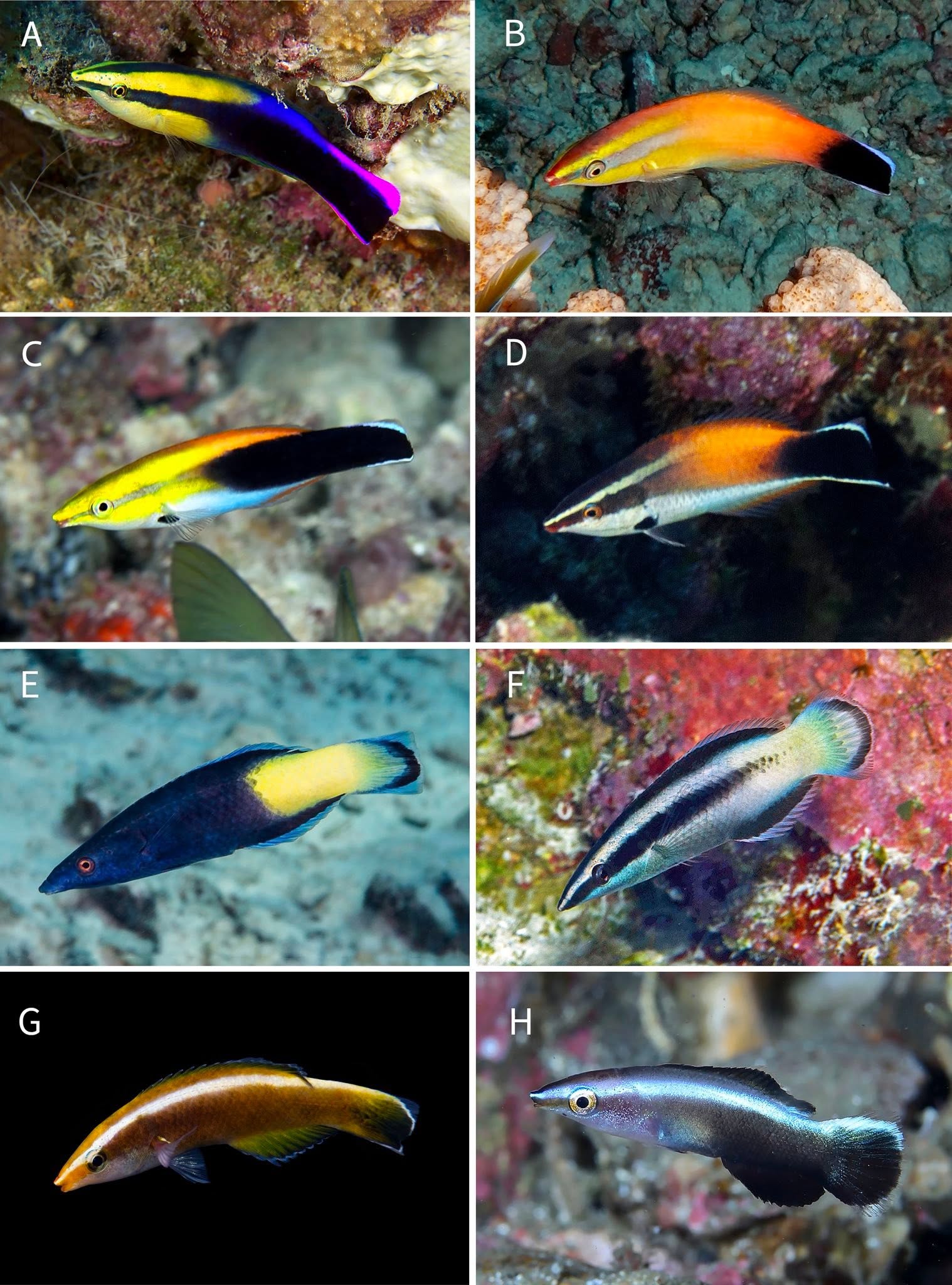
Published in the Raffles Bulletin of Zoology, a powerhouse team of taxonomists led by Reefbuilders Alum Dr. Yi-Kai Tea has published a comprehensive revision of the Labroides phthirophagus and Labroides bicolor species complexes. Utilizing a massive, cutting-edge genomic dataset, combining 1,019 genome-wide ultraconserved elements (UCEs) with mitochondrial DNA and ultra-fine morphometrics (say that three times fast), the authors didn’t just clarify boundaries; they officially added two brand-new species to the tree of life and completely reorganized how we look at this iconic genus.
Let’s dive into the details of this massive update.
Meet the New Guys
1. The Cinnabar Cleaner Wrasse (Labroides flammulatus)
- Type Locality: Christmas Island and Cocos (Keeling) Islands (Eastern Indian Ocean).
- Depth Range: Shallow coral reefs, 2–40 m.
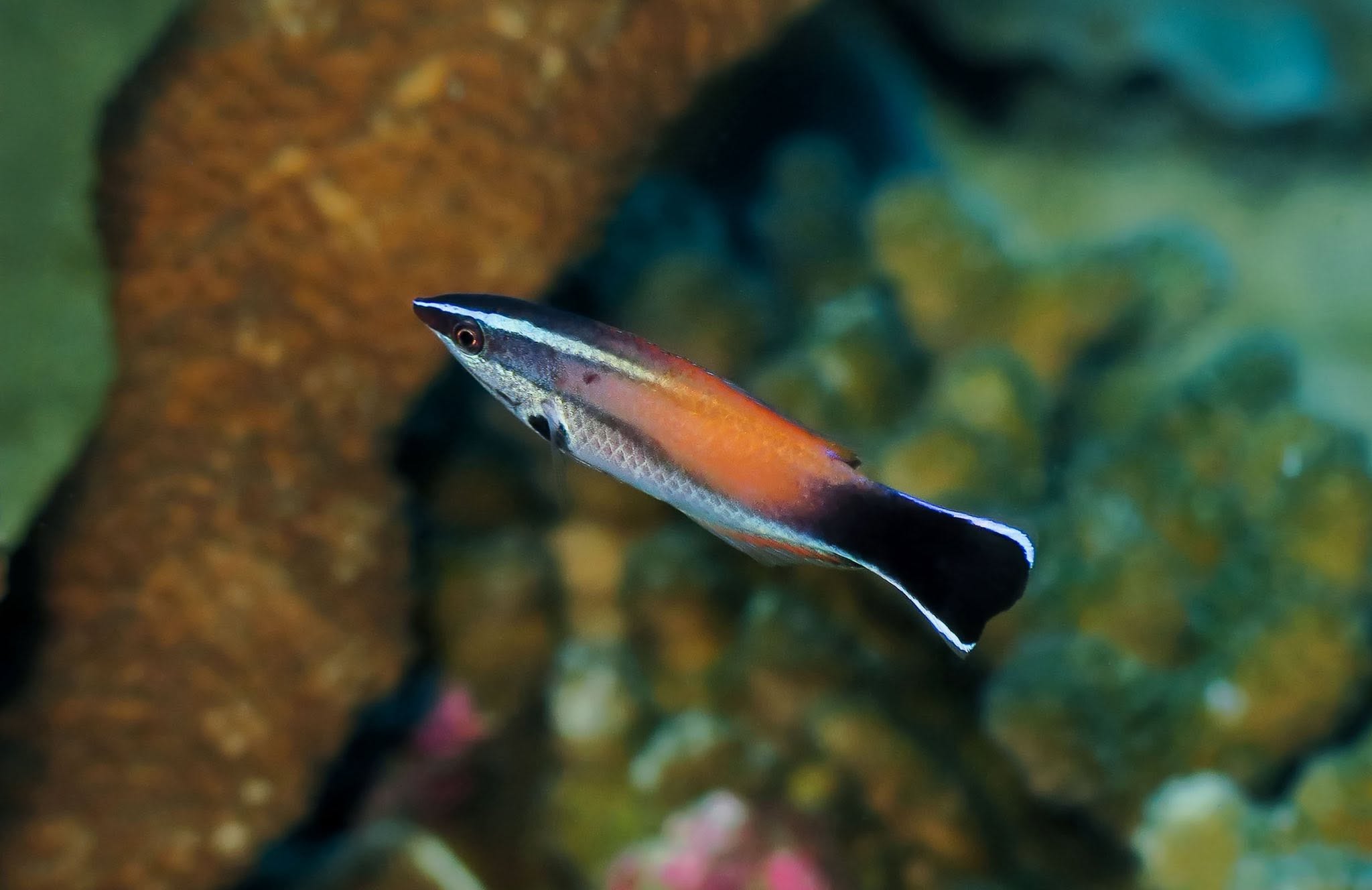
For years, populations of “Breastspot” cleaner wrasses in the eastern Indian Ocean were lumped in with the classic Pacific Labroides pectoralis. However, Labroides flammulatus is natively distinct. While it shares that signature black elliptical spot at the lower base of its pectoral fin, it completely swaps out L. pectoralis‘ bright yellow-orange dorsum for a steely grey-to-blue head and anterior body. Its midsection and posterior are richly suffused with a gorgeous, fiery orange-brown color that bleeds subtly into its lateral stripe.
Cool Fact: The name flammulatus means “little blaze” or “diminutive flame”. The best part? The name was chosen via a winning vote by school students during an Australian Museum science trail event back in 2023.
2. The Goldenrod Cleaner Wrasse (Labroides inopinatus)
- Type Locality: Flora Reef (Coral Sea), New Caledonia, and the Izu Peninsula (Japan).
- Depth Range: Deep mesophotic reefs, 40–145 m.
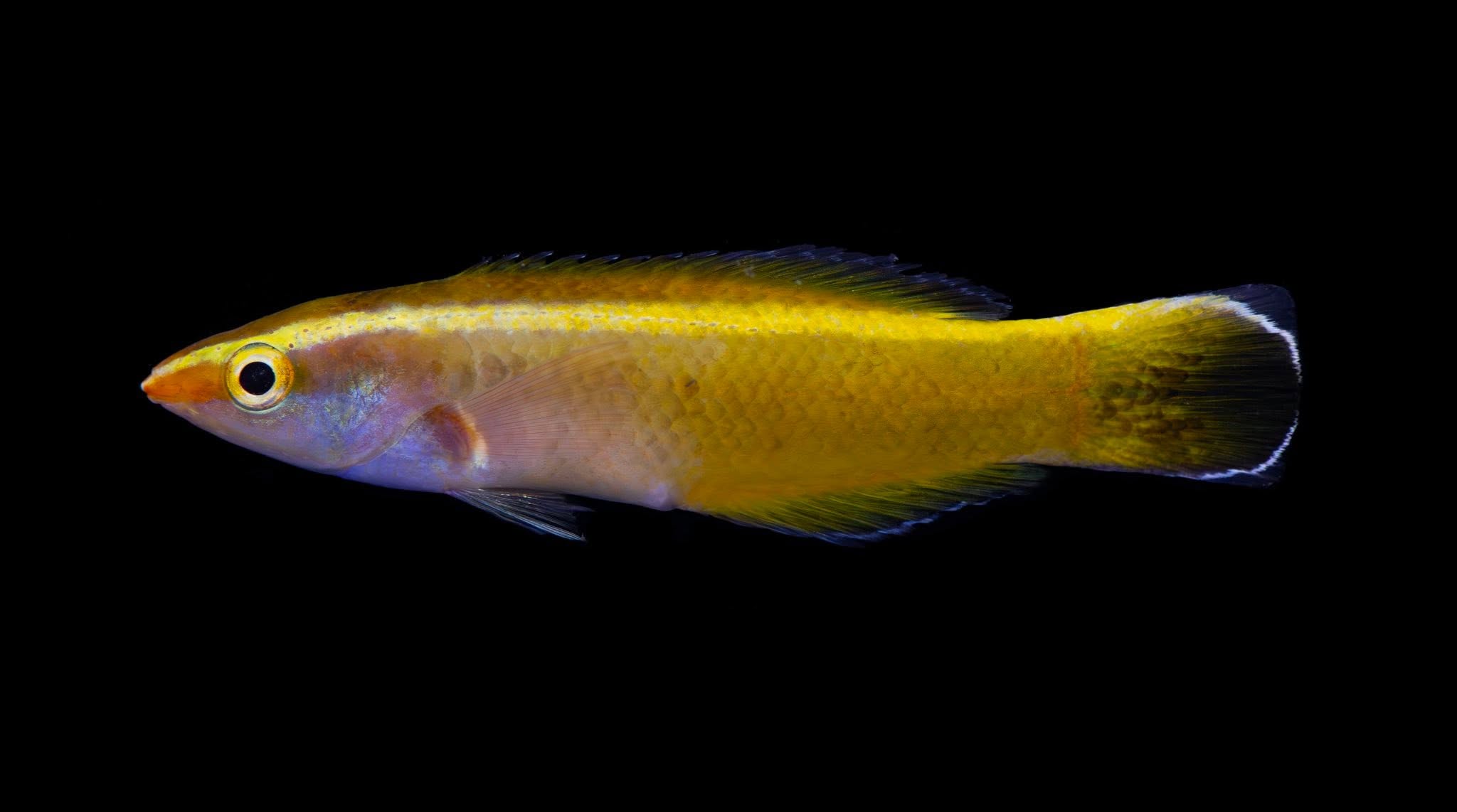
Labroides inopinatus (fittingly named after the Latin for “unexpected”) is a true deep-dwelling specialist: every single type specimen was sourced from depths of 60–145 m, representing the absolute deepest documented occurrences for any member in the genus. Visually, it looks like a cross between a cleaner wrasse and a pencil wrasse, sporting a beautiful mustard-yellow to goldenrod-brown upper body, a silvery-grey belly, and a brilliant white, crescentic margin on its dusky tail.
What makes it so wild is its scale counts and genetics. It possesses 33–36 pored lateral-line scales (compared to fewer than 30 in most other congeners) and is genetically distinct, differing from its closest lookalike (Labroides bicolor) by a massive 8.8–10.1% divergence in mitochondrial DNA. It is incredibly rare to find a new obligate cleaner occupying the deep, competition-free twilight zone of mesophotic reefs.
The Massive Genus Shake-Up
Beyond the descriptions of new species, this paper drops some heavy nomenclatural bombs that completely redefine the genus Labroides.
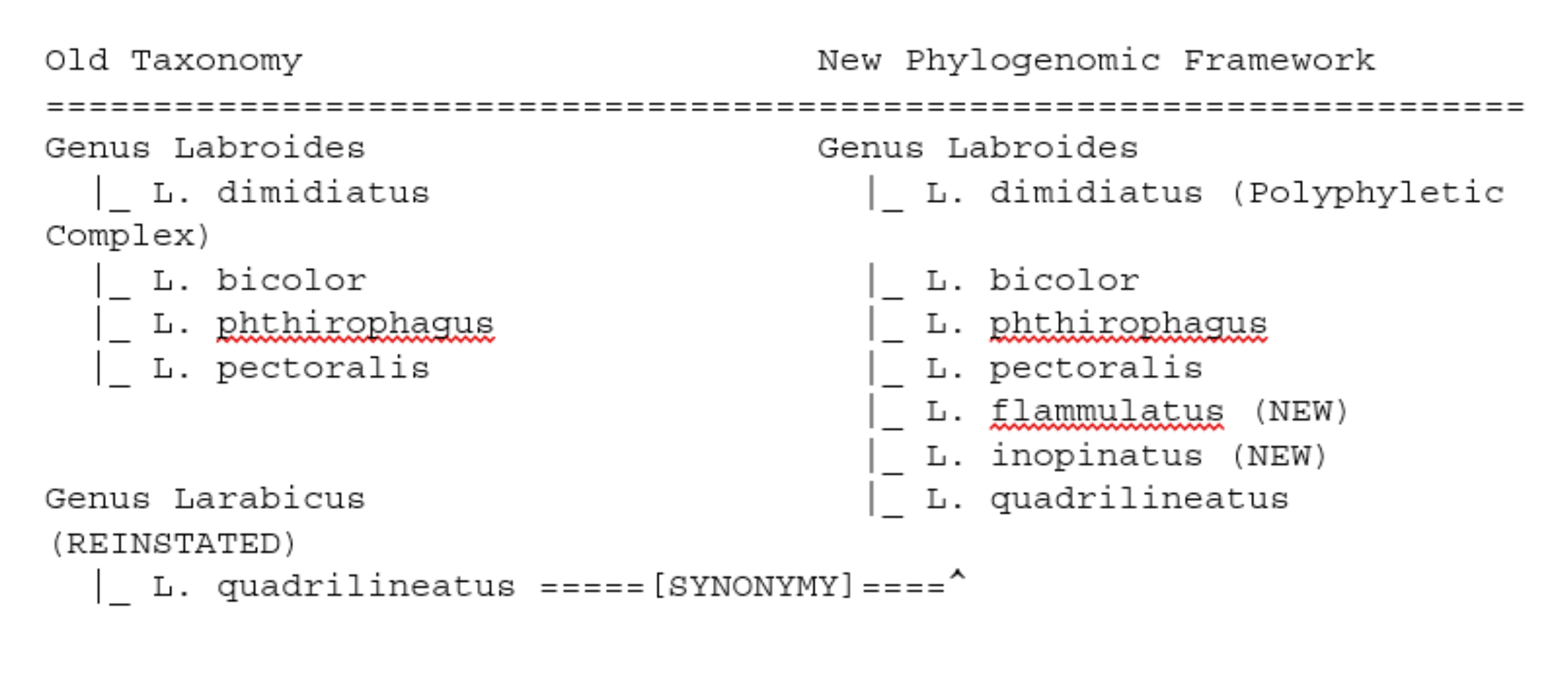
Larabicus quadrilineatusis officially a Labroidesagain!
For decades, the Red Sea endemic “Four-line Wrasse” was isolated in its own monotypic genus, Larabicus, due to its unique, ventrally furled lip morphology and its adult habit of eating coral polyps rather than cleaning parasites.
However, genomic evidence proves that Larabicus is nested deep within Labroides, sharing an incredibly close sister relationship with a subset of Labroides dimidiatus. To keep the genus monophyletic, the species has been reinstated as Labroides quadrilineatus, a combination first proposed by Albert Günther all the way back in 1862. The authors note that its coral-eating habits are actually a secondary evolutionary reversion to the ancient ancestral condition of corallivory.
To lock this taxonomy down permanently, the team also designated a historical specimen from Eduard Rüppell’s original collection as the species’ official neotype.
The Cryptic Mess of Labroides dimidiatus
If you think the genus is fully sorted out now, think again. The phylogenomic analysis definitively corroborated that the common bluestreak cleaner wrasse (Labroides dimidiatus) is entirely polyphyletic. It splits cleanly into two distinct evolutionary lineages (Clade 1 and Clade 2) spanning across different ocean basins. While the authors noted that unraveling the L. dimidiatus cryptic species complex is outside the scope of this specific paper, they explicitly promised it will be addressed in an upcoming subsequent work. The pressure is on for Yi-Kai to reveal more new species names for the common cleaner wrasse!
A Final Stand Against “Shortcut” Taxonomy
Showing out like a boss in the discussion section, Yi-Kai and his co-authors took a firm, peer-to-peer stand against recent trends in macro-systematics. They directly rejected a sweeping 2025 paper by Near et al. that had heavily synonymized numerous species in closely related groups like Cirrhilabrus (Fairy Wrasses) and Paracheilinus (Flasher Wrasses) based purely on single-gene mitochondrial COI “paraphyly” shortcuts.
As this cleaner wrasse paper beautifully demonstrates, closely related, recently diverged species frequently share identical mitochondrial markers due to slow evolutionary rates or historical hybridization. If the authors had relied strictly on basic mitochondrial data, Labroides pectoralis, L. rubrolabiatus, and the new L. flammulatus would look like the exact same fish. By combining massive nuclear UCE genomic datasets with classical morphological examinations and direct handling of type specimens, this paper proves that true, modern taxonomy requires an integrative approach.
Kudos to the team for giving these fascinating, hard-working reef fishes the comprehensive taxonomic cleanup they’ve deserved for over half a century!
Read the paper for free here: https://lkcnhm.nus.edu.sg/rbz/cleaning-up-the-cleaner-wrasses-revision-of-the-labroides-phthirophagus-and-labroides-bicolor-species-complexes-with-rediagnosis-of-labroides-quadrilineatus-and-descriptions-of-two-new-species-tele/