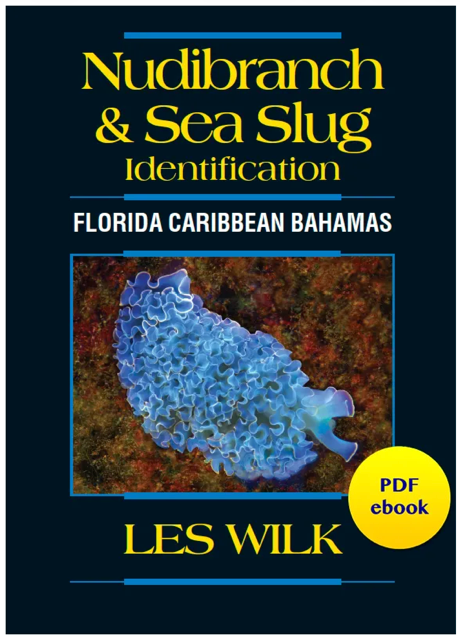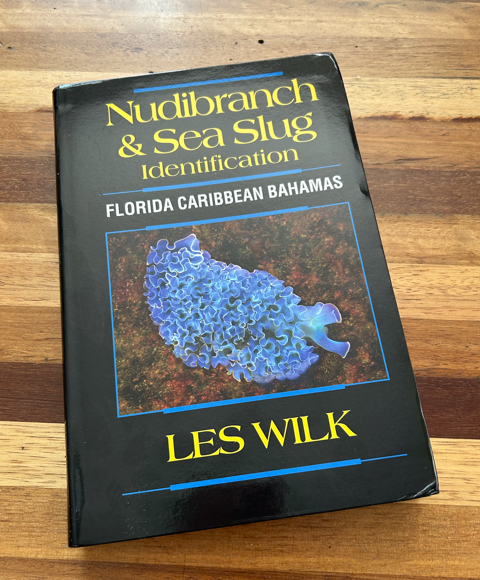
Have you ever ended up with an unknown nudibranch or sea slug in your aquarium? New World Publications has just released a comprehensive identification guide by Les Wilk which covers these unusual critters found in Florida, the Caribbean and the Bahamas. Known for their extensive fish ID and behavior books, these guides are not only popular with divers, snorkelers and naturalists, they are also handy references for aquarists.
In the past, when sourcing live rock and coralimorphs from this region, it wasn’t unusual to get numerous hitchhikers in shipments. If you are obtaining cultured live rock or rubble from this region, there is always a chance to have something extra tagging along. We’ve discovered the occasional odd critter accompanying snails and other cleanup crew ordered from suppliers based in Florida.
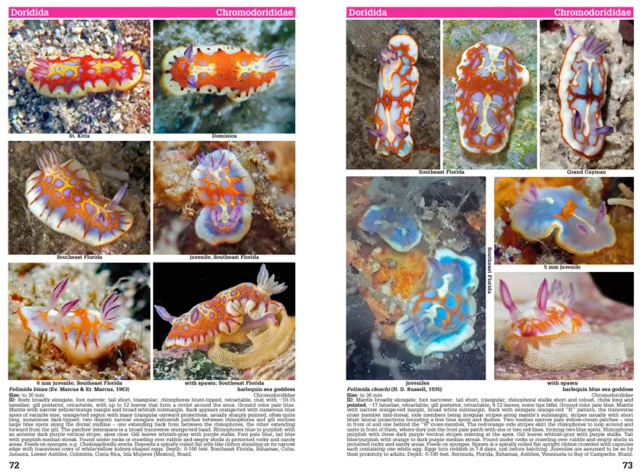
While many of these animals are not candidates for a typical reef tank due to dietary needs or predatory behavior, the advent of micro aquariums offers opportunities to maintain and observe some of these critters in isolated settings. There are a handful of nudibranchs or sea slugs sold for the hobby representing just a fraction of the over 600 species identified from this region.
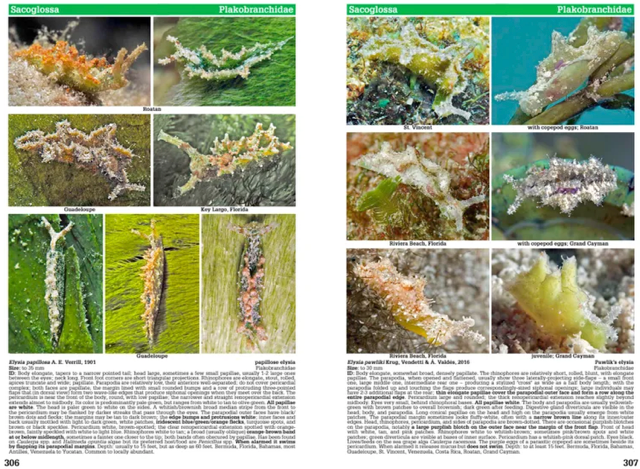
Top Atlantic & Caribbean “Reef-Safe” Nudibranchs
- Lettuce Sea Slug (Elysia crispata)
- Diet: Consumes specific types of green macro-algae.
- Note: Technically a sacoglossan (sap-sucking sea slug) rather than a true nudibranch. They steal chloroplasts from algae to photosynthesize energy.
- Aiptasia-Eating Nudibranch (Berghia stephanieae)
- Diet: Feeds exclusively on pest Aiptasia (glass anemones).
- Note: Native to the Atlantic and Caribbean, these are the holy grail of reef tank pest control.
- Blue Velvet Nudibranch (Chelidonura hirundinina or Chelidonura electra)
- Diet: Feeds on flatworms.
- Note: Small and striking jet-black with electric blue lines. They are highly sought after for eliminating nuisance flatworms without using chemicals. Like the Berghia, they will likely starve once their specific prey is depleted.
- Brazilian Aeolid (Spurilla braziliana)
- Diet: Feeds on Aiptasia and other small anemones.
- Note: Found throughout the Gulf of Mexico, Caribbean, and Florida. While they consume pest anemones, they can grow larger than Berghia and are sometimes known to nip soft coral polyps.
While the guide is intended for identification purposes and doesn’t specifically focus on behavior or husbandry, there are certainly useful references to the areas where these critters are found. With some research and experimentation, one might find an additional species that could assist with other nuisance invaders we face in our aquariums.