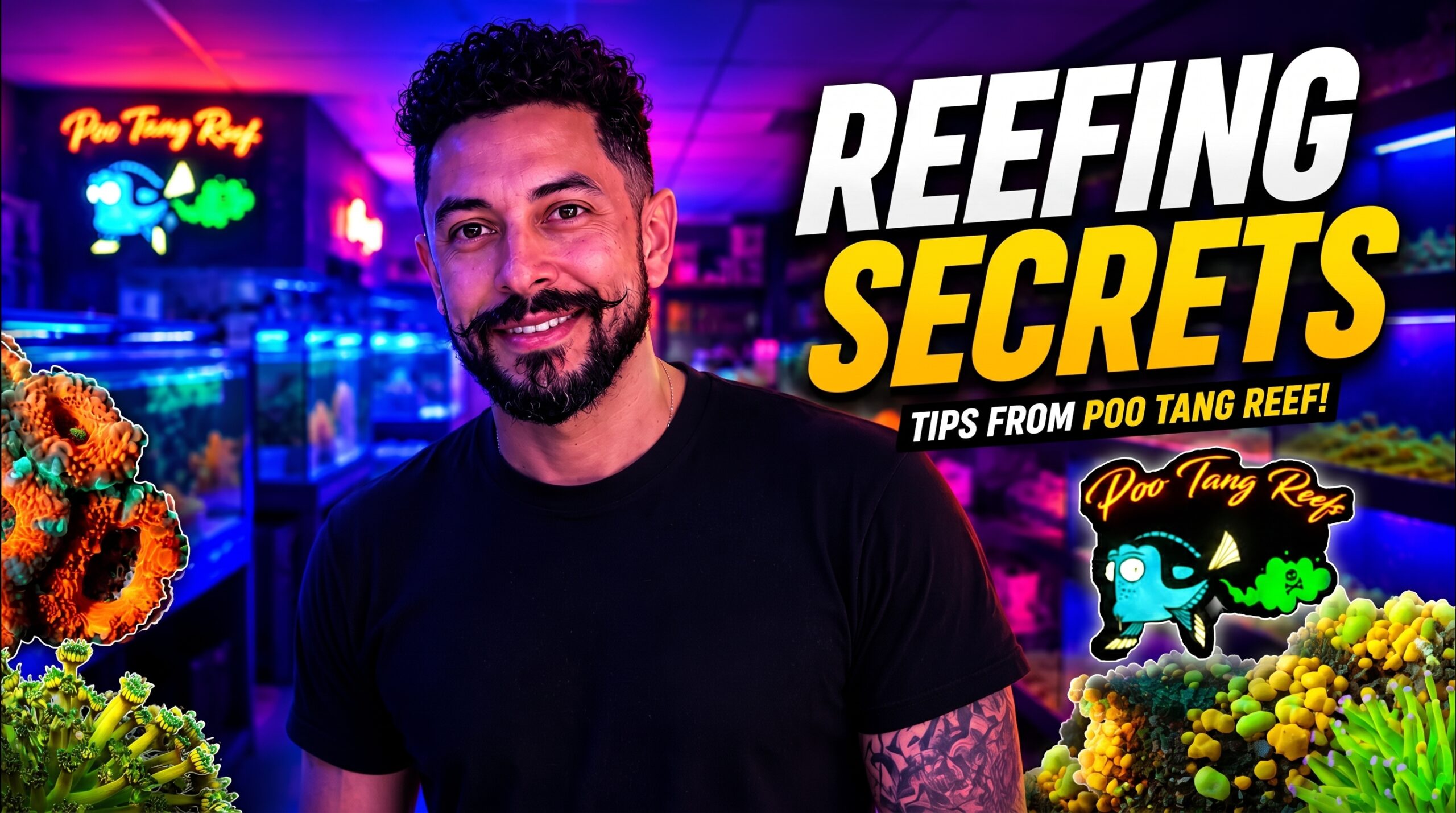
In the modern reefkeeping landscape, “garage culture operations” often trigger immediate skepticism from trade veterans, commercial importers, and store owners—and frankly, much of that criticism is earned. The industry has seen plenty of fly-by-night basement hobbyists undercutting local fish stores while running unstable systems, skipping proper quarantine, and selling unconditioned wild cuts.
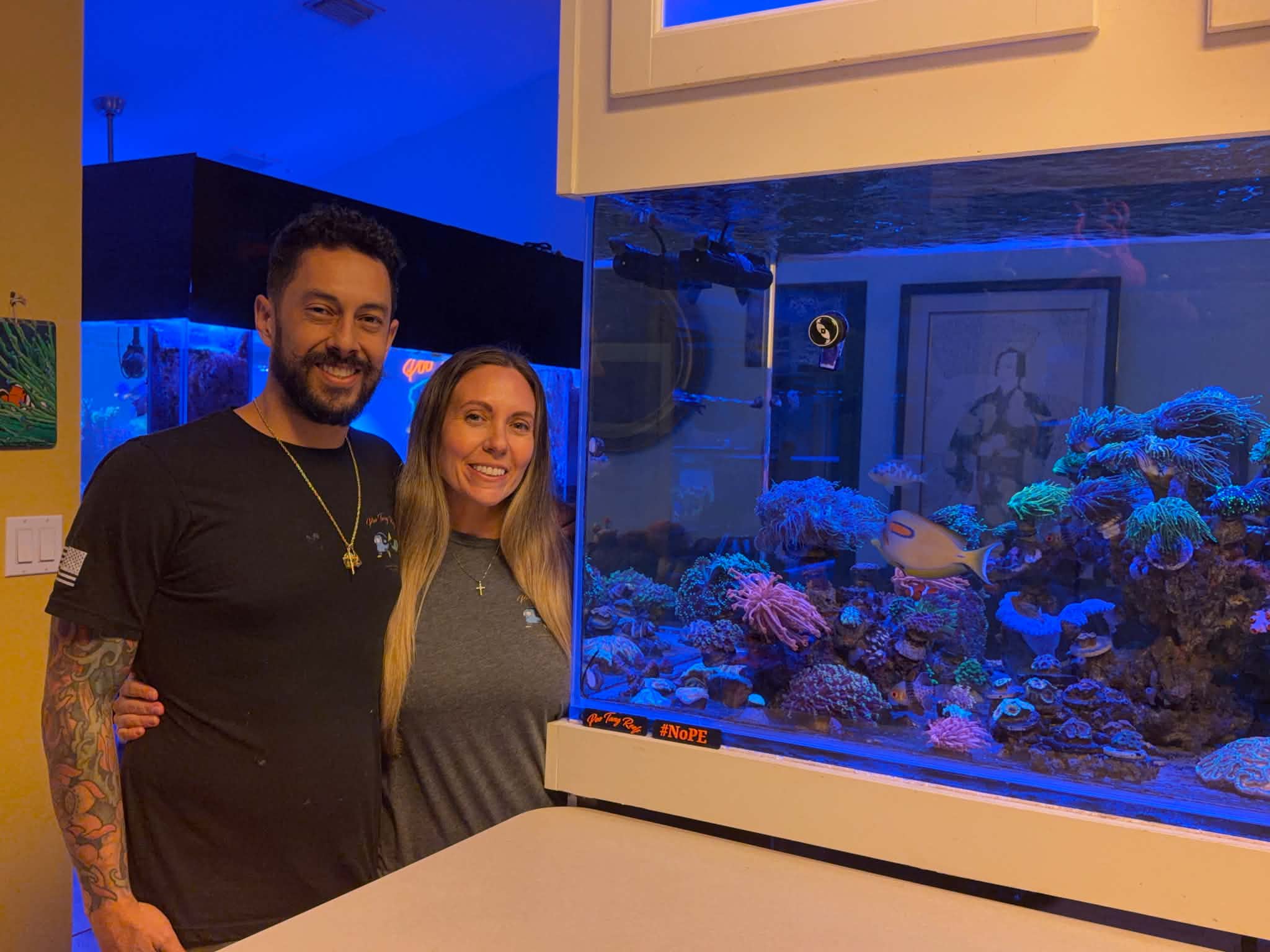
However, walking through Terrill and Lindsay’s operation makes one thing clear immediately: this isn’t a casual garage collection. It is a specialized, clean-running micro-aquaculture facility operating at commercial-grade rigor. Evie and I visited their facility after hearing so much from other hobbyist and we are happy we did. See our walkthrough here https://youtu.be/6QOM527liK4. 45 minutes of pure education; It wasn’t from me, (commonly that will be the case when I visit facilities) that isn’t my time to share but to learn along side of you all. Instead, you’ll have an opportunity to hear from the owners of Poo Tang Reefs Terril and Lindsey.
For this industry to progress, we have to evaluate facilities by their husbandry metrics, water chemistry, and quarantine biosecurity—not just their real estate. Here is a complete breakdown of the technical systems, automation setups, parameter targets, and hard-earned lessons running behind the scenes at Poo Tang Reefs.
1. System Engineering: High-Density Flow & Filtration Architecture
Managing high-density coral stock in closed home systems requires explicit plumbing, turnover, and filtration choices to prevent rapid organic accumulation.
Custom Sump & Mechanical Foundations
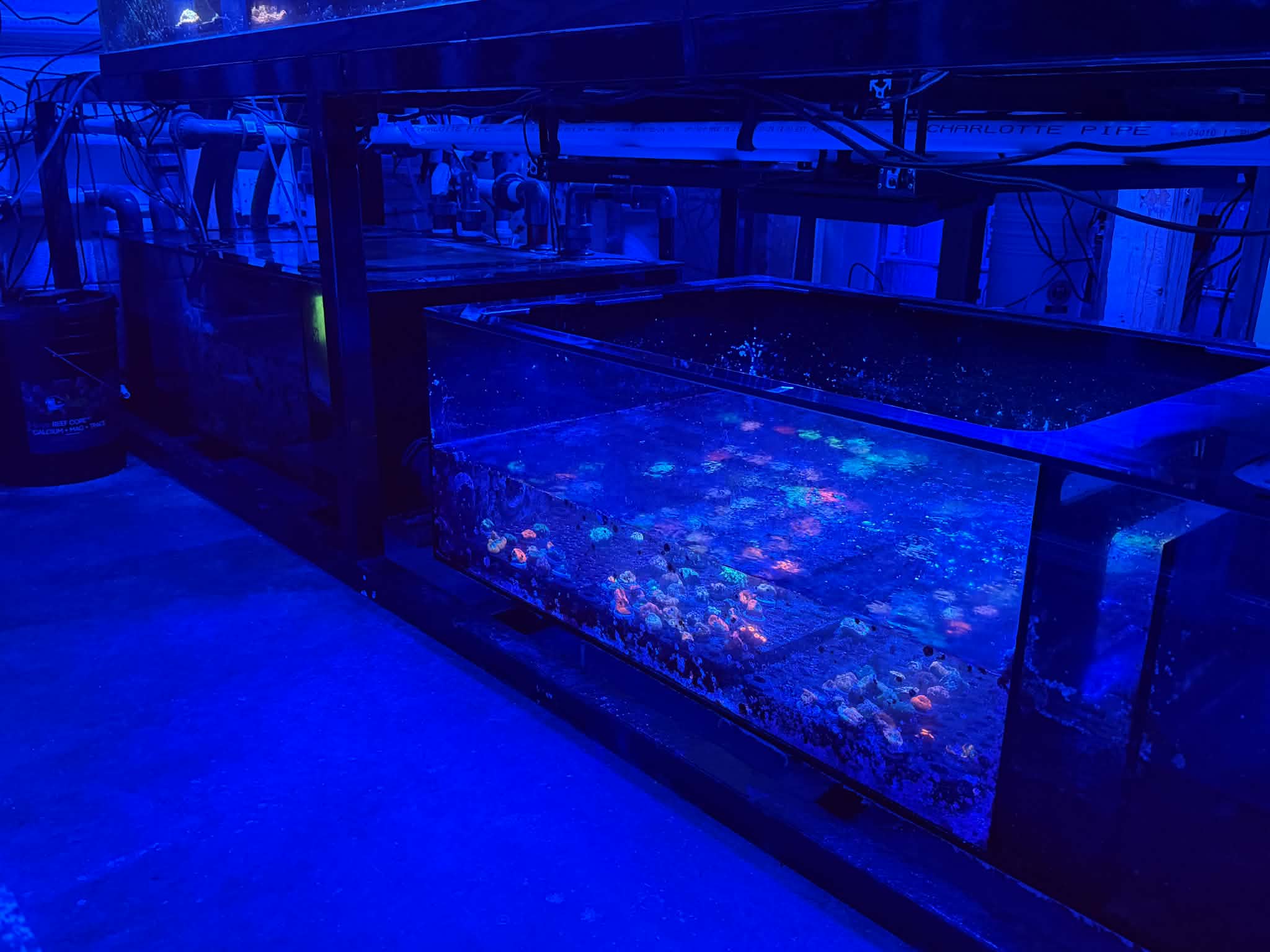
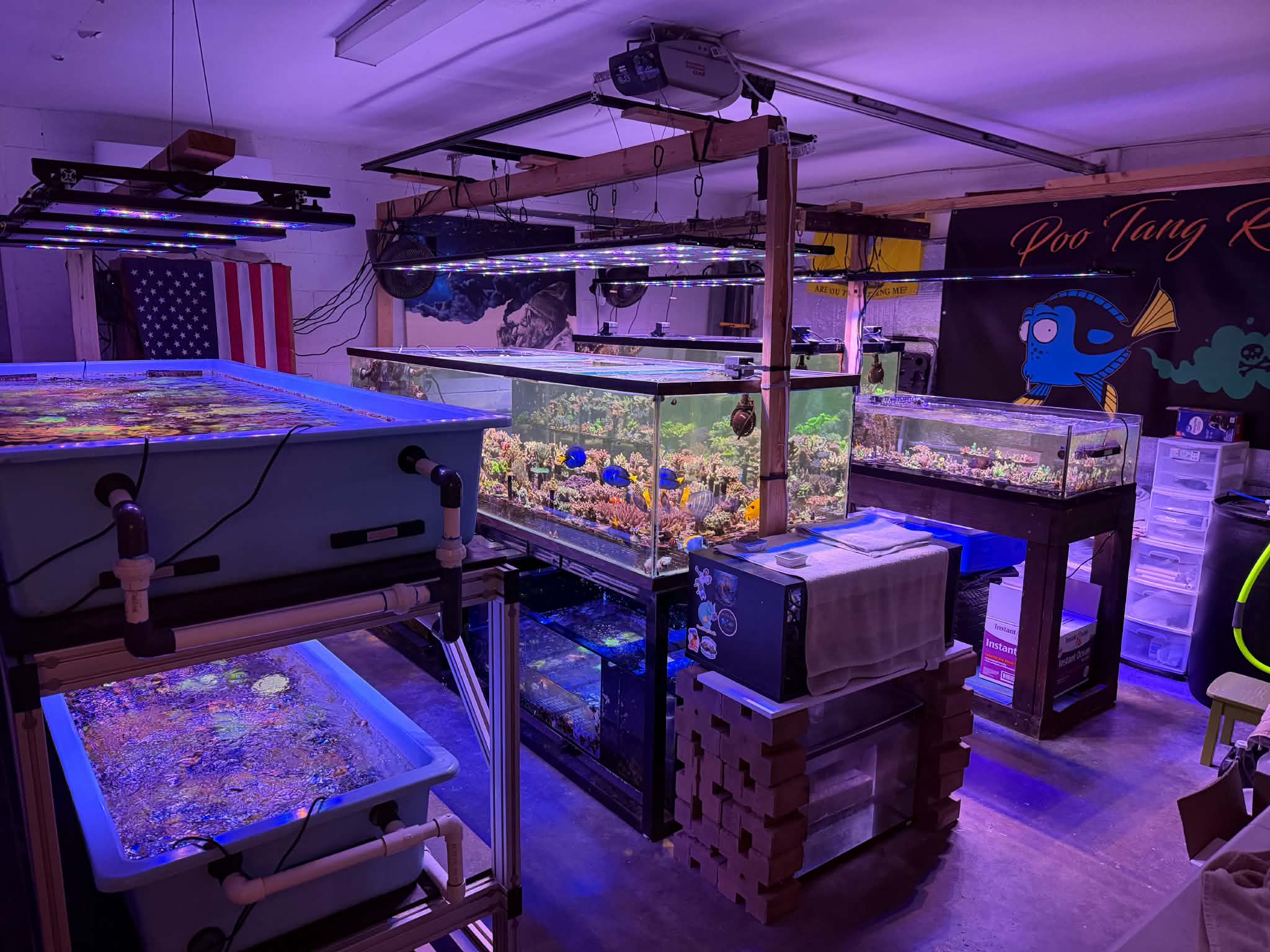
- Custom Sump Infrastructure: System filtration relies on custom acrylic sumps manufactured by Luna Reefs out of Central Florida. The primary farm network in the garage utilizes a 10-foot connected sump system linked with 3-inch bulkheads to maintain unrestricted turnover across heavy biomass.
- Filter Floss Over Socks: Terrill strictly utilizes disposable filter floss rolls rather than traditional cloth filter socks. Eliminating particulate detritus before it breaks down—and removing the maintenance friction of laundering dirty socks in home laundry machines—is critical for long-term operational consistency.
- Biological Basins: Heavy biological filtration is handled by high-surface-area live rock packed into designated sump chambers, supported by external and in-sump protein skimmers (including Aquamaxx units).
Randomizing Flow: Ocean Sea Waves
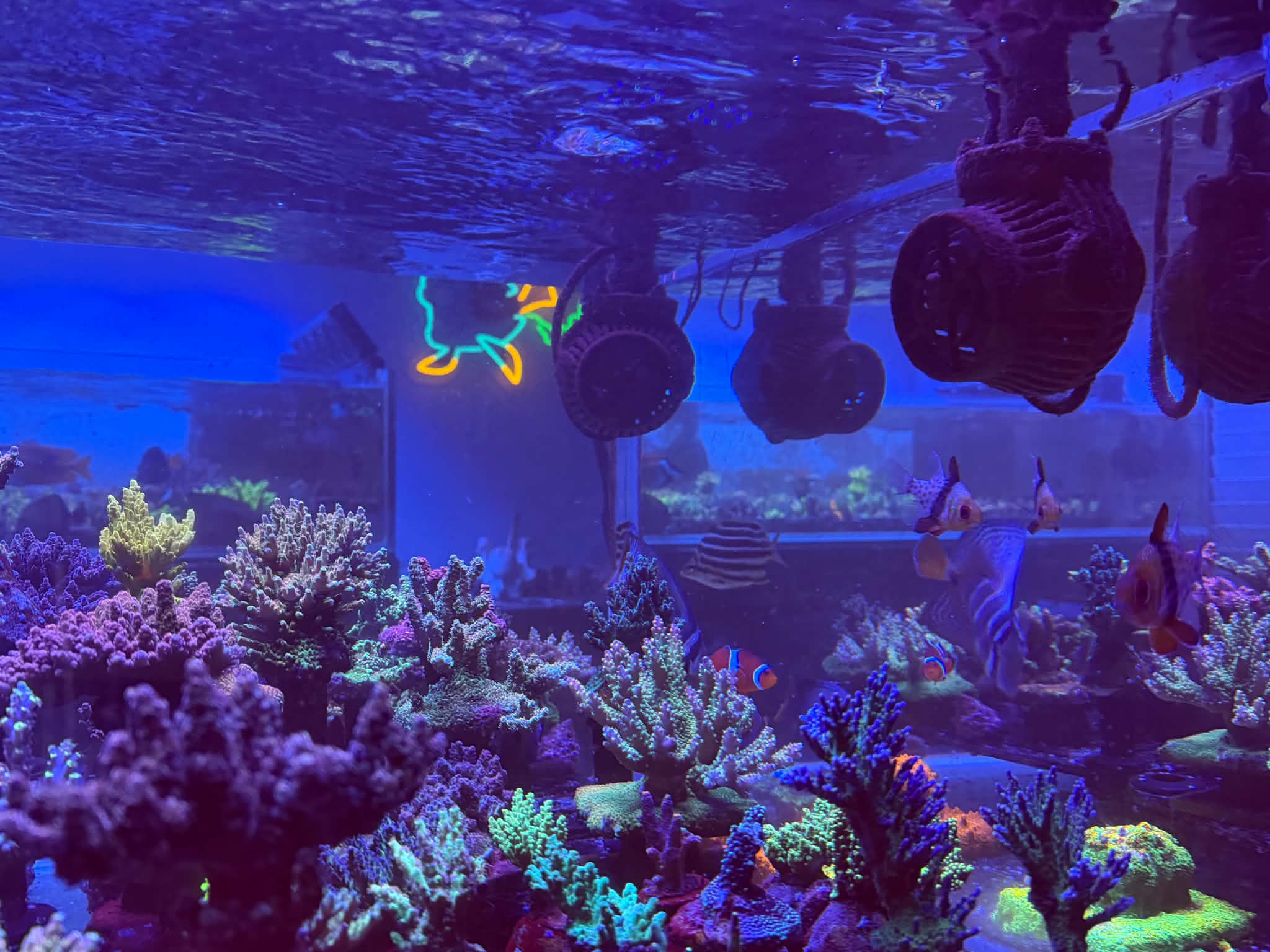
A major hardware highlight of the facility is the application of Ocean Sea Waves oscillator units imported from the UK, for which Terrill serves as the US distributor.
- Eliminating Static Shear Stress: Standard static powerheads create direct, localized shear stress while leaving dead zones directly beneath the pump. By mounting standard powerheads (such as Jebao units) onto motorized 3D-printed sweeps, the water column receives continuously shifting gyres.
- Preventing Detritus Burn: Terrill removed multiple static pumps after installing oscillators. The randomized directional sweep prevents detritus from settling into the deep interior branches of dense Acropora colonies—eliminating localized tissue necrosis (“detritus burn”) without requiring destructive water velocity.
- Atmospheric & Humidity Control: Operating hundreds of gallons of open-surface systems inside a residential footprint requires dedicated exhaust ventilation or heavy-duty dehumidification integrated directly into the HVAC footprint to protect residential framing from moisture saturation.
- Strategic Capital Allocation: High-value hardware investment belongs in lighting, heaters, and primary protein skimmers. For flow, mounting reliable value-tier pump heads onto randomized mechanical sweepers (like Ocean Sea Waves) offers decades of commercial utility without forcing four-figure replacement costs per pump.
Practical Hardware & Environmental Strategy
2. Water Chemistry, Automation, & Photoperiod Ramps
Having spent 11 years running Fritz Aquatics and formulating RPM Salt, I evaluate coral operations through raw chemical metrics. Terrill’s targets reflect modern, high-nutrient aquaculture protocols:
Operating Parameter Profiles
- SPS Systems: Alkalinity: 8.0 dKH | Phosphates: 0.10–0.20 ppm | Nitrates: 12–25 ppm
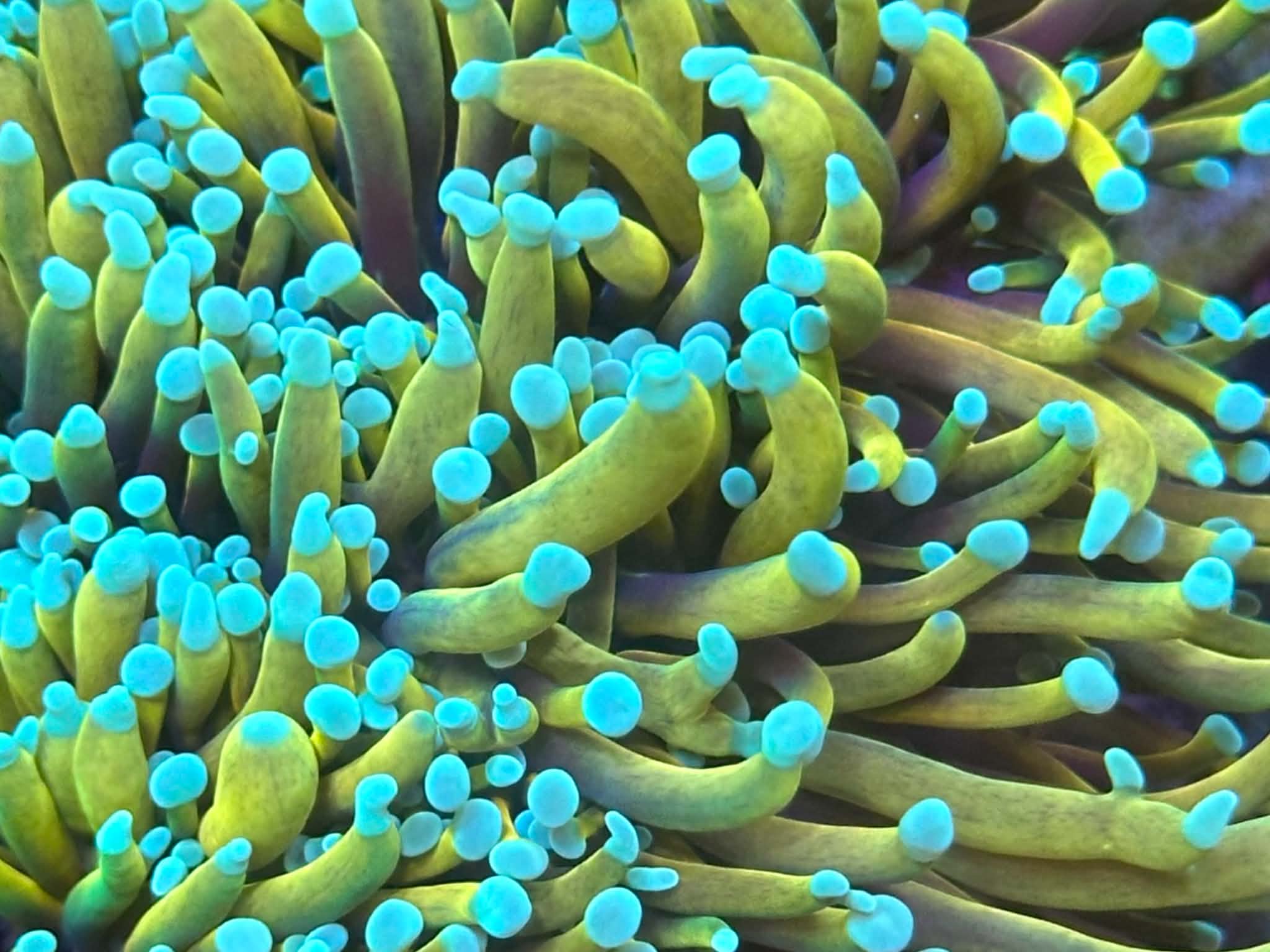
- LPS Systems (Torches, Scolies, Acans): Alkalinity: 7.8–8.0 dKH | Phosphates: 0.60–0.77 ppm | Nitrates: 12–25 ppm
- Foundation Metrics: Calcium: 420 ppm | Magnesium: 1350 ppm
Yes, 0.60 PPM Phosphates for LPS
A common point of debate among hobbyists watching the video tour was whether Terrill target-runs his LPS systems at 0.06 ppm or 0.60 ppm phosphate. Lindsay Newell explicitly confirmed it is strictly 0.60–0.70 ppm PO4.
In high-density LPS systems featuring fleshy corals (Euphyllia, Scolymia, Bowerbanki), running elevated organic nutrients prevents tissue stripping and starvation—provided alkalinity remains rock-solid (7.8–8.0 dKH) and mechanical filtration continuously strips heavy particulate waste.
Photoperiod & Lighting Ramps
Running Reef Breeders Meridian fixtures across his farm grid, Terrill shares his exact app photoperiod:
- Ramp Window: Sunrise initiates at 08:00 AM, with full sunset shutdown at 11:00 PM.
- Intensity Ramp: Photoperiod ramps up through 11:00 AM (hitting 55% peak channel output), holding stable PAR across the afternoon grow window before stepping down at 07:15 PM toward evening night-modes.
Commercial Quality Control & Automated Alkalinity
To supply two-part alkalinity and calcium solutions to his customer base, Terrill implements strict batch verification. Every batch is submitted for ICP testing to generate a Certificate of Analysis (COA).
Shawn’s Take: Whether you run a commercial salt manufacturing facility, an LFS, or a boutique micro-farm, always retain a sealed sample vial from every chemical batch you mix. If a client ever experiences a system shift, having a physical sample on hand for independent verification protects both your brand and your customer.
For automated alkalinity monitoring without ongoing reagent costs, the facility utilizes two distinct technologies:
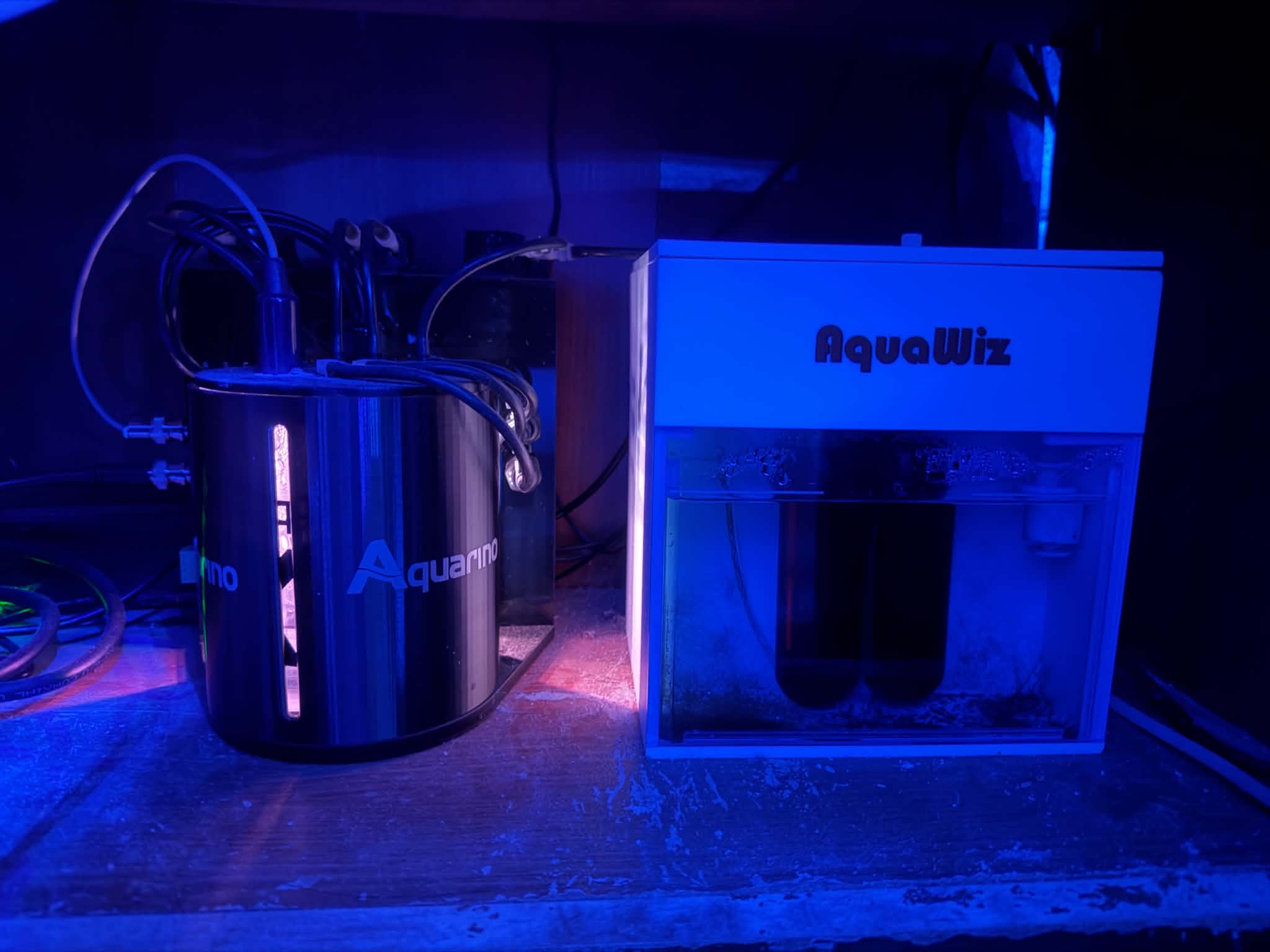
- Aqua Wiz: A dual-cuvette, reagentless tester that measures alkalinity via pH differential from an air-bubbled reference fluid. Integrated directly into the Neptune Apex, it triggers simple safety overrides (If AquaWiz > 8.1 dKH, turn doser off).
- Aquarino: A sealed unit from Brazil currently undergoing long-term evaluation that calculates alkalinity using a multi-variable algorithm factor including pH, salinity, and temperature.
|
Trace Element Balance: The Reef Moonshiners Protocol
Terrill has executed the Reef Moonshiners method for roughly three years. After establishing baseline daily absorption via monthly ICPs, audit frequency was dialled back to bi-monthly checks. Targeted daily additions of manganese, fluoride, iron, molybdenum, zinc, cobalt, and chromium demonstrated visible improvements in tissue color and polyp extension within seven days on pale, imported stock.
3. Real-World Husbandry & Practical Realities
True technical authority comes from addressing real-world failures transparently.
The Hidden RODi Failure Trap
Terrill experienced a catastrophic hidden failure when an internal flow restrictor cracked inside his RODi unit while his inline TDS meter malfunctioned. Unknowingly topping off systems with 200–400 TDS municipal water heavy with tap contaminants caused chalice bleaching and head loss in Euphyllia over several weeks.
- Husbandry Standard: Never rely exclusively on a single inline digital TDS probe. Verify source water weekly with a calibrated handheld meter and execute strict pre-filter replacement schedules.
Euphyllia Volatility vs. Parameter Shifts
While many consider Acropora the pinnacle of care, Torch corals (Euphyllia glabrescens) are significantly more volatile when parameters shift. When system phosphates spiked above 0.90 ppm, Terrill’s torches remained fully expanded. However, attempting to rapidly drop phosphates back down triggered immediate tissue bailout and Brown Jelly Syndrome. Rapid parameter correction in LPS systems often causes more mortality than the high nutrient state itself.
Biosecurity & Multi-Stage Quarantine Protocol
To guarantee that frags shipped nationwide never introduce pests to retail stores or home aquariums, Poo Tang Reefs operates a dedicated 70-gallon standalone quarantine system:
- Chemical Intake Bath: Potassium chloride (KCl) dip on initial intake.
- Targeted Systemic Dip: Multi-week isolation protocols to treat for red bugs, black bugs, and parasitic acropora mites before any coral touches main systems.
- Secondary Visual Inspection: Target inspection under high-PAR glass before release into main propagation grids.
- Facility Biosecurity Audits: Regular whole-system treatments executed as a preventative standard across all holding racks.
4. The Coexistence of Brick-and-Mortar LFS and Boutique Aquaculture
The retail fish store is the irreplaceable anchor of the marine aquarium industry. Local stores absorb the immense costs of holding live fish inventory, maintaining dry goods stock, offering immediate emergency advice, and introducing brand-new hobbyists to the trade.
Boutique micro-farms like Poo Tang Reefs do not replace the local fish store. Instead, when run at this level of technical discipline, high-grade home aquaculture acts as a specialized supplement—conditioning hardy, multi-generation captive frags that can ultimately ease pressure on wild reefs and strengthen the overall livestock supply chain.
Whether an operation runs out of a 5,000-square-foot retail showroom or a custom-fitted home garage, the benchmark remains identical: uncompromised water chemistry, strict quarantine biosecurity, and livestock health above all else.
Join Us Live for Live Reef Therapy!
Want to dive deeper into Terrill’s parameter targets, automated alkalinity setups, or biosecurity protocols?
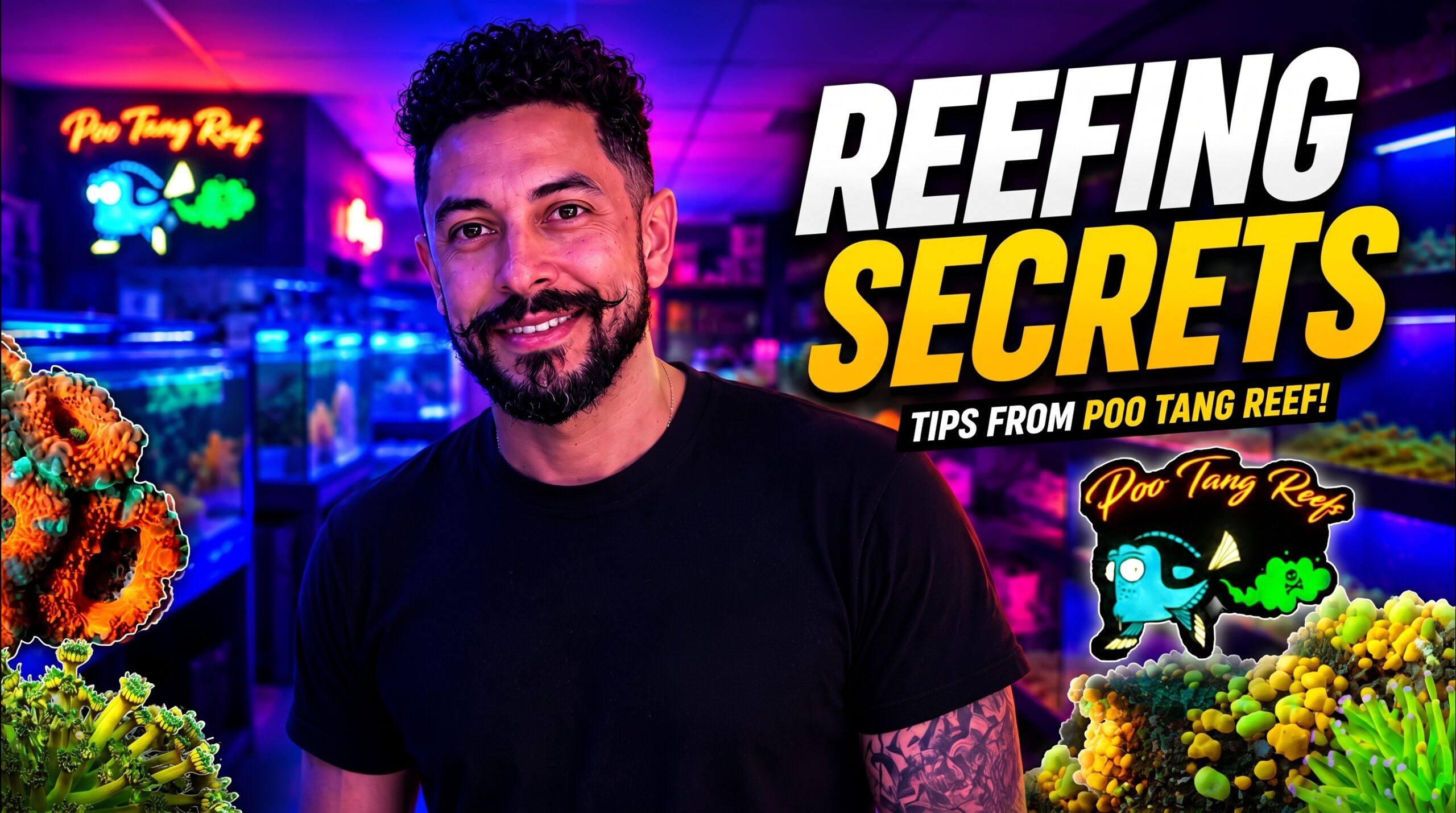
Evie and I are going live with Terrill and Lindsay Newell! We’ll be answering community questions in real time, breaking down viewer feedback from the YouTube tour, and taking a closer look at what it takes to run a commercial-grade micro-farm.
- Where: Streaming live across YouTube, Facebook, and Instagram.
- When: Tuesday at 7:30 PM EST / 6:30 PM CST.
Bring your questions on flow, water chemistry, and quarantine, and let’s talk reefing!