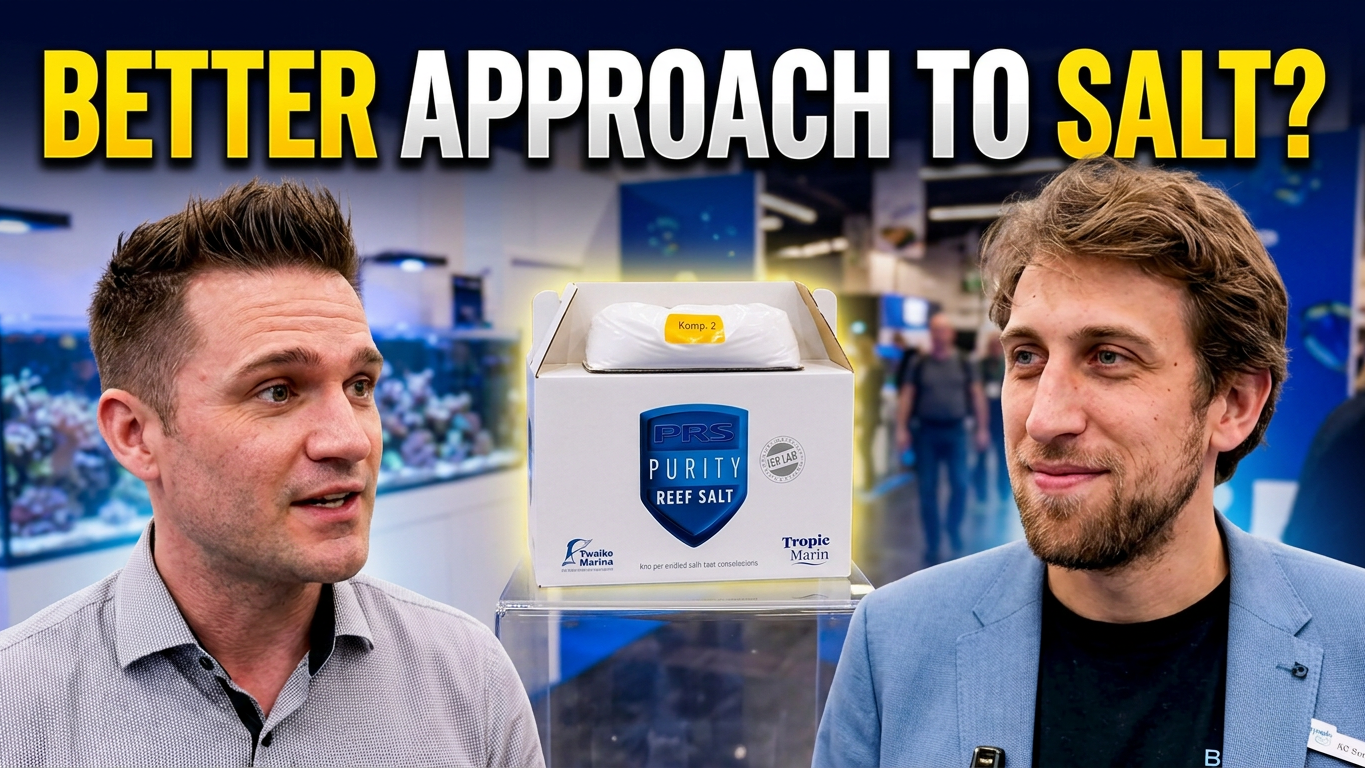
On Day 3 of Interzoo in Nuremberg, Evie and I sat down with Dr. Samuel Nietzer (Sam) at the Tropic Marin booth to break down one of the most chemically significant product slates in recent marine history. Sam brings a rare dual perspective to the floor—he is a marine biologist specializing in coral reproduction, runs the Sci-Reef channel, and works directly on Tropic Marin’s technical research and educational media.
Rather than releasing incremental formula tweaks, Tropic Marin’s latest lineup targets core physiological and chemical dilemmas facing modern reefers: delivering phosphate directly to polyps without feeding nuisance algae, inoculating dry rock via substrate “marinating,” triggering captive coral larval release during routine dipping, preserving micro-dosing sterility on nano tanks, and surgically addressing accumulated heavy metals without stripping baseline seawater parameters.
Here is the complete, unbiased scientific breakdown, chemical analysis, and formulator’s perspective on Tropic Marin’s new releases.
Targeted Particulate Nutrition: Phos-Start & Phos-Feed
For over a decade, the reefing community operated under an extreme dogma: drive dissolved phosphate (PO43-) as close to absolute zero as possible to eradicate nuisance algae. The unintended consequence across thousands of tanks was widespread coral starvation, tissue necrosis, and systemic biological crashes.
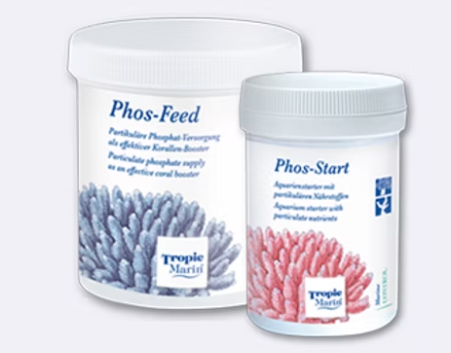
While natural seawater measures almost non-detectable dissolved orthophosphate in surface waters, marine ecological research confirms that wild corals feed continuously on abundant plankton, organic particles, and microbial particulate matter. Tropic Marin’s Phos-Start and Phos-Feed bridge this gap by delivering particulate, encapsulated phosphate directly to filter-feeding polyp tissue.
Dissolved PO4 Dosing: Feeds Water Column —> Available to Micro-Algae & Bacteria
Particulate PO4 Dosing: Encapsulated Particles —> Ingested Directly by Coral Polyps
The Encapsulated Particle Mechanism: Phosphate is bound into insoluble organic particles floating in suspension. Coral polyps and filter-feeding organisms ingest the particles directly, digesting and utilizing the phosphorus internally. Because the phosphate is not dissolved in the water column, it remains unavailable to nuisance micro-algae at the surface.- Phos-Start (Young & Developing Systems): Formulated with particulate phosphate alongside essential halogens (Iodine, Fluorine) and long-chain organic biopolymers. The organic biopolymers provide a carbon source for beneficial heterotrophic bacteria, building a robust microbiome while supporting coral immune health in young or developing setups.
- Phos-Feed (Established Reef Displays): Supplies concentrated particulate phosphate specifically engineered for targeted coral polyp intake in mature, densely stocked systems without driving up measurable dissolved phosphate levels.
- Operational PO4 Buffers: In Tropic Marin’s heavily stocked research facilities, systems utilize both particulate feeds and dissolved phosphate to maintain a stable baseline buffer of ~0.10 mg/L (ppm), ensuring corals never hit total nutrient depletion.
Inoculating Dry Rock: Eco-Start Reef & Eco-Start Freshwater
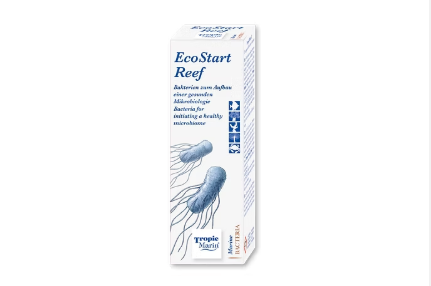
Starting a system with sterile ceramics or dry aragonite rock often leads to ugly “dino” or cyanobacteria outbreaks because opportunistic organisms outcompete slow-colonizing nitrifying bacteria. Eco-Start Reef redefines tank cycling through a proactive “rock marinating” protocol.
- The 24-Hour “Marinating” Protocol: Instead of dumping bottled bacteria into a massive volume of display water, dry rock, ceramics, or substrates are placed in a container with tank water and a concentrated dose of Eco-Start Reef for 24 hours prior to aquascaping.
- Deep Surface Colonization: During the 24-hour soak, probiotic heterotrophic denitrifying strains penetrate deep into the porous rock matrix, occupying surface area before nuisance organisms can take hold.
- Ground Calcareous Algae Carrier: The bacteria are cultured on a carrier substrate of finely milled coralline/calcareous algae powder, introducing essential natural mineral structures alongside the biological culture.
- Heterotrophic vs. Autotrophic Strains: Eco-Start utilizes robust heterotrophic denitrifying bacteria rather than delicate autotrophic strains, avoiding the severe temperature sensitivity and rapid shelf-life degradation common with bottled nitrifiers.
- Freshwater Synergy: Tropic Marin also introduced Eco-Start Freshwater, bringing the exact same substrate-inoculation protocol to planted aquascapes and freshwater tanks.
Pest Dip vs. Bacterial Treatment: Coral Spa vs. Coral Clean
Tropic Marin clarified the functional difference between routine pest management and targeted bacterial disease intervention across their two dipping formulations:
| Feature / Metric | Coral Spa | Coral Clean |
| Active Base | Potassium-based formulation | Iodine-based formulation |
| Primary Indication | Prophylactic dip; hitchhiker, worm, and flatworm removal | Active bacterial infections (e.g., Brown Jelly, ciliates) |
| Impact on Blue Pigments | Zero effect; blue Acropora retain full vibrant coloration | Causes temporary pigment stripping; blue hues recover in 1–2 weeks |
| Dip Duration | 5 – 7 minutes | Short, targeted antibacterial bath |
| Special Phenomenon | Triggers immediate larval release in brooding corals | High-strength antibacterial disinfection |
The Larval Release Phenomenon
During a 5-to-7-minute bath in Coral Spa, brooding coral species—such as Pocillopora, Tubastraea, and certain Euphyllia—that hold internally fertilized larvae will immediately expel fully developed, swimming planulae within minutes. Hobbyists and researchers can pipet these larvae directly out of the dip container into clean tank water to settle and start new colonies.
Note on Symbiotic Crabs: Potassium-based dips affect crustaceans severely. Symbiotic Trapezia acro crabs will evacuate the colony during the bath and must be retrieved immediately or removed manually prior to dipping.
Micro-Dosing Protection for Nanos: Omni-Dilute
Dosing micro-volumes (0.5 – 2.0 mL) of concentrated additives like All-For-Reef or two-part liquids on small nano systems presents a major challenge for standard dosing pumps. However, diluting these concentrates with standard RODi water breaks their inherent antibacterial preservatives, resulting in cloudy bacterial blooms inside the dosing reservoir.
- Sterile Dilution Matrix: Omni-Dilute provides a sterile chemical matrix that allows hobbyists to dilute liquid carbon, calcium, or multi-part additives to 50% or lower concentrations without triggering bacterial or fungal growth in the bottle.
- CRITICAL WARNING: Never use Omni-Dilute with live bacterial additives. The same stabilizing matrix that prevents bacterial blooms in chemical solutions will kill live bacterial cultures instantly.
Geochemistry & Salt Mixology: Purity Reef Salt (PRS)
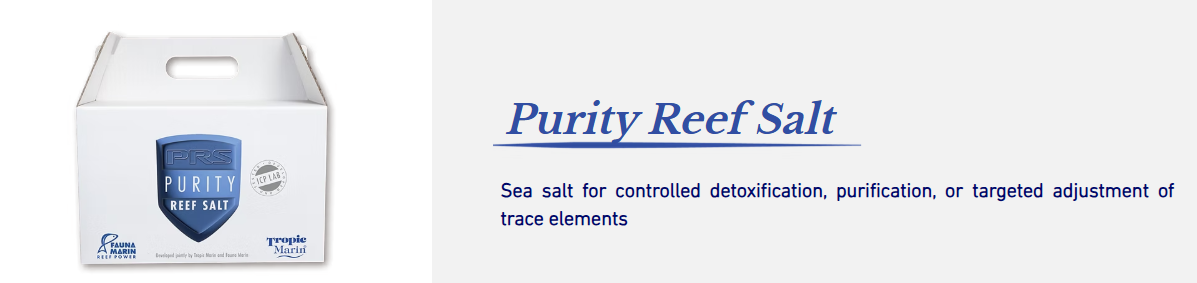
In an unprecedented industry collaboration, Tropic Marin partnered with Fauna Marin to engineer Purity Reef Salt (PRS)—a specialized 2-component salt matrix designed specifically to address heavy metal accumulation.
Standard Salt Mixes: Include Trace Heavy Metals + Anti-Caking Agents (Iron/Manganese)
Purity Reef Salt: 2 Isolated Components (Komp 1 & 2) —> 0 Heavy Metals / 0 Caking
The Geochemistry of Heavy Metal Accumulation & Rock Buffering
To understand why PRS exists, we have to look closely at marine geochemistry. Many hobbyists wonder why a system can run smoothly for years before suddenly experiencing unexplained SPS bleaching, loss of polyp expansion, or fish HLLE:
- ICP Testing Limitations: ICP-OES and ICP-MS analytical testing only measure free-floating dissolved ions in the liquid water column sample ([M2+]aqueous). Standard ICP lab tests cannot measure or quantify heavy metals physically bound or adsorbed to solid calcium carbonate substrates.
- Surface Adsorption vs. Lattice Incorporation: Marine geochemical research demonstrates that aragonite rockwork and sand beds act as chemical buffers governed by surface sorption isotherms. Divalent metal cations—such as Copper (Cu2+), Zinc (Zn2+), Nickel (Ni2+), and Lead (Pb2+)—bind to live rock in two ways: via loose surface adsorption on the outer crystal faces, or via lattice substitution (coprecipitation) deep inside the mineral matrix as the rock precipitates.
- The Saturation Spike: For years, live rock acts as a sink, locking away excess metals via surface binding so water tests look clean. However, environmental mineral studies show that once the rock’s active surface binding capacity hits full saturation, newly introduced metals have nowhere to bind, causing dissolved water-column concentrations to spike rapidly.
- Microzone pH Dissolution: While bulk aquarium water sits at a safe pH 8.2, analytical micro-probe studies reveal that deep inside porous live rock and bacterial biofilms, localized microbial organic respiration drops pH below 7.5 (<1). This micro-dissolution slowly liberates lattice-bound metals back into solution over time.
The Self-Inflicted Threat: Unmeasured Trace Element Dosing
While equipment wear—such as a corroding pump impeller or split magnet mount—is a well-known source of metal contamination, hardware failures typically cause an isolated spike in one or two specific elements (like pure Iron or Copper). In contrast, broad multi-element heavy metal accumulation across mature systems is frequently driven by unmeasured, speculative trace element dosing.
- The “Dosing for Color” Trap: Hobbyists often attempt to chase tissue pigmentation by pouring concentrated liquid trace mixes into their aquariums based on internet hearsay or arbitrary dosing caps rather than measuring actual coral consumption rates.
- Unconsumed Accumulation: Dosing metals like Copper, Zinc, Nickel, or Vanadium into a system where coral biomass or metabolic uptake cannot absorb them guarantees those metals must go somewhere. Because they don’t evaporate or break down, unconsumed divalent cations precipitate directly onto aragonite rockwork and sand beds via surface adsorption.
- The False Sense of Security: Reefers often send in an ICP test, see near-zero dissolved heavy metals in the water column sample, and assume their heavy trace dosing is completely fine—unaware that their live rock is quietly acting as a chemical sponge hitting full metal saturation. Once saturated, even a tiny additional dose triggers a sudden, unexplained tissue necrosis event.
The 2-Component Engineering Solution
When a reefer attempts to flush heavy metals from the water column, standard salt mixes reintroduce baseline trace metals.
- Zero Heavy Metal Baseline: PRS supplies pure major macro-elements (Sodium, Calcium, Magnesium, Bicarbonate) alongside essential non-metallic halogens (Iodine, Fluorine, Bromine), but contains zero trace heavy metals.
- Gradual Desorption Equilibrium Gradients: By mixing a 100% heavy-metal-free water change, you establish a steep concentration gradient between the water column and the rockwork. Over weeks of maintaining low water-column levels alongside specialty chelating resins or Poly-Filters, chemical equilibrium kinetics force loosely bound surface-adsorbed metals off the rock and into solution, where they can be permanently removed without fighting background salt contamination.
- Komp. 1 & Komp. 2 Isolation: By isolating reactive macro-elements into two pharmaceutical-grade dry bags (Komp. 1 and Komp. 2), PRS eliminates anti-caking additives, prevents chemical binding, and guarantees 100% solubility.
Practical Reset Timeline: What to Expect
Desorbing heavy metals off rockwork is a kinetic chemical process, not an overnight event:
- Immediate (Day 1 — Water Column Dilution): A single 30% to 50% water change with PRS instantly dilutes free-floating dissolved heavy metals in the liquid water column by 30% to 50%.
- Short-Term (Days 2 to 14 — Desorption Creep): As free-floating metals drop, chemical equilibrium forces surface-adsorbed metals off your live rock back into solution. Your water column heavy metal levels may creep back up slightly over the first 10 days as the rock desorbs.
- The 2 to 4 Week Protocol: Perform 2 to 4 weekly water changes (25% to 30% each) using one full 24.2 lb box of PRS over a month while running Poly-Filters or chelating resins in high flow to permanently catch desorbed metals.
- Verification (Day 30): Re-test via ICP on Day 30. Once dissolved metals have returned to acceptable baseline ranges, your rockwork’s surface load is reset, and you can safely return to your baseline maintenance salt (such as Tropic Marin Pro-Reef or Fritz RPM).
Financial Analysis: Surgical Reset Tool vs. Daily Driver
At Reef Builders, we hold no corporate sponsorships or brand allegiances. We credit outstanding innovation where it’s earned, but we also deliver an honest financial critique so store owners and hobbyists can make informed decisions.
Purity Reef Salt retails at ~$95.00 (€89.90) for an 11 kg (24.2 lb) box yielding roughly 80 gallons of mixed seawater at 35 ppt (1.026 S.G.). That places PRS at 1.18permixedgallon(3.92/lb).
Market Cost Comparison (Normalized to 35 ppt Yield)
| Salt Mix / Brand | Unit Packaging Size | Average Retail Price | Cost Per Pound ($/lb) | Cost Per Mixed Gallon ($/gal) | Primary Market Role |
| Instant Ocean / Reef Crystals | 55 lb Box (200 Gal) | $58.00 | $1.05 / lb | $0.29 / gal | Bulk Economy / Fish-Only / High-Volume |
| Fritz RPM (Standard / Redline) | 55 lb Box (200 Gal) | $84.99 | $1.54 / lb | $0.42 / gal | High-Purity Commercial & Reef Workhorse |
| AquaForest Reef Salt / Hybrid | 44 lb Box (180 Gal) | $85.00 | $1.93 / lb | $0.47 / gal | Mid-Tier Synthetic & Hybrid Reefing |
| Red Sea Salt (Blue Bucket) | 55 lb Bag/Bucket (200 Gal) | $97.99 | $1.78 / lb | $0.49 / gal | Low-Nutrient / Accelerated Growth Reefing |
| Red Sea Coral Pro (Red Bucket) | 55 lb Bag (160–200 Gal) | $97.99 | $1.78 / lb | $0.55 / gal | High-Alkalinity Reef Systems |
| Tropic Marin Pro-Reef | 55 lb Bucket (200 Gal) | $110.00 | $2.00 / lb | $0.55 / gal | Premium Maintenance Salt |
| Brightwell NeoMarine | 48 lb Bucket (150 Gal) | $135.00 | $2.81 / lb | $0.90 / gal | Ultra-Grade Synthetic Precision Blend |
| Purity Reef Salt (PRS) | 11 kg Box (80 Gal / 24.2 lb) | $95.00 (€89.90) | $3.92 / lb | $1.18 / gal | Targeted Heavy Metal Reset & Lab Baseline |
The Unbiased Verdict & Price Context
Why is PRS significantly more expensive than standard maintenance salts—retailing at $1.18 per gallon compared to $0.40–$0.55 for workhorse reef salts? It comes down to pharmaceutical impurity limits, trace exclusion, and two-component packaging:
- “Pharmaceutical Grade” vs. “Reef Zero”: Standard maintenance salts (like Tropic Marin Pro-Reef, Fritz RPM, or Red Sea) are intentionally formulated for daily coral growth. While high-end maintenance salts utilize pharmaceutical-grade raw materials, pharmacopeial standards (USP/Ph. Eur.) still permit parts-per-million (ppm) background trace minerals. Because micro-trace metals cannot be dry-mixed as separate powders into bulk blenders without severe particle segregation, maintenance salts intentionally rely on these inherent background mineral matrices to supply the daily micro-nutrients corals consume.
- Why PRS Costs More: To create a zero-heavy-metal reset salt, Tropic Marin and Fauna Marin must source major raw inputs screened to parts-per-billion (ppb) ICP levels—far cleaner than standard pharmaceutical thresholds—and exclude heavy metal trace profiles entirely. Furthermore, isolating reactive macro-elements into two dry packages (Komp. 1 and Komp. 2) eliminates anti-caking additives (a major source of iron and manganese contamination), adding significant dual-filling and packaging overhead.
- Do NOT Switch Your Daily Salt: We are not suggesting reefers throw away their standard salt mixes. Everyday maintenance salts supply the balanced, highly beneficial background trace element packages that corals require for sustained growth and coloration.
- When You Need a Reset: The need for PRS arises over time when irresponsible trace element additions, heavy feeding routines, or subtle hardware wear (corroding pump impellers, magnet mounts) create a slow heavy metal accumulation that saturates your rockwork.
- A Surgical Diagnostic Tool: At $1.18/gal, running PRS for routine weekly water changes on a 200-gallon display would cost over $1,200 annually. However, spending $100 on a 24.2 lb (11 kg) box of PRS (yielding 80 gallons of mixed seawater) as a targeted reset tool to establish a clean baseline and rescue a $10,000 mature reef display is a brilliant, cost-effective insurance policy.
Conclusion
Having spent over a decade in commercial chemical manufacturing and dry salt blending, I can tell you that producing synthetic sea salt is one of the most brutal engineering tasks in the marine industry.
When charging multi-ton industrial blenders with dry chemical salts, attempting to evenly distribute micro-trace metals measured in parts-per-billion across thousands of pounds of bulk powder is virtually impossible without granular segregation. Over time, transit vibration causes heavier raw components to settle toward the bottom of packaging, leading to parameter stratification between the top and bottom of a single container.
This physical reality is precisely why standard maintenance salts rely on the consistent, inherent background mineral profiles of their bulk major salts for their trace packages—a system that works brilliantly for daily coral metabolism. Tropic Marin’s decision to engineer Purity Reef Salt using major components stripped of trace heavy metals and packaged in two isolated dry bags is a masterclass in chemical blending for when you specifically need a zero-baseline reset. (Note: To prevent dry stratification inside the bags, hobbyists should mix the entire box of Komp. 1 and Komp. 2 at once rather than scooping partial batches.)
More than anything, tools like PRS serve as a wake-up call for how we manage water chemistry. Hardware fails, but unmeasured dosing is entirely within our control. If you aren’t actively testing and measuring coral uptake via routine ICP analysis, stop blindly dosing trace element mixes to chase coral color. Unmeasured dosing remains one of the fastest ways to turn your live rock into a heavy metal time bomb.
Combined with targeted particulate feeds like Phos-Feed, proactive rock marinating via Eco-Start, and larval release triggers in Coral Spa, Tropic Marin’s release slate demonstrates true scientific leadership focused on biological stability over commercial marketing fluff.
Follow Up
I know the information I’ve presented here has gotten a bit dense and overwhelming and I am sure it has raised some questions. In effort to help get these questions answered I will reach out to the team at Tropic Marin or Fauna Marin, perhaps Dr. Samuel Nietzer from our original interview and schedule a Q & A Livestream Reef Therapy where I can invite you to come and join. This will create an opportunity to ask your questions within the chat. I would love for these to be well attended but since we have only made this effort a couple of times, the attendance has been less than what I have hoped. When we release this article, I will put out a poll of sorts to weigh the desire for the additional effort. Keep an eye on the RB Socials if you would find value in it. In the meantime I have seen some engagement from Fauna Marin within the YouTube video so you could put questions in the comments there and I will try to answer or perhaps they can weigh in as well.
What’s Your Take?
Are you utilizing particulate feeds like Phos-Feed to maintain coral color, or considering a two-component salt reset for your system? How do you handle trace heavy metal management on mature displays?
Drop your thoughts in the comments on the channel and let us know your system routine!
This video provides an in-depth walkthrough of Tropic Marin’s booth at Interzoo, demonstrating Omni-Dilute, Coral Spa, Eco-Start, and Purity Reef Salt directly in action.