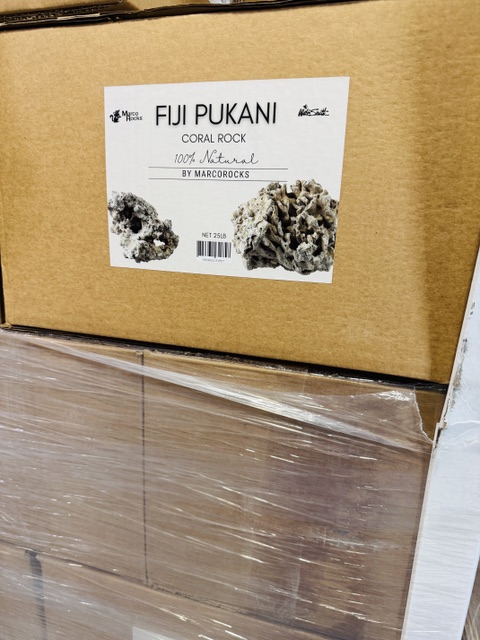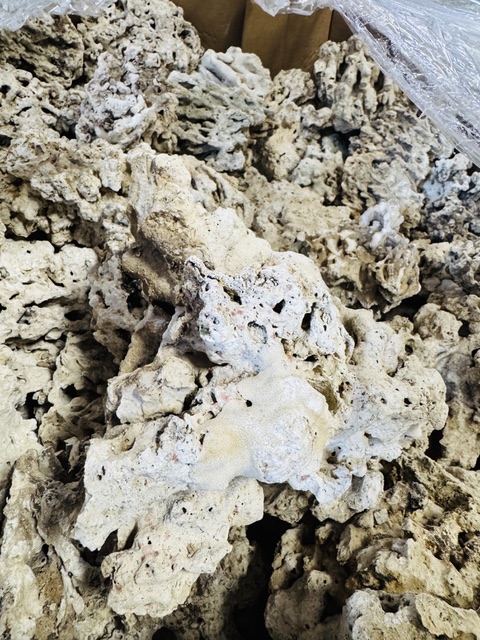
We finally got our hands on Fiji Pukani rock from Marcorocks. This sustainably harvested rock from Walt Smith International provides a myriad of shapes and sizes for your aqua scape. Known for its lightweight, highly porous structure and craggy, natural contours, Pukani dry rock offers reef keepers an ideal balance of visual appeal and biological filtration capacity. If you like your rock like your English Muffins, full of nooks and crannies, this rock is for you.
Aesthetic Appeal and Aquascaping Versatility
Visually, Pukani rock stands out due to its irregular, highly textured surface full of naturally formed nooks, crannies, and deep crevices. Unlike denser limestone or smooth dry rock varieties, Pukani has an organic, open structure that easily anchors coral frags and creates natural hiding spots for fish and invertebrates.
Because the rock is relatively soft and workable compared to denser rock formations, it can be easily shaped, drilled, or broken apart with a hammer and chisel. Aquascapers frequently use acrylic rods, reef-safe epoxy, or mortar with Pukani to construct gravity-defying overhangs, bridges, and expansive shelf systems.
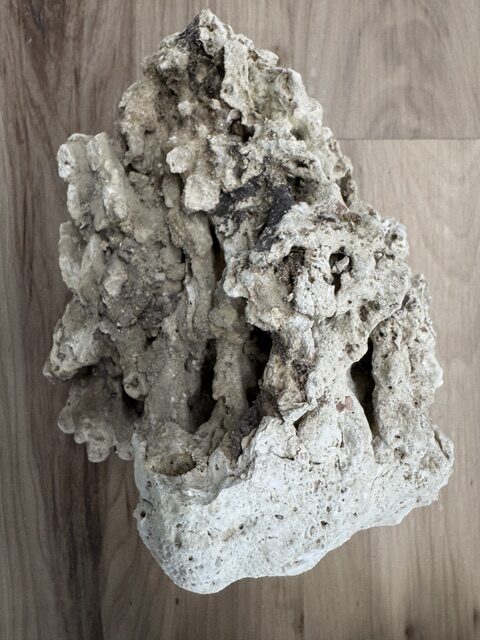
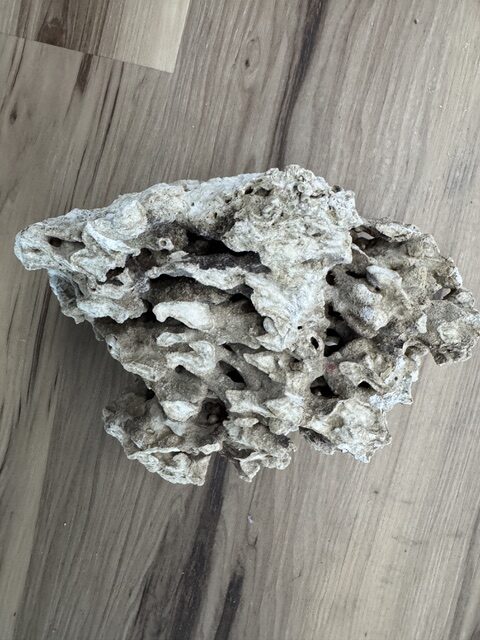
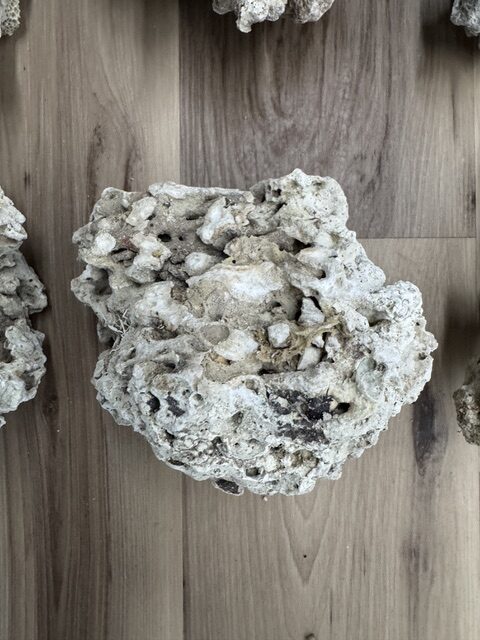
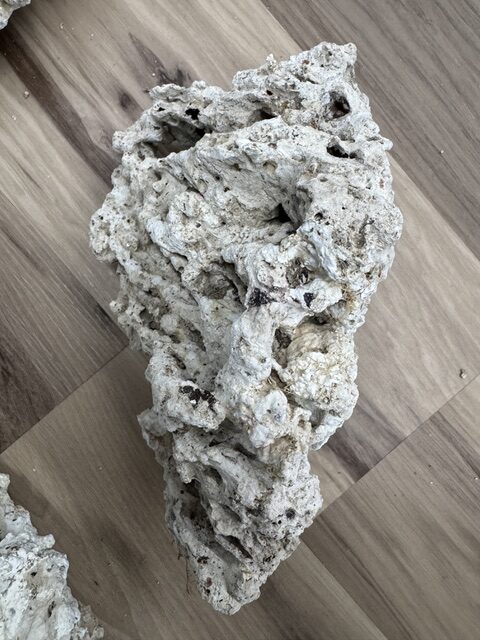
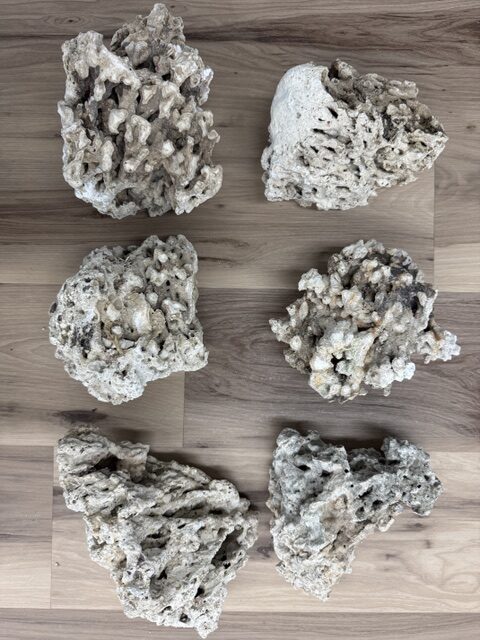
Photos courtesy Aquarium Supply Distribution
Surface Area and Biological Efficiency
The primary functional benefit of Pukani rock is its incredible porosity. Weight for weight, Pukani provides significant surface area for nitrifying and denitrifying bacteria .
- High Volume-to-Weight Ratio: Because it is packed with microscopic pores and hollow cavities, a 25-pound box of Pukani fills substantially more physical space in a tank than 25 pounds of dense rock like Fiji shelf or Tonga branch.
- Flow Integration: The porous matrix allows water to penetrate deep into the interior of the rock, promoting stable anaerobic zones that may contribute to nitrate reduction.
The Curing Process: What to Watch For
While dry Pukani is 100% free of live pests like unwanted hitchhiker crabs, flatworms, or mantis shrimp, it requires thoughtful preparation before introduction to an established reef.
Because natural Pukani consists of dried ancient coral skeletons, the deep pore network often contains dried organic matter (dead sponges, micro-fauna, and plant material). When placed directly into a tank this organic matter may leach phosphates into the water column. For new aquariums this won’t pose a concern, but if you are adding rock to an existing reef, adding phosphate adsorption media for a few weeks may be prudent.
Whether buying by the piece, by the box or the new rubble option, you can find this versatile rock at your favorite LFS or at online retailers such as SaltwaterAquarium.com.