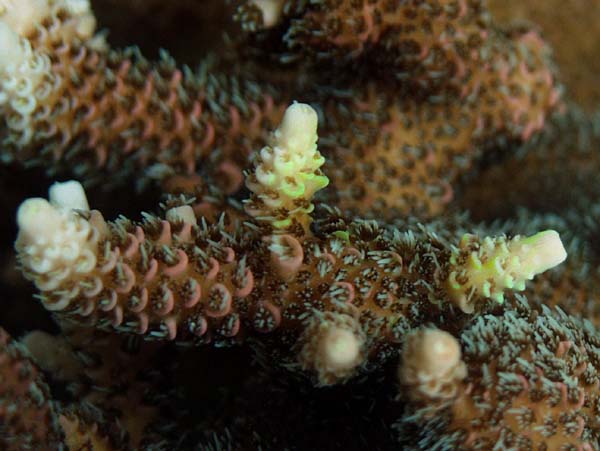
Green Fluorescent Protein is one of the most ubiquitous and recognizable fluorescent colors in soft and stony corals. In some cases the GFP is expressively produced, sometimes it’s a byproduct and recently reef aquarists have observed a third phenomenon involving GFP: infection. GFP “infection” describes the spread of a solid fluorescent green color through the tissues of a stony coral in a way that is disjointed from the ‘normal’ growth of coral tissue, skeleton and pigmentation. Whether the spread of the GFP is an infection in the classical sense of the word, or another biological process is not at all understood or explained and it remains to be seen how the GFP infection progresses long term. The coral featured in this video is called the ‘Green Jacket’ and it was first created by Steve Garrett of Garrett’s Acropolis. This specimen was the inspiration for a full article on GFP infection in the fourth issue of Reef Life Magazine (hitting newstands and finer LFS any day and also in digital format right now). Follow the break for more pics and a full rundown of other GFP infected corals you can find around the net.
Pink Millipora from Garrett’s Acropolis

Again the Green Jacket, also from Garrett’s Acroplace


GFP infected red Montipora capricornis from World Wide Corals

Acropora simplex from Steve Tyree, the first documented observation of GFP infection in captivity