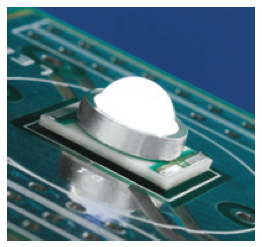
Underdriving or Overdriving LEDs: coralSky’s Jeff Littlejohn explains LED drive current

26

Screen shot 2009-12-21 at 1.08.33 PMWith LEDs only now just beginning to emerge as an important technology for reef aquarium lighting, the hobby’s collective understanding about how LEDs work is still very limited. There appears to be a lot of confusion about the difference between LED wattages since manufacturers don’t exactly list them as such. We recently posted about Coralsky’s newly released products and with the launch of their new forum, Jeffrey Littlejohn decided to kick off a discussion about what it means to underdrive or overdrive a light emitting diode. This write up about LED drive current is a very informative crash course in LED operation 101 and it should answer many questions you may have had about how LEDs actually operate.

I have often heard comments about the apparent underutilization of the maximum rated drive current of an LED. Phrases like “underdriving these LEDs at only 350 mA doesn’t allow them to reach their max potential”, or “you need to drive these LEDs at 700 mA or higher to make them useable for coral growth/reef environments”, or “underdriving these LEDs means you have to add more LEDs, which amounts to money wasted” are prevalent around the forums. So, I would like to take this opportunity to clear a few things up.

1. A drive current of 350 mA for a Cree XR-E is not underdriving. This is the nominal/normal/standard drive current for these LEDs. Cree reports the light output of each type of X-Lamp LED at this drive current. So, when you read that a Q5 XR-E puts out 107+ lumens, that intensity is reached at the nominal drive current of 350 mA. While this current may be just a little more than a third of their maximum rated current of 1000 mA, it is the “sweet spot” for Cree LEDs, which means that the LED is operating at its most efficient state, in terms of power consumption and heat generated. To illustrate, if you overdrive an XR-E to 700 mA, you do not get twice the light output from the LED than when it is driven at 350 mA. In fact, it takes nearly 1000 mA to achieve double the light output from 350 mA.

2. For an industry that is trying to push the limits of efficiency (lumens per watt), maximum light output is not the pinnacle achievement. In the example given, it takes about 2.6 times the energy to produce 2 times the light output. If energy efficiency is not one of the reasons that compel you to switch to LED, then you can stick with metal halide.

3. Heat is the bane of LEDs. Cree LEDs must be kept below 150 C at the solder junction. If they get hotter, their lifespan will be adversely affected, or they may fail. Increasing the drive current over 350 mA greatly increases the cooling requirements (it’s not a linear relationship…driving an LED at 700 mA takes more than double the heatsink capacity than an LED driven at 350 mA). Additionally, and apparently this is little known among the self-professed LED “gurus”, a hotter LED produces LESS LIGHT! An overdriven LED, running near its maximum temperature produces only 68%* of the light output! (*For white LEDs. Royal LEDs produce 78% of the light at maximum temperature.) So, to continue with our previous example, let’s assume that the LED driven at 350 mA can be kept under 50 C, and it is producing better than 95% of its rated flux of 107 lumens (let’s say 102 lumens). Now we’ll overdrive it to 1000 mA. Cree says we can expect to achieve about 220% the rated output, but this assumes that the junction temperature remains at a very cool 25 C. From our experience, this is impossible to achieve at this current. Even with very agressive cooling and a large heatsink, you can expect to see junction temperatures of 75-100 C at this current, reducing your 220% expectation to a less compelling 176% increase. If you decide to cut your cooling a little short (heatsinks can be expensive, fans can get dusty or fail), at maximum temperature, you will only achieve 150% of the light output of the nominally driven LED. Now, you’re paying the power company for 2.6 times the energy for only 1.5 times the light! (…and, you’ve spent more money in heatsinks and fans…and, if a fan or two fails, kiss your LEDs goodbye!)

In short, while you could certainly expect more light out of Cree LEDs by overdriving them, if you are not extremely careful with the heatsink design and provide active cooling (fans) as needed, you will end up shortening their useful life or may cause them to fail. Also, especially if you are causing the LEDs to run hotter, you are not getting as much extra light as you may think, and you are certainly not taking full advantage of the efficiency of this technology.

This is not a lecture, it’s a discussion. So let the debate begin!


Top Related Stories:

  • Jon ‘hahnmeister’

    Heat is the bane of LED’s, which is why I cant understand why more makers havent gone the route of liquid cooling like I did. OR… at least heatpipes.

  • Jon ‘hahnmeister’

    Heat is the bane of LED’s, which is why I cant understand why more makers havent gone the route of liquid cooling like I did. OR… at least heatpipes.

  • http://coralidea.com Jake Adams

    liquid cooling? heatpipes? Come on Jon, be realistic about manufacturing constraints. It took 10 yrs for some PC makers to incorporate that kind of tech and aquarium product manufacturers are more concerned with making reliable products that are safe for use around water.

  • http://coralidea.com Jake Adams

    liquid cooling? heatpipes? Come on Jon, be realistic about manufacturing constraints. It took 10 yrs for some PC makers to incorporate that kind of tech and aquarium product manufacturers are more concerned with making reliable products that are safe for use around water.

  • huh

    You have a product on the market Jon?

  • huh

    You have a product on the market Jon?

  • Elebriend

    Yeah I remember hearing at one point that LEDs are in some aspects like CPUs, just backwards so I would think that previous knowledge of how to design CPU heatsinks would be utilized.

  • Elebriend

    Yeah I remember hearing at one point that LEDs are in some aspects like CPUs, just backwards so I would think that previous knowledge of how to design CPU heatsinks would be utilized.

  • Mike

    “If energy efficiency is not one of the reasons that compel you to switch to LED, then you can stick with metal halide.”

    I don’t know if it’s me but this statement makes the author sound quite pompous… if energy efficiency is really the reason I wouldn’t have a reef tank at all!

    As those into modifying their computers beyond what the specs list (aka overclocking) know is there is in fact a sweet spot where you want to go to increase output performance at a level which the efficiency in energy drop is acceptable but maybe some other efficiency is more desirable,for LEDS perhaps output per square meter is a better gauge. More light over a given area and it’s more energy efficient than MH lamps? Umm sounds like a winner to me.

    Also all that being said there’s one quote that never gets touched on, growing corals! The industry is not trying to just push energy efficiency but light output efficiency … again how many of these buggers do need to cram over a tank to successfully grow corals!

  • Mike

    “If energy efficiency is not one of the reasons that compel you to switch to LED, then you can stick with metal halide.”

    I don’t know if it’s me but this statement makes the author sound quite pompous… if energy efficiency is really the reason I wouldn’t have a reef tank at all!

    As those into modifying their computers beyond what the specs list (aka overclocking) know is there is in fact a sweet spot where you want to go to increase output performance at a level which the efficiency in energy drop is acceptable but maybe some other efficiency is more desirable,for LEDS perhaps output per square meter is a better gauge. More light over a given area and it’s more energy efficient than MH lamps? Umm sounds like a winner to me.

    Also all that being said there’s one quote that never gets touched on, growing corals! The industry is not trying to just push energy efficiency but light output efficiency … again how many of these buggers do need to cram over a tank to successfully grow corals!

  • http://coralidea.com Jake Adams

    In sheer efficiency as measured in lumens per watt, there is a point where a poorly driven LED will not be as efficient as a (properly driven) metal halide lamp.

  • http://coralidea.com Jake Adams

    In sheer efficiency as measured in lumens per watt, there is a point where a poorly driven LED will not be as efficient as a (properly driven) metal halide lamp.

  • Mike

    Oh I’m not disputing that fact. However remember the whole point of LEDs over the aquarium is to grow corals, and as mentioned all that’s talked about is a basic solid state guide on how they work.

  • Mike

    Oh I’m not disputing that fact. However remember the whole point of LEDs over the aquarium is to grow corals, and as mentioned all that’s talked about is a basic solid state guide on how they work.

  • Raj

    “..why I cant understand why more makers havent gone the route of liquid cooling like I did…”

    The same reasons why computer manufacturers haven’t done so. You generally find liquid cooling on expensive “gaming” computers. Add it to every LED fixure and you’ll see the price point jump even farther than it already is.

  • Raj

    “..why I cant understand why more makers havent gone the route of liquid cooling like I did…”

    The same reasons why computer manufacturers haven’t done so. You generally find liquid cooling on expensive “gaming” computers. Add it to every LED fixure and you’ll see the price point jump even farther than it already is.

  • http://www.nanocustoms.com Chris

    In our specialized field of lighting, we aren’t as concerned with efficiency or efficacy as we are with packaging. In our HQI based systems, we were able to deal with the thermal consequences (keeping the hood from melting down) using positive pressure ventilation (fans). No matter what we did to keep the air cool, we couldn’t fight Infrared Emissions.

    Nowadays in our business, LEDs are a godsend because of packaging efficiency and luminous flux density. Not all lighting systems will apply for all reefers, but we feel that until the 150LPW mark of the next gen emitters are out, the only choice is to OVERDRIVE.

    We are talking about 150HQI light output in small areas and within a closed hood. Although the efficiency and throughput of the emitters have evolved tremendously since the early days, for US in the nano world, its all about the packaging baby!!!!

  • http://www.nanocustoms.com Chris

    In our specialized field of lighting, we aren’t as concerned with efficiency or efficacy as we are with packaging. In our HQI based systems, we were able to deal with the thermal consequences (keeping the hood from melting down) using positive pressure ventilation (fans). No matter what we did to keep the air cool, we couldn’t fight Infrared Emissions.

    Nowadays in our business, LEDs are a godsend because of packaging efficiency and luminous flux density. Not all lighting systems will apply for all reefers, but we feel that until the 150LPW mark of the next gen emitters are out, the only choice is to OVERDRIVE.

    We are talking about 150HQI light output in small areas and within a closed hood. Although the efficiency and throughput of the emitters have evolved tremendously since the early days, for US in the nano world, its all about the packaging baby!!!!

  • http://www.coralskyLED.com Jeff Littlejohn

    I must admit that it was a little tongue in cheek when I posted: “If energy efficiency is not one of the reasons that compel you to switch to LED, then you can stick with metal halide.” I was also trying to cause folks to think about overall system efficiency.

    I mentioned “efficiency” as one of the compelling reasons to switch to LED (and there are others). I wasn’t just referring to the efficiency of the emitter itself, but also the efficiency of the total system. i.e., the heat introduced into a tank from the IR spectrum of a metal halide light source may need to be removed by a chiller.

    If you already own a very effective MH light system and chiller, and you don’t care about your power bill, then you may, with good reason, decide to “stick with metal halide.”

    If ultimate system efficiency is important to you, then the best way to achieve more light output from an LED fixture is to use more LEDs at their optimum (most efficient) drive current. I gave an example in my first post of how an overdriven XR-E can actually require up to 2.6 times the power to generate just 1.5 times the light. Remember, the only way to achieve 2 times the light with just 2 times the power consumed is to operate these LEDs at their most efficient state.

  • http://www.coralskyLED.com Jeff Littlejohn

    I must admit that it was a little tongue in cheek when I posted: “If energy efficiency is not one of the reasons that compel you to switch to LED, then you can stick with metal halide.” I was also trying to cause folks to think about overall system efficiency.

    I mentioned “efficiency” as one of the compelling reasons to switch to LED (and there are others). I wasn’t just referring to the efficiency of the emitter itself, but also the efficiency of the total system. i.e., the heat introduced into a tank from the IR spectrum of a metal halide light source may need to be removed by a chiller.

    If you already own a very effective MH light system and chiller, and you don’t care about your power bill, then you may, with good reason, decide to “stick with metal halide.”

    If ultimate system efficiency is important to you, then the best way to achieve more light output from an LED fixture is to use more LEDs at their optimum (most efficient) drive current. I gave an example in my first post of how an overdriven XR-E can actually require up to 2.6 times the power to generate just 1.5 times the light. Remember, the only way to achieve 2 times the light with just 2 times the power consumed is to operate these LEDs at their most efficient state.

  • jgonz

    well and the lumens per watt aren’t the only concern about leds, the colors of corals stay there when you use led ligthing, they grow and show the colors as they do when grow under mh,hqi or t5? this is the other great concern about leds.

  • jgonz

    well and the lumens per watt aren’t the only concern about leds, the colors of corals stay there when you use led ligthing, they grow and show the colors as they do when grow under mh,hqi or t5? this is the other great concern about leds.

  • Pingback: Comparing the NanoCustoms and LeDio LED Spotlights over a real nano reef

  • Rental

    Each LED has a cost attached to it in terms of manufacture, transport and assembly. You would need to produce and assemble 8 350mA driven LEDs to match 5 1000mA LEDs. That has a cost to the end user which should be offset against any subsequent running costs.

    If the major issue is heat then why do fixture manufacturers use (using your example) a Cree XR-E LED which has a thermal resistance of 8C/W when you can use an MC-E which has a thermal resistance of 3C/W? Yet how many used Cree MC-Es to take advantage of this property? None?

  • Rental

    Each LED has a cost attached to it in terms of manufacture, transport and assembly. You would need to produce and assemble 8 350mA driven LEDs to match 5 1000mA LEDs. That has a cost to the end user which should be offset against any subsequent running costs.

    If the major issue is heat then why do fixture manufacturers use (using your example) a Cree XR-E LED which has a thermal resistance of 8C/W when you can use an MC-E which has a thermal resistance of 3C/W? Yet how many used Cree MC-Es to take advantage of this property? None?

  • http://profile.yahoo.com/UA75W2S7HTYGX35FENANKWKZ7Q Matt

    I know this is 2 years old, but I think that this statement hits at the heart of a lot of the confusion today regarding LEDs and efficiency.  The Author discusses “light output”, but is clearly talking about lumens.  Lumens are not a measure of “light output”, they are a measure of “perceived” light output.  The relationship between “light output” and “perceived light output” is no where close to being linear.  Therefore, there is no justification to heuristically discuss light output in terms of lumens.  The result is not just wrong, it is misleading.