

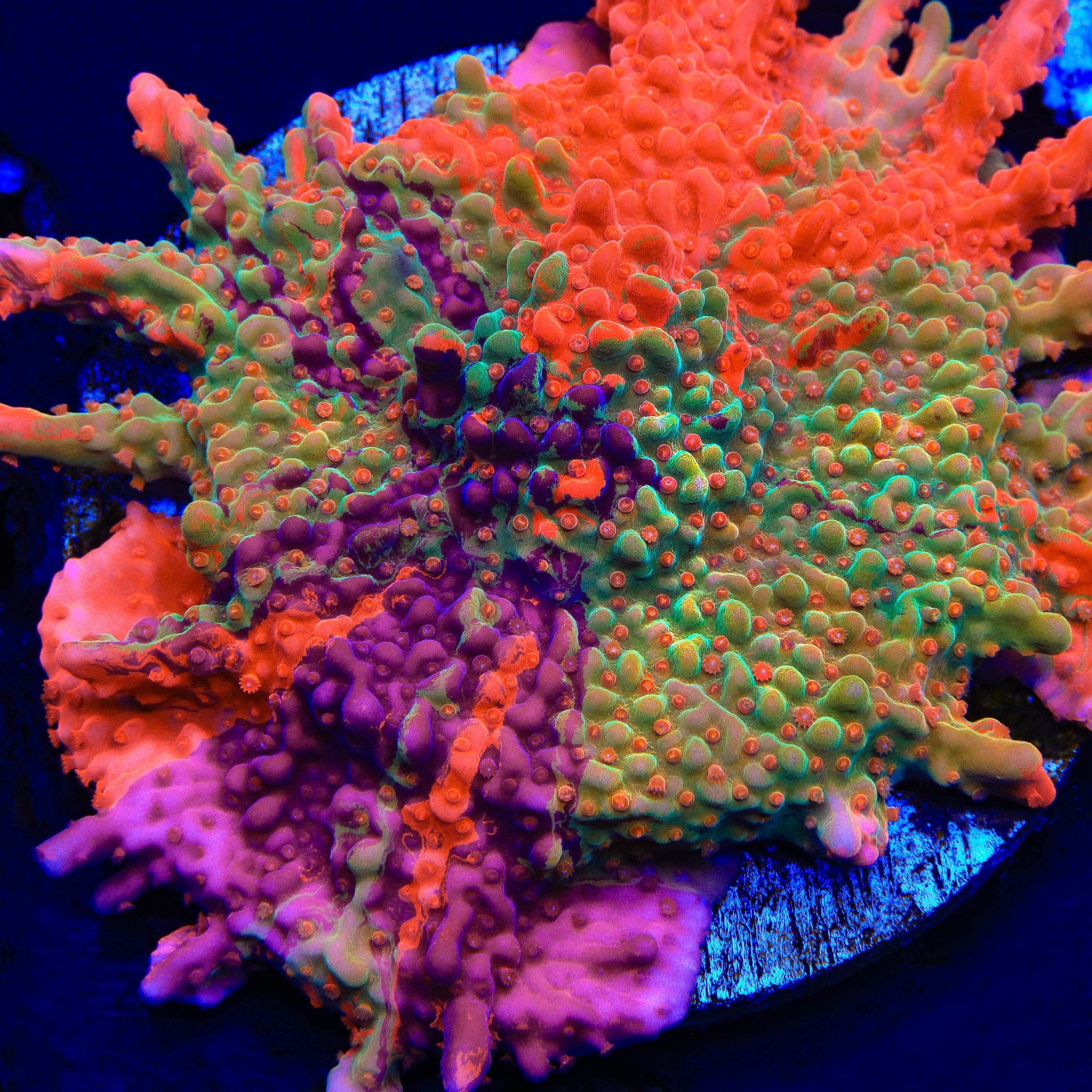
The fascination with unique and rare corals is a constant driver in the reef-keeping hobby. In recent years, “grafted corals” have emerged as some of the most sought after pieces in our hobby. Characterized by irregular patches of contrasting colors, these corals are a visual spectacle. However, their creation isn’t a deliberate biological fusion but a phenomenon that behaves more like a “protein infection.” For the avid reefer, the allure of a one-of-a-kind specimen is strong, but if you have done some research and reading, the word is that grafted corals come with significant unpredictability and challenges. However, this hobby is constantly evolving quickly. Have grafted corals become easier or more predictable than we once believed? I spent the last couple of weeks working with Kevin Burda of Top Shelf Aquatics, one of the most successful coral facilities in the world. In this article I will focus on uncovering the latest details on grafted coral. Like most of us I began my research by scrubbing the internet and utilizing AI tools to bring as much information to my fingertips as possible. However, it was difficult to find much information that wasn’t from 2023 or before. If you query “grafted corals” you’ll find mainly words of caution and warnings that grafted corals won’t last long before being dominated by one color or another. Have things changed?
What is Coral Grafting?
Contrary to the term’s horticultural origins, coral grafting is not the physical joining of two different coral species. Instead, it describes a spontaneous process where fluorescent protein pigments appear to transfer from one coral to another. This can result in two colors swirling and mixing on the same colony or even the creation of a third color in the merged area. In extremely rare cases, sometimes multiple new base color pigments occur, like our multiple triple base color grafts which started from completely different parts of the same colonies or even different ones
While some hobbyists and professional growers have experimented with techniques to encourage this—such as placing different-colored fragments of the same species next to each other and adjusting lighting or water parameters—the process is not fully understood. Some instances of grafting are more straightforward, like reattaching a live piece of Acropora coral tissue to stunted parts of the colony or its own dead skeletal base to encourage regrowth. Sometimes people merge multiple frags to form a larger colony faster. However, the most coveted “grafted” corals are those where a pigment transfer leads to vibrant, bicolored, or even tricolored colonies.
The Unpredictable Reality of Keeping Grafted Corals
While a newly acquired grafted coral can be a breathtaking centerpiece, maintaining its unique look is far from guaranteed. The fluorescent protein phenomenon is highly unpredictable, and one color has a possibility to dominate the other over time. See this article from 2022, where Reef Builders Founder Jake Adams discusses this.
- Color Reversion: In the past we have seen that grafted corals, especially SPS corals, can revert to a single color as they grow. The mixed-pigment effect that makes the coral so desirable can fade, leaving the hobbyist with a standard-looking colony.
- Constant Pruning: To maintain the unique color blend, some reefers resort to regular pruning to keep the dominant color in check. This is a labor-intensive process with no guarantee of long-term success. For tips on how to sculpt, shape and grow out Grafted Corals see also this video Jake released in 2023.
But have things gotten easier? I spoke to Kevin Burda about whether or not the information most recently available is still accurate?
Comments from Kevin Burda – “In my experience, if you start with a properly balanced acro frag, it is not likely to be overrun with the green fluorescent part. I had heard from plenty of hobbyists and experienced some of this issue when the rainbow splice became one of the hottest pieces amongst farmers and hobbyists. Being conscious that the green fluorescent pigments do have a tendency to dominate, I typically cut grafted frags with a little green swirl, or combine parts of the colony with the original base coloration to maintain a safe ratio as they grow. As the colonies grow, I also cut and remove frags from the more dominant areas to keep balance. Some of these frags may develop the second color but even in the case of the rainbow splice, an all green colony is still amazing, with vibrant green that stands out similar to a green slimer. This is my experience with Acropora. Other species, like Monti caps and chalices, occasionally should be trimmed in order to keep the mixed parts on the “growth edge” where it won’t be sealed in the middle of the colony where it typically won’t continue to spread. In a species like Acropora, Anacropora, and Montipora digitata that has upward growth from those spots, this isn’t an issue though you can still graft opposing colors to different parts on the colony. In my opinion, manipulating and shaping a colony as it grows to optimize its appearance can be a unique, fun, and rewarding experience in trying to make the best and most extreme mixed grafted colonies over time. We also enjoy restarting new generations of colonies from the best grafted sections containing the most extreme swirling and color mixes. This process will continue to produce better rewards in helping to create a more extreme colony over time.”
After feedback from Kevin and seeing all the progress in grafted coral at the TSA Farm, I would say that there might be some significant improvements on keeping grafted coral we should understand. But first, let’s take a deeper look at the science behind grafted coral to help you build a strong foundation of understanding of what research has shown us so far.
The Science Behind the Spectacle
The striking coloration of grafted corals is often attributed to a “protein infection.” While this term provides a simple explanation, the underlying scientific mechanisms are far more complex. Instead of a pathogen-like infection, the phenomenon showcases cellular and genetic processes involving fluorescent proteins (FPs), which are key to coral coloration. This “grafting” is less about disease and more about the boundaries of coral tissue compatibility, cell-to-cell communication, and the intricate genetics of FP expression.
The Nature of Fluorescent Proteins (FPs)
The vibrant colors in corals are primarily caused by the fluorescent proteins produced by the coral itself, not by the symbiotic algae (zooxanthellae) living within its tissues. Corals possess a variety of FPs, each absorbing light at a specific wavelength and re-emitting it at a longer one, creating a colorful glow. A coral’s final color is possibly determined by a complex interplay of genetic factors, environmental conditions (like light, water parameters, and nutrition), and the specific types and concentrations of FPs expressed.
Tissue Fusion and Chimerism
For color mixing to occur, corals must first overcome the natural immune responses that prevent genetically distinct individuals from fusing.
- Histocompatibility: In corals, a system of histocompatibility prevents non-self tissue from merging. When two genetically distinct corals are placed side-by-side, they typically “wall off” with a layer of dead tissue, or one coral will actively attack and overgrow the other.
- Isogenic Fusion: Fusion is most successful between fragments from the same colony (isogenic), which share an identical genetic makeup. Hobbyist techniques often succeed in creating chimeric (genetically mixed) colonies only when this fusion occurs without rejection.
- The Chimerism Hypothesis: In rare cases, the immune response fails or is suppressed, allowing tissues from two different genotypes to merge. This creates a single colony with a mixed genetic makeup, known as a chimera. It is this chimerism that provides the opportunity for fluorescent proteins to be shared between the different tissue types.
The “Protein Infection” Model and Its Limits
The term “protein infection” suggests the transfer of FPs between fused tissues. While plausible, as proteins are known to move between cells, it is an oversimplification.
The actual mechanism of FP transfer between coral tissues is not fully understood. It could involve cellular signaling or the direct transfer of protein molecules during cell-to-cell contact. However, a more likely model involves a complex interaction of gene expression. When two tissues merge, the normal genetic regulation of FP production might be disrupted.
The instability that we have seen in grafted corals, where one color can dominate, suggests the initial color mixing is a transient state of genetic disarray. The reversion to a single color is a possible result of the more dominant or robust genotype reasserting its control over gene expression within the colony. As mentioned above environmental factors like light spectrum and intensity can further influence this instability, causing some hobbyists to experience the gradual disappearance of one of the colors.
I have also heard through people working in the professional aquarium and restoration sectors of our industry that there has been some research that suggests there is other possible explanations going on at the genetic level but the researchers who shared this info with me are not ready to release these studies until further research is performed. I promise to update you all as soon as more information is made available. For now, on a scientific level, this is all we know so far.
Now, I get to first to bring you some exciting new releases coming soon from Top Shelf Aquatics. They won’t be easy to get your hands on but everyone can look right? I may have worked out a way for some lucky people to better their chances to obtain them. We will discuss that after we drop these incredible new coral creations from TSA.
New Grafted Corals from Top Shelf Aquatics
The ongoing fascination with grafted corals has inspired both hobbyists and professionals to constantly push the boundaries of what’s possible in reef-keeping. One of the most exciting recent developments comes from Top Shelf Aquatics, a leader in the aquaculture industry known for producing outstanding coral specimens. Owner Kevin Burda and his team have meticulously cultivated a series of show-stopping grafted corals, each with its own striking palette and story. Here, we highlight some of the most popular and newly released captivating and some soon to be released creations and the innovations behind them.
TSA Fruit Swirl Setosa Triple Graft (Now in stock at TSA) click here
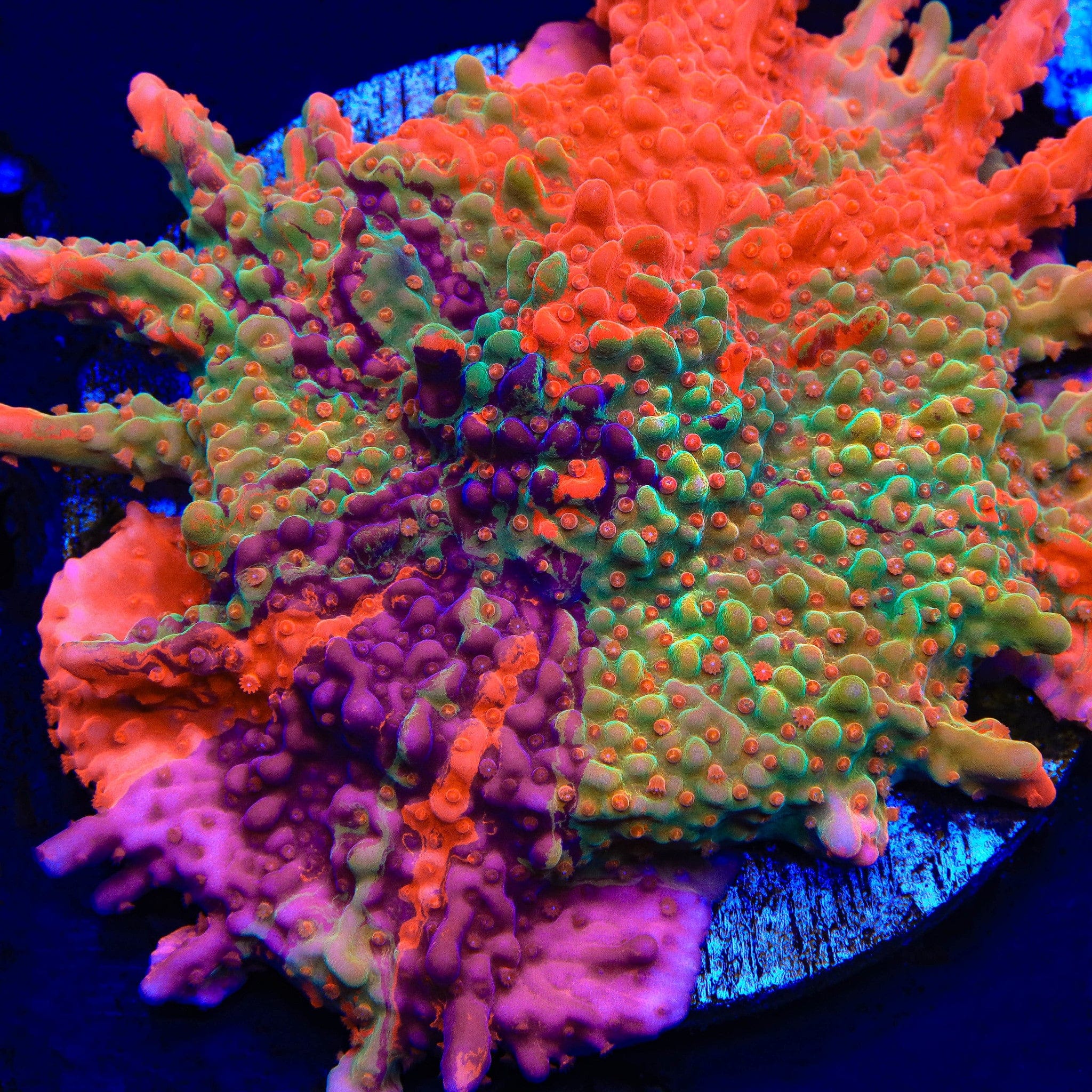
A true one-of-a-kind, this coral boasts a mosaic of orange, neon greenish gold, and intense purple. The seamless transition between these colors creates a dramatic, swirling effect.
Comments from Kevin: First triple grafted Setosa. We had discovered sections of our red Setosa that had mutated to contain tiny specks of greenish/ gold coloration. Eventually, after isolating and grafting these sections, we balanced the colors well enough to release our “Tequila Sunrise Setosa”. During this time a couple other colonies of red Setosa mutated with specks of purple, which we isolated, developed, and successfully grafted them to the tequila sunrise, where the triple grafted fruit swirl Setosa was born. Over years, this was grown and selectively cut to make multiple mother frags and colonies containing the 3 natural colors, allowing the few lucky enough to acquire these frags a truly unique specimen.
TSA Golden Waves Grafted Anacropora (1st release coming soon via TSA Text)
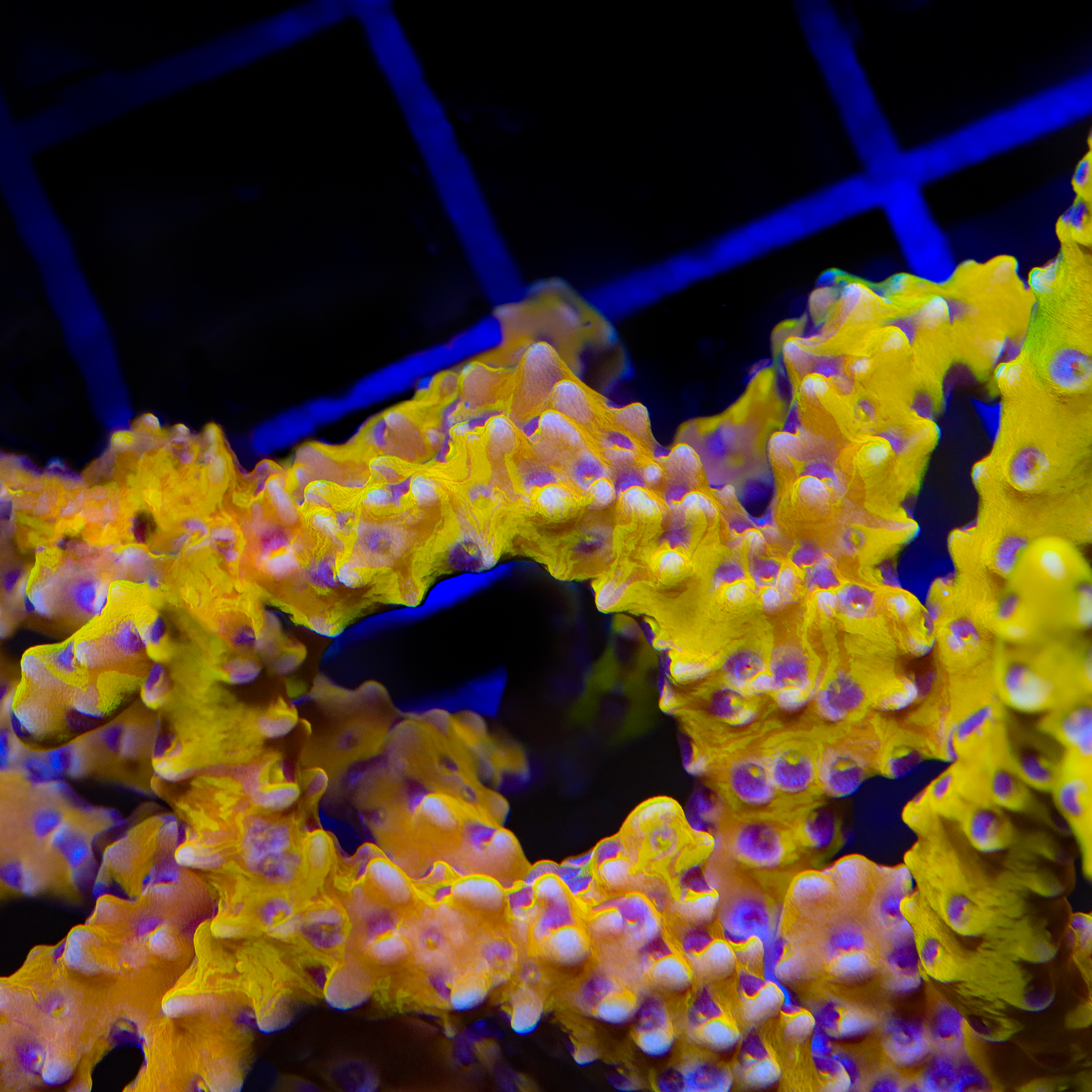
Known for its radiant yellow-orange branches speckled with purple polyps, this piece seems to shimmer under actinic lighting, making it a standout in any reef tank
TSA Psychedelic Swirl Anacropora (1st release coming via TSA Text)
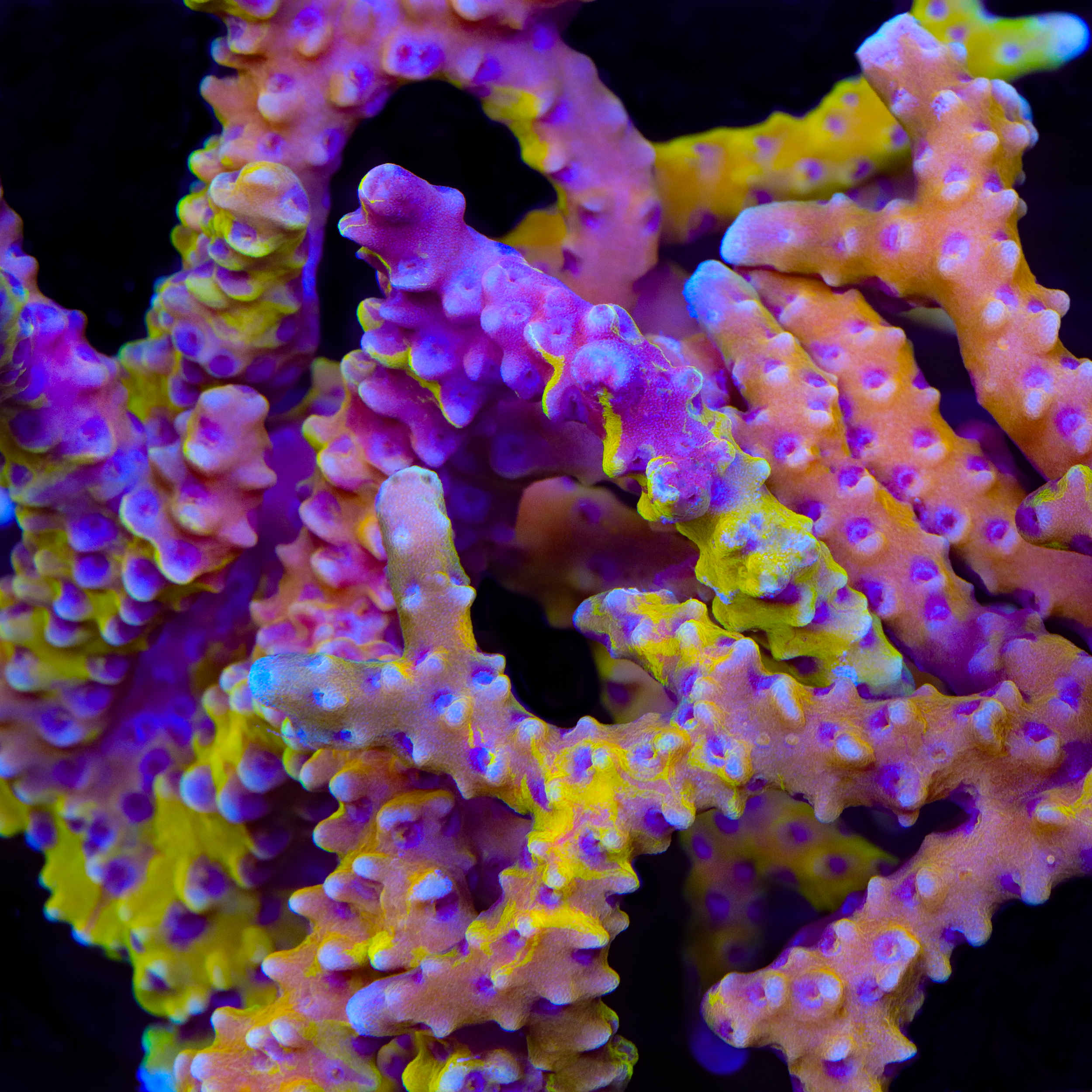
An eye-catching coral with swirling hues of chartreuse yellow, magenta, and electric blue, the Psychedelic Swirl Anacropora offers a vivid visual experience. Its polyp tips feature vibrant magenta star-bursts that contrast beautifully with its glowing yellow branches.
Comments From Kevin – About a year ago we picked up an extremely bleached piece of Anacropora from a client’s aquarium. He had some nice pieces that we planned to quarantine and bring into our farm for grow out. I was very close to pulling the plug on this one a few times but decided to spread it around, baby it and let the team at the Top Shelf Farm bring this thing back to optimal health. As the coloration slowly darkened, I noticed what looked to be some swirling developing on some of the branches. Since we have another grafted neon green Anacropora with forest green blotches, we now had hope this could be a very unique coral for our collection. Months later, the pigments had fully come in with a bold yellow and gold base color to confirm the swirling color mix. As we were preparing to release the first batch of frags, I noticed a branch that had developed a vibrant and contrasting purple coloration. This is when I excitedly reached out to Shawn at Reef Builders, to ask him if he had ever seen anything like this. This is a great example of a theory I have observed that coincides with experiences that I have heard from others . It does seem that some of these mutations may be a result of stress. We have various backup farm colonies where random mutated color spots have popped up on pieces that may be bleached, have unhealthy, and stunted growth. Many times we have isolated these pieces, moved them to new locations or systems, and grafted the mutated parts to healthy colonies with success.
Sunny D Splash Grafted Setosa (1st release coming soon via TSA Text)
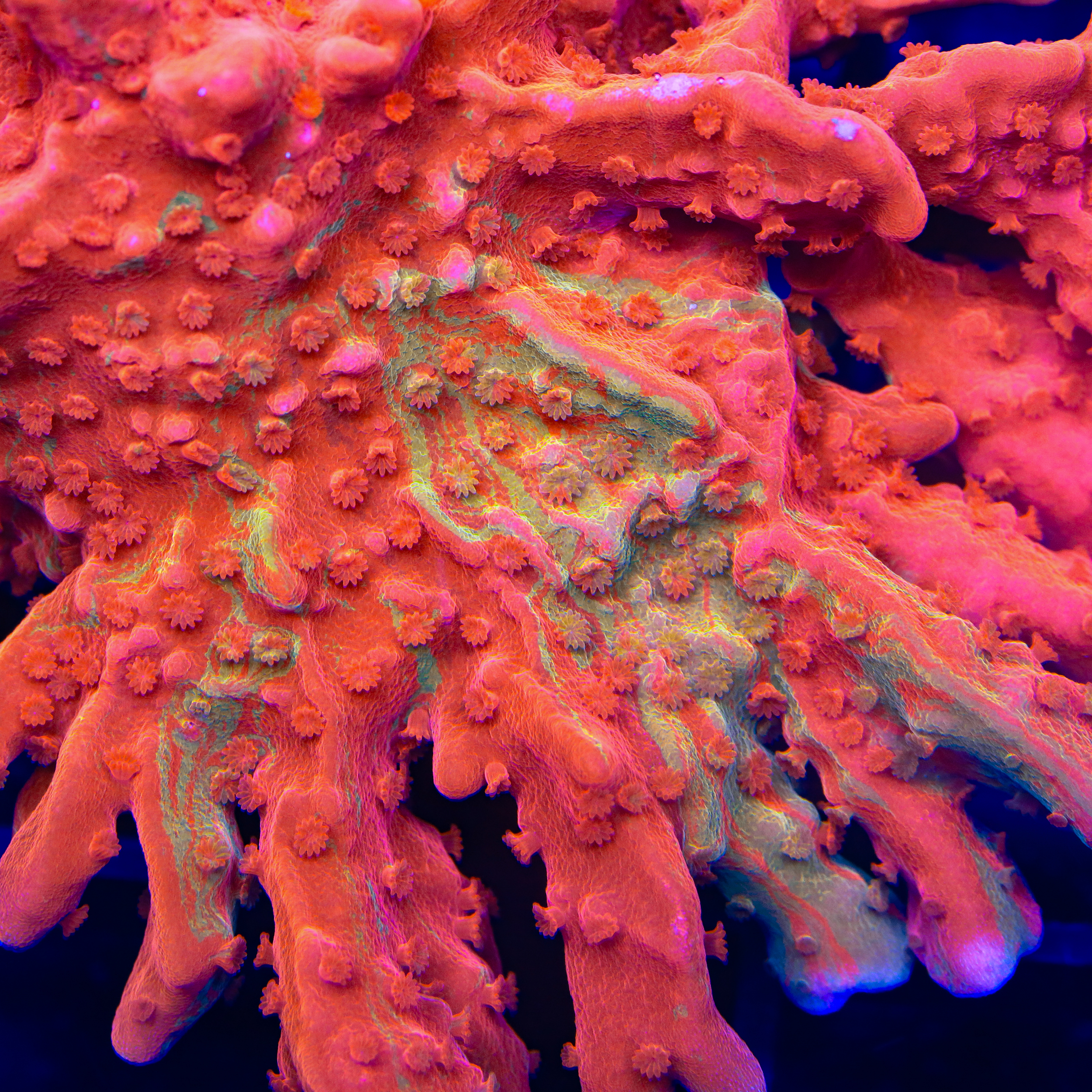
This coral stands out with a brilliant explosion of orange, vivid yellow, and pink. Distinct bi-color zones seem to dance across the coral’s surface, a testament to the unpredictable beauty of pigment blending in grafted specimens.
TSA Sherbet Swirl Setosa ( 1st release coming soon via TSA Text )
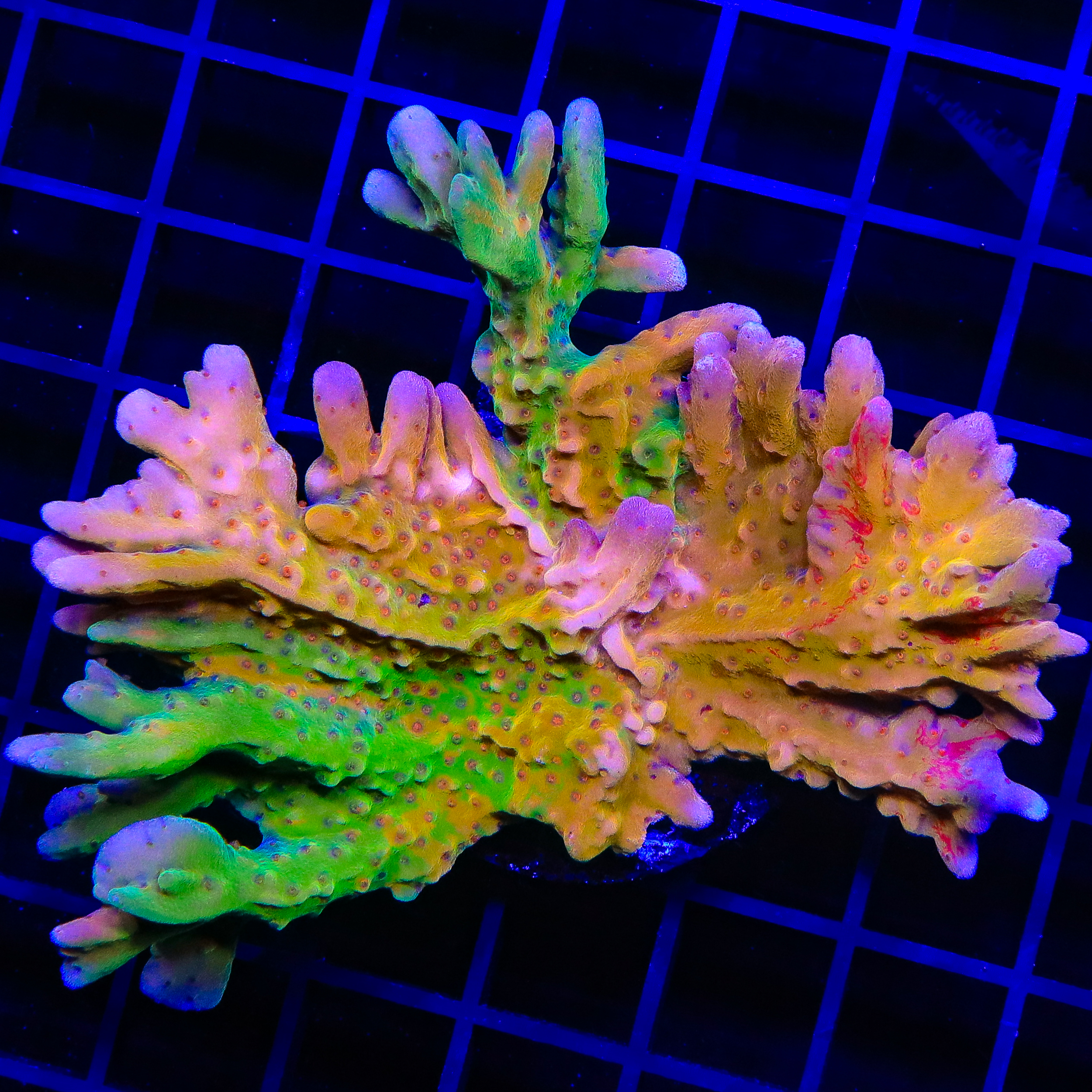
With a striking gradient of lime green, yellow, gold, and pink, topped with reddish-orange polyps, this coral embodies the full spectrum of SPS coloration.
Comments from Kevin
- After the success we had with the fruit swirl Setosa, we noticed a different strain of Setosa developing specks of subtle sherbet green and bold red. This particular strain would never successfully graft with the ones that made up our fruit swirl, always walling up when joined and eventually needing to be separated. Using the same process as the fruit swirl, we were able to develop a second triple grafted Setosa we call “Sherbet Swirl Setosa” – Sunny D Splash is the orange and red graft version of this.
TSA Grafted Gamma Knife Hydnophora ( Now Available at TSA click here )

Displaying densely packed, finger-like purple polyps tipped in neon yellow-green, this coral’s fluorescence makes it a visual focal point.
Comments from Kevin: A graft popped up in our system and started spreading well on our main colony of our TSA Gamma Knife Hydnophora. Luckily the color mutation occurred on our favorite and most vibrantly colored Hydnophora with primary colors of vibrant speckled orangeish gold polyps on a glowing neon green base. The new variation now has a base color of a vibrant baby blue that really makes the colony contrast, especially when growing out where striping occurs.
TSA Grafted Quasimodo Monti (Coming Soon via TSA Text)
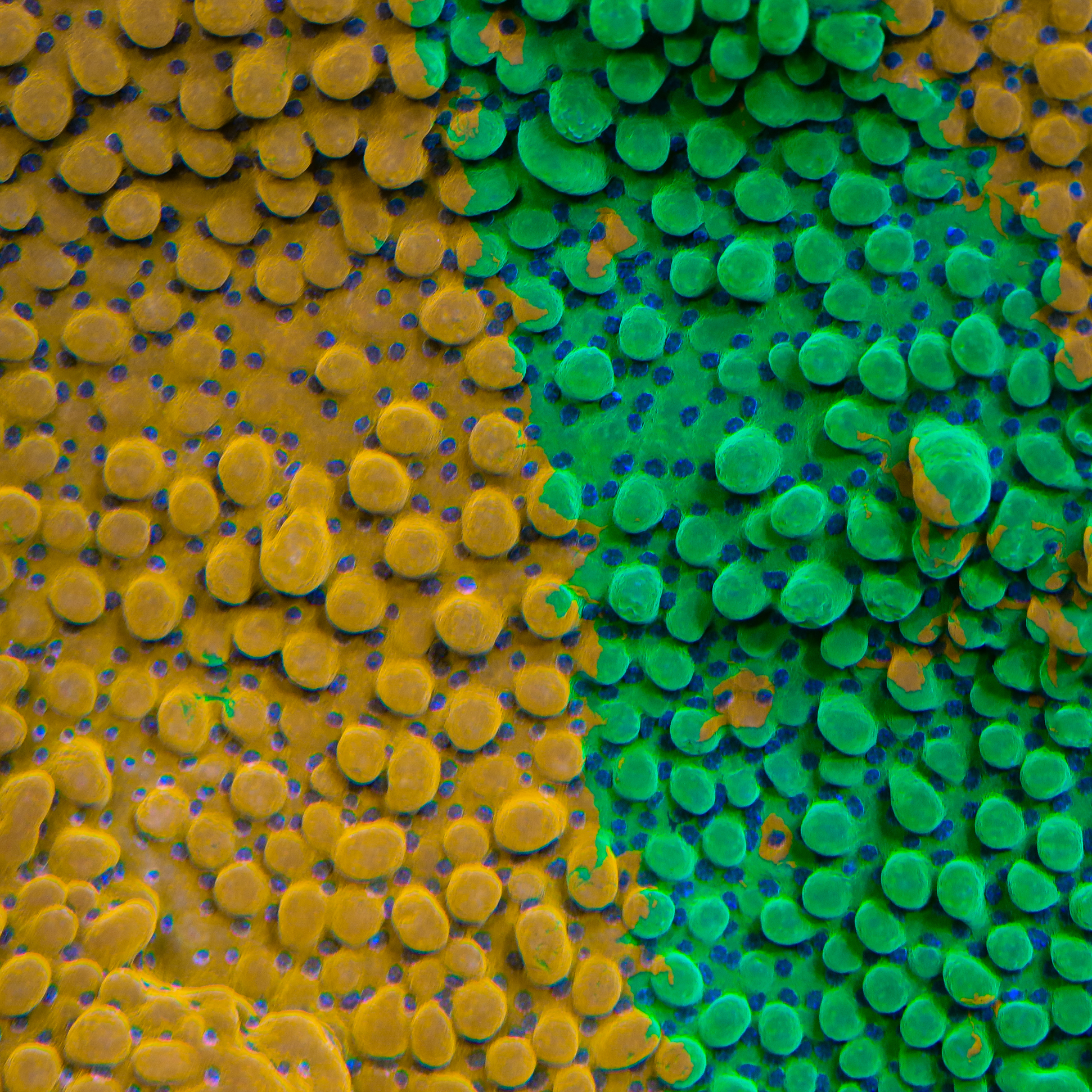
This specimen showcases golden-yellow and neon-green regions intermingled with deep blue punctuations, resulting in a coral that almost glows from within.
TSA Pooh Bear Grafted Monti (Coming Soon via TSA Text)

Glowing with a vibrant yellow-green base, accented by intricate, vein-like patterns of vivid green and star-shaped purple polyps, this coral’s surface complexity is mesmerizing.
Comments from Kevin – At Top Shelf, we are always trying various things, and mixing and matching Montis to attempt to find new ones that will graft. We had tried about every combination that you can imagine including various species like “JF Beach Bum” or Montipora Palawanensis with no success. We were able to connect with an importer to acquire a few wild colonies with very unique colorations that also showed signs that they may have a naturally occurring grafted color mutation. Sometimes these color differentiations end up just being an old dead spot where the coral has healed or a spot where a boring invertebrate is irritating the tissue. We were fortunate to hit a couple home runs to eventually release our Grafted Quasimodo and “Pooh Bear Monti” Monti which is exciting as I have never seen grafted Montipora in these species being grown.
TSA Swamp Thing Grafted Anacropora (Coming Soon via TSA Text)

Showcases a dramatic interplay of glowing lime green and deep blue, its convoluted branches and textures underscoring the artistic potential of chimeric coral growth.
Each of these corals embodies the ongoing “coral renaissance” driven by passionate aquarists and informed by scientific curiosity. As Kevin Burda notes, the unpredictable outcomes and kaleidoscopic colors found in these new grafted releases are the result of both expertise and a willingness to embrace the unexpected. By documenting and sharing these new varieties, Top Shelf Aquatics provides hobbyists with not only extraordinary additions to their collections but also living windows into the fascinating world of coral genetics and pigment expression.
The Road to Scientific Clarity
While hobbyist observation has advanced the understanding of grafted corals, comprehensive scientific investigation is still needed. Researchers are increasingly using genomic and molecular methods to study corals, which can help identify the specific genes and pathways involved in the color-mixing phenomenon. Advanced protein analysis can track the movement of FPs within fused tissue and quantify changes in their expression over time.
The phenomenon of color mixing in grafted corals is a fascinating intersection of immunology, cellular biology, and genetic instability. It offers a rare glimpse into the mechanisms that govern tissue compatibility and gene expression in these remarkable animals. As hobbyists continue to experiment and scientists apply advanced molecular techniques, the mysteries behind this unpredictable beauty will slowly unravel, providing insights not only into coral biology but also into the fundamental processes of cellular communication and genetic regulation.
The icing on the cake is that all of us reef builders will benefit with amazing coral to add to our personal piece of the ocean.
Want to be first to get your hands on these rare and exclusive pieces? – Kevin and the team at TSA have created a text alert for when these new releases and others are coming available. They also will be throwing out some pretty crazy deals on the alert to reward their customers for following along. You can sign up with this link the all new TSA Text – tsa.attn.tv
Interested in learning more about grafted coral or have questions? Join me on Reef Builders, Reef Therapy where I’ll be talking with Kevin Burda this article deeper and answering your questions live. We will announce the date for that on all social platforms and have it listed on the www.reefbuilders.com
I hope you enjoyed this article on Grafted Corals! It took me a bit to get all the information put together on this one so I would appreciate the feedback! Until next time all you reef builders – Shawn Hale


Awesome jobs TSA!! and RB