

Reef Culture Technologies is ramping up to breed angelfish again

34

After a long absence from breeding marine angelfishes, we are happy to announce that Frank Baensch has already begun to get Reef Culture Technologies back into gear. For a few years in the early 2000s Frank Baensch was a prolific breeder of several species of dwarf angelfish including some common species like flame and lemonpeel angelfish but also of several extremely rare species including the resplendent, debelius and nahacky angelfishes.

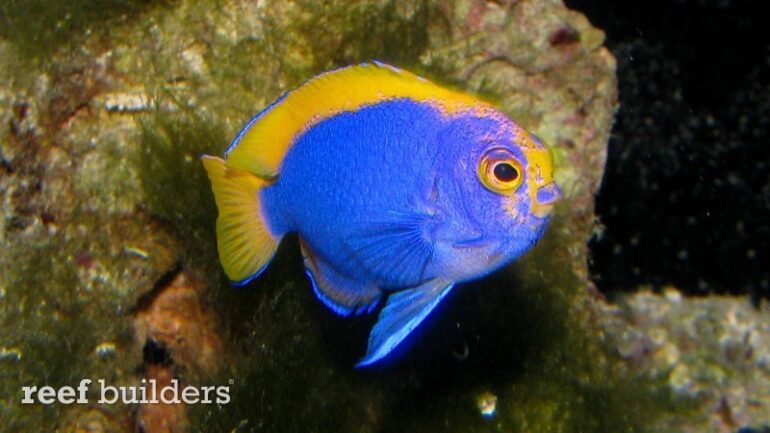
The resplendent angelfish pictured above is one of Frank’s little babies which we visited at the home of Jim Styme, the L.A. Fishguy, which we previously featured in a post on resplendent angelfish. We very much look forward to Mr. Baensch getting his broodstock ready for production as we can guarantee you that RCT will be aiming to breed the masked angelfish, Genicanthus personatus, and even the peppermint angelfish, Paracentropyge boylei, should he succeed in obtaining a pair. If anyone can do it, Frank can, and we look forward to tracking the successes of his marine angelfish breeding come back.




Top Related Stories:

  • Mark

    Yes! I really regretted not getting one of his resplendents last time.

  • Mark

    Yes! I really regretted not getting one of his resplendents last time.

  • Brian B

    what is the cost comparison to the wild caught fish???

  • Brian B

    what is the cost comparison to the wild caught fish???

  • http://reefbuilders.com Jake Adams

    Well considering that Resplendens, Debelius and Nahacky’s pygmy angelfish are virtually impossible to legally obtain, it doesn’t really matter how much they cost, does it?

  • http://reefbuilders.com Jake Adams

    Well considering that Resplendens, Debelius and Nahacky’s pygmy angelfish are virtually impossible to legally obtain, it doesn’t really matter how much they cost, does it?

  • Matt Pedersen

    Awesome! Clarification to Jake’s comment – “virtually impossible to legally obtain from the wild”.

  • Matt Pedersen

    Awesome! Clarification to Jake’s comment – “virtually impossible to legally obtain from the wild”.

  • Matt Pedersen

    And I now realized I have to clarify my own response – those species labeled as “virtually impossible” could be brought into the hobby through special permitted collections (as was the case with Amphiprion mccullochi) or from priorly existing legal specimens (i.e. I think of Goldline Neon Gobies, Elacatinus randalii / figaro from Brazil, which ORA produces and sells like crazy but you’ll never see them wild caught these days because Brazil banned their collection more recently). This is one of the ways that captive breeding can make a rare species “more obtainable”. Many of the orchids I used to keep and breed were CITES Appendix I, but are permitted in international trade IF they are captive propagated.

  • Matt Pedersen

    And I now realized I have to clarify my own response – those species labeled as “virtually impossible” could be brought into the hobby through special permitted collections (as was the case with Amphiprion mccullochi) or from priorly existing legal specimens (i.e. I think of Goldline Neon Gobies, Elacatinus randalii / figaro from Brazil, which ORA produces and sells like crazy but you’ll never see them wild caught these days because Brazil banned their collection more recently). This is one of the ways that captive breeding can make a rare species “more obtainable”. Many of the orchids I used to keep and breed were CITES Appendix I, but are permitted in international trade IF they are captive propagated.

  • http://reefbuilders.com Jake Adams

    The irony of this story: most of the resplendens, nahackyi and debelius specimens alive in captivity are captive bred specimens from RCT!

  • http://reefbuilders.com Jake Adams

    The irony of this story: most of the resplendens, nahackyi and debelius specimens alive in captivity are captive bred specimens from RCT!

  • Craig

    Now if we can just him to share his secrets so more people can duplicate his work.

  • Craig

    Now if we can just him to share his secrets so more people can duplicate his work.

  • jr

    Id like to see yellow belly regals, maybe not as fancy as the uber rare, but very difficult to find healthy specimens.

  • jr

    Id like to see yellow belly regals, maybe not as fancy as the uber rare, but very difficult to find healthy specimens.

  • Copps

    Picked up on that fast Jake! Frank never did C. nahackyi, and unfortunately the last captive specimen died recently… he did do C. multicolor though, which all grew into completely xanthic coloration…

  • Copps

    Picked up on that fast Jake! Frank never did C. nahackyi, and unfortunately the last captive specimen died recently… he did do C. multicolor though, which all grew into completely xanthic coloration…

  • DJ

    Not to be confused with Reef Culture the store in Tempe, Az… Lol

  • DJ

    Not to be confused with Reef Culture the store in Tempe, Az… Lol

  • animalmaster6

    Hopefully he can get Paracentropyge boylei captive bred. They are stunning.

  • animalmaster6

    Hopefully he can get Paracentropyge boylei captive bred. They are stunning.

  • Brandon

    Does anyone know why frank stopped production to start with??

  • Brandon

    Does anyone know why frank stopped production to start with??

  • Matt Pedersen

    Craig, all of Frank’s work was actually published in both scientific journals and hobbyist publications. The fact that he held no big secrets, and that so few people have followed in his footsteps, is a sign of the truly challenging nature of breeding marine angelfish.

  • Matt Pedersen

    Craig, all of Frank’s work was actually published in both scientific journals and hobbyist publications. The fact that he held no big secrets, and that so few people have followed in his footsteps, is a sign of the truly challenging nature of breeding marine angelfish.

  • Brandon

    Frank really never went into detail about larval tank design or explained methods of exchanging prey items out of larval tanks…aka larval rearing methods… Aka all the BIG secrets! He was actually quite sneaky about it. He did leave behind some great info just not an exact blueprint. But really all of the nitty gritty was left out:(

  • Brandon

    Frank really never went into detail about larval tank design or explained methods of exchanging prey items out of larval tanks…aka larval rearing methods… Aka all the BIG secrets! He was actually quite sneaky about it. He did leave behind some great info just not an exact blueprint. But really all of the nitty gritty was left out:(

  • Matt Pedersen

    @Brandon, I suspect, just call it a hunch, that there were no real secrets to rearing the larvae. I also suspect that since other people’s experiences rearing marine angelfish were also well published, you *might* be able to piece together a workable plan (provided you had the right feeds)

  • Matt Pedersen

    @Brandon, I suspect, just call it a hunch, that there were no real secrets to rearing the larvae. I also suspect that since other people’s experiences rearing marine angelfish were also well published, you *might* be able to piece together a workable plan (provided you had the right feeds)

  • Brandon

    @Matt read all the articles then try to repeat their success. Without a doubt there are holes in all of the published works. Secrets or just dumbluck, raising angels is not a science yet….

  • Brandon

    @Matt read all the articles then try to repeat their success. Without a doubt there are holes in all of the published works. Secrets or just dumbluck, raising angels is not a science yet….

  • Wayne

    There was nothing published on the larval tank design as they were just regular drum shaped tanks. There are a bunch of pulished photos of them Why would predator removal be any different to the norm? It just looks to me like it’s a ton of hard work, and kudos to him for making the commitment. Who wants to endlessly culture copepod nauplii, for little return.

    He stopped production because he had other things to do with this time…. I don’t think dumb luck has very much to do with this at all.

  • Wayne

    There was nothing published on the larval tank design as they were just regular drum shaped tanks. There are a bunch of pulished photos of them Why would predator removal be any different to the norm? It just looks to me like it’s a ton of hard work, and kudos to him for making the commitment. Who wants to endlessly culture copepod nauplii, for little return.

    He stopped production because he had other things to do with this time…. I don’t think dumb luck has very much to do with this at all.