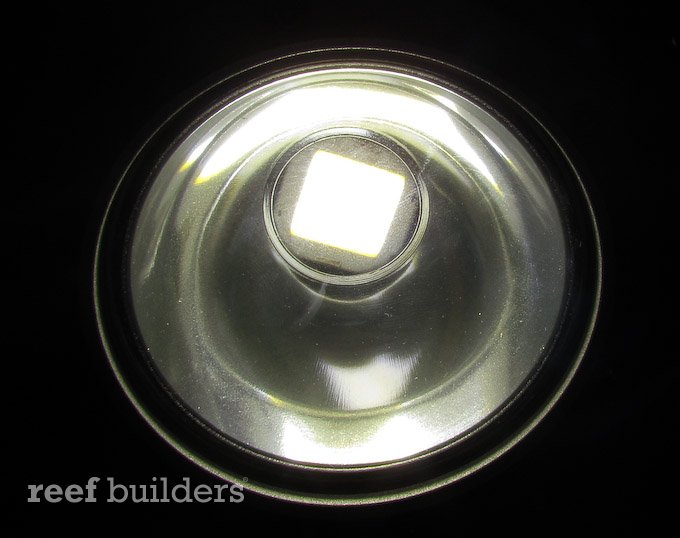
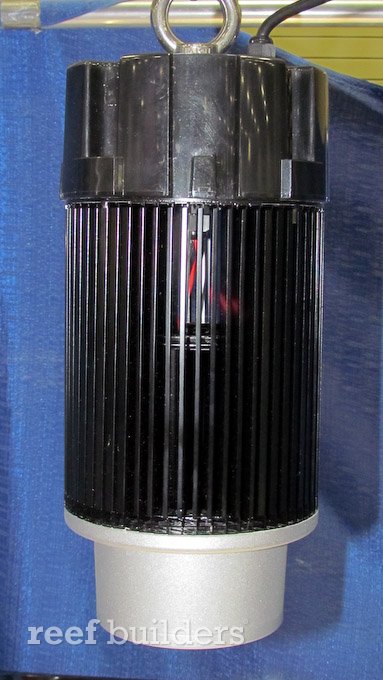
 The 120 watt Cannon LED from Ecoxotic is not at all just a 120 watt version of the 100 watt Cannon LED spotlight. Whereas the 100 watt LED cannon is simply riding a big mass of aluminum heatsinking, the 120 watter is significantly lighter due to a more efficient heat-managing design that uses vapor-filled heat pipes and abundant thin aluminum fins. The new design of the 120 watt Cannon allows it to be significantly lighter than the 100 watter, and definitely not much more expensive due to the savings in freight costs.
Ecoxotic’s 120 watt Cannon LED spotlight will be available in 12k, blue, and some form of warmer white lighting. The driver for the 120 watt Cannon is mounted above the heatsink in order to be able to have UL listing for safety in an aquatic environment. Although the 120 watt Cannon LED ends up being much taller as a result of having the driver on top, this light is primarily intended for use in public aquaria. There is a DIY way of dimming the LED Cannon, but it won’t be adjustable for intensity out of the box, at least not right away. The 120 watt Cannon isn’t expected to cost much more than the 100 watt version and we should be seeing them trickling out to end users sometime in October.